
Overview
Prometheus, co-founded by Jeff Bezos and Vik Bajaj in November 2025, is developing an “artificial general engineer” (AGE) to automate the engineering workflow, revolutionizing product development across manufacturing industries. By focusing on “physical AI,” Prometheus aims to enhance not just digital processes but also real-world applications, potentially speeding up the creation of complex products like aerospace components and automobiles. With over $16 billion in funding, including a major $10 billion round, Prometheus is gaining traction as a transformative player in AI.
Leadership and Team
In a unique two-CEO structure, Bezos oversees strategic vision and fundraising while Bajaj focuses on technical operations. This division of roles allows Prometheus to leverage their respective expertise in navigating both financial support and technical challenges. The company employs around 120 specialists from leading AI institutions, enhancing its capability to develop its innovative AGE technology while maintaining focus on the nuances of industrial applications.
Funding Landscape
Prometheus has secured significant funding rapidly, with a total exceeding $16 billion by mid-2026. The initial $6.2 billion raised allowed it to establish itself as a high-value player in the AI sector, while the subsequent $10 billion round affirmed investor confidence and positioned the company favorably for growth. This funding not only supports the development of its AGE technology but also facilitates an acquisition strategy aimed at integrating AI across various industries to drive efficiency.
Technological Innovations
Centrally, Prometheus is creating the AGE, which integrates AI capabilities through the entire engineering lifecycle. By utilizing “world models,” the system aims to simulate and interact with the physical world, enhancing everything from design to manufacturing oversight. Recent acquisitions have bolstered its capabilities, allowing for robust real-time interactions in dynamic environments, thereby improving overall product development processes.
Industry Applications
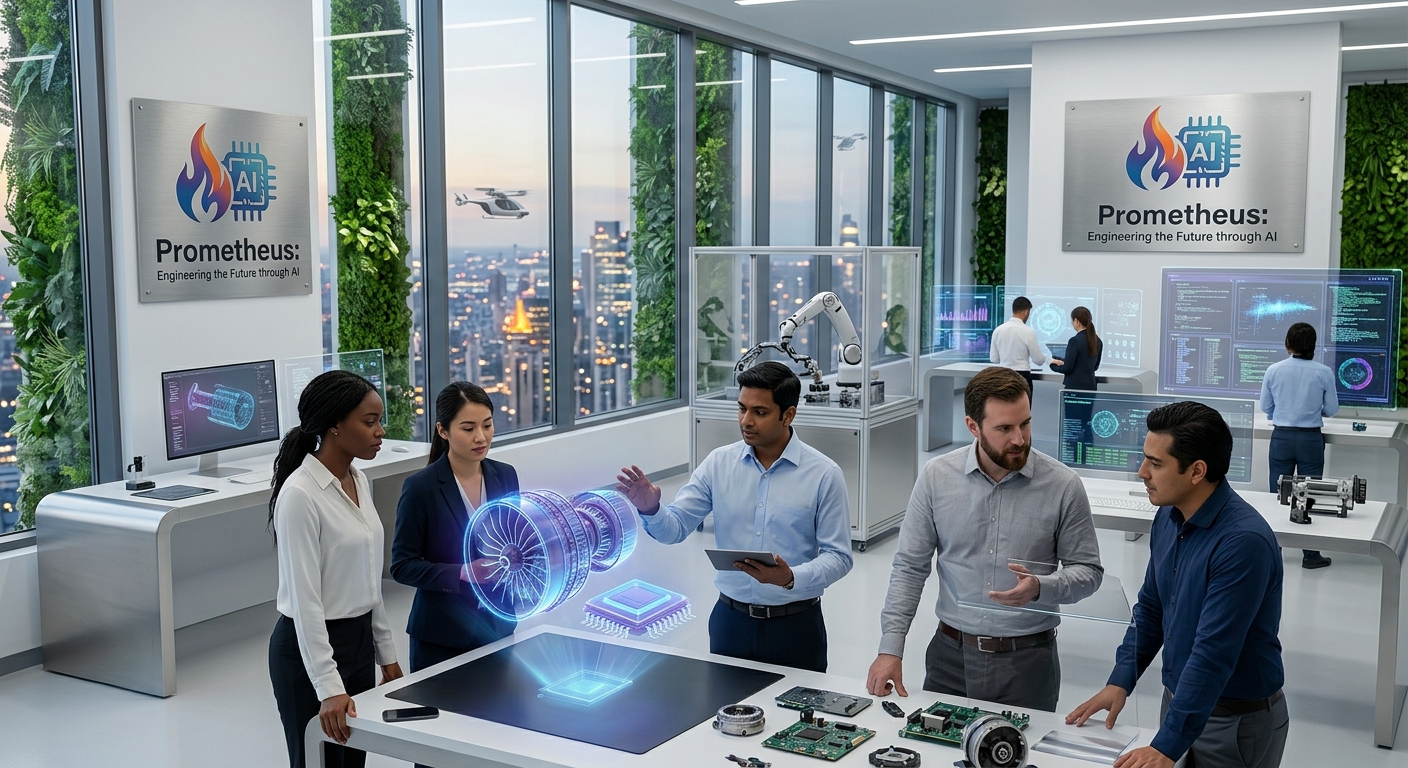
Prometheus focuses on enabling engineering teams to utilize AI tools throughout the entire development lifecycle. This includes optimizing design, performance predictions, and manufacturing processes, significantly enhancing productivity within smaller teams. By targeting sectors such as aerospace and automotive, the company seeks to streamline complex tasks and reduce development time, ultimately reshaping definitions of innovation in these critical industries.
Strategic Collaborations
The synergy between Bezos and Bajaj extends to past ventures, leading to a strategic approach in building a strong talent base from top AI organizations. Prometheus functions independently yet benefits from Bezos’s insights into large-scale operations, which guide its focus on integrating advanced AI into manufacturing sectors. Plans for global expansion and acquisition of additional firms suggest an aggressive strategy positioned to scale its innovations effectively.
Societal Impact and Market Reception
While Prometheus’s ambition to amplify engineering capabilities is praised, it is met with skepticism regarding its technical direction and overall feasibility. Critics question the scale of its funding initiatives and the realistic outcomes expected in an evolving AI landscape. Nevertheless, the initiative seeks to mitigate potential job displacement concerns by focusing on enhancing human-driven processes rather than replacing them, aiming to redefine economic opportunities in manufacturing.
Future Directions
Looking ahead, Prometheus envisions embedding its AGE technology into various facets of industrial manufacturing. By enhancing the capacity for innovation, the aim is to revolutionize how engineering tasks are approached, creating substantial shifts in productivity and economic outcomes. This long-term vision reflects a commitment to not only technological advancement but also to transforming sectors traditionally burdened by slower development cycles.
The content is provided by Avery Redwood, Front Signals