
Summary
Unveiling the Hidden Meanings: The Powerful Symbolism of Greek Mythology examines the intricate symbolism within Greek myths, emphasizing their moral and cultural significance. These rich narratives not only entertain but also impart essential lessons, with symbols like Zeus’s thunderbolt embodying divine qualities and societal values. Understanding these symbols enhances insights into ancient practices, art, and philosophical thought, highlighting their continued relevance today.
Historical Context
The exploration of Greek mythology stems from both ancient traditions and modern scholarship. Early scholars like Wilhelm Mannhardt categorized folk customs that influenced these myths, noting links between Greek rituals and those of northern Europe. However, scholars recognize that Greek mythology has significant roots in Pre-Greek and Near Eastern cultures, which impacted its evolution, as illustrated in the works of ancient historians like Herodotus and Pausanias who documented various local myths. Such historical narratives reveal the rich interplay of cultures shaping Greek mythology, serving as a vital source for understanding ancient beliefs and rituals.
Major Themes in Greek Mythology
Greek mythology explores key themes, including heroism, divine order, and the human condition. Heroes like Hercules and Odysseus exemplify virtues such as strength and resilience, offering moral guidance while highlighting human challenges against divine forces. The origin of the cosmos, as articulated in Hesiod’s Theogony, contextualizes the gods within a structured hierarchical framework, which is crucial for Greek understanding of existence. Collectively, these themes fostered cultural values that have permeated Western thought, shaping how moral lessons were communicated through myth.
Symbolism in Greek Mythology
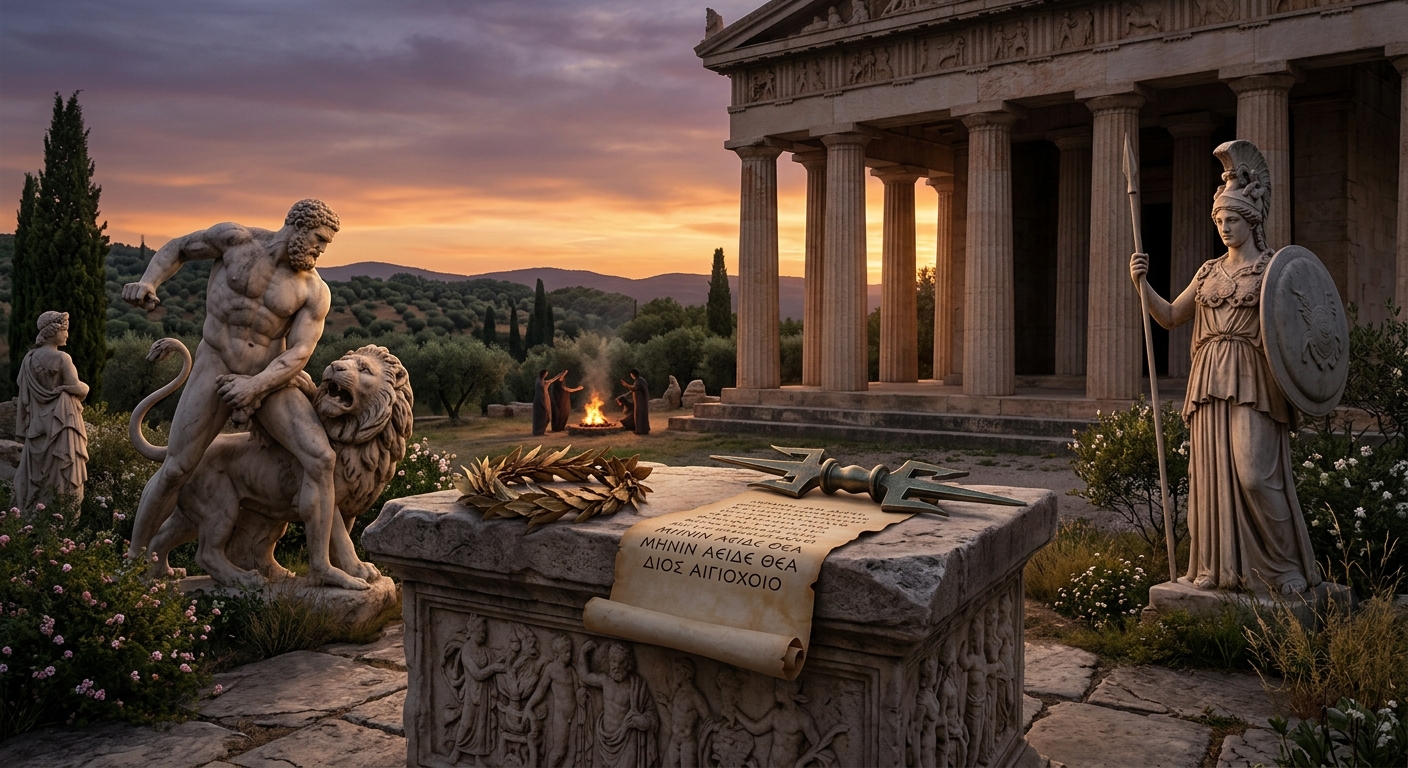
Symbols in Greek mythology convey profound meanings related to the divine and human experience. Each deity is associated with distinct symbols that reflect their powers, such as Zeus’s thunderbolt symbolizing authority, while Athena’s owl denotes wisdom. These representations not only enriched narratives but also engaged communities in rituals, embedding moral lessons that resonate beyond their ancient context, demonstrating their lasting significance in cultural expression.
Depictions and Functions of Symbols in Ancient Greek Art and Architecture
Greek art and architecture are interwoven with symbols reflecting mythology and religious beliefs. Architectural elements often incorporate mythical motifs, such as the Ionic column capitals that mirror ram’s horns, emphasizing cultural reverence for the divine. Additionally, mythological scenes depicted in pottery and sculpture serve as both decorative and narrative devices, reinforcing mythic themes within artistic traditions that are foundational to Western artistic heritage.
Allegorical and Philosophical Interpretations
Allegorical interpretations of Greek mythology emerged as philosophers like Plato critiqued traditional myths for portraying immoral deities. This critical viewpoint led to viewing the gods and narratives through symbolic lenses that conveyed deeper ethical insights. Allegorical readings transformed mythic tales into reflections of natural and moral principles, enhancing their relevance in philosophical discourse. Such interpretations have enriched the understanding of these narratives, showcasing their multifaceted nature and cultural significance.
Cross-Cultural Parallels and Adaptations
Greek mythology contains numerous parallels with other cultures, revealing a tapestry of intercultural exchanges. Ancient philosophers criticized the flaws attributed to gods, reflecting a broader philosophical concern. Noteworthy cross-cultural influences include similarities with Near Eastern motifs, such as Adonis and Cybele, highlighting the complexities of myth’s development through cultural contact. By comparing Greek figures with counterparts in Indo-European traditions, scholars uncover shared archetypes that emphasize a collective cultural heritage.
Primary Sources and Artifacts
The study of Greek mythology is supported by literary and artistic sources that highlight its cultural narratives. Key texts include the epic poems of Homer and works by playwrights like Aeschylus and Sophocles, which adapted myth to address contemporary issues. Additionally, archaeological evidence reveals mythological symbolism in art, enhancing contemporary understanding of ancient beliefs and values. This interplay of literature and material culture emphasizes the profound legacy of Greek mythology on subsequent artistic and philosophical expressions.
Cultural Impact and Legacy
Greek mythology significantly influences Western culture through its rich symbolism and moral teachings. Heroes epitomizing virtues facilitate social cohesion and reflect collective ideals that persistently resonate in modern narratives. The impact of Greek myths extends into Renaissance art, demonstrating a continued fascination while adapting these stories across diverse contexts. As universal themes emerge in global myths, the relevance of Greek mythology as a source of moral and spiritual lessons is confirmed in various cultural landscapes.
Scholarly Debates and Interpretive Divergences
Interpretations of Greek mythology invite scholarly debate, particularly regarding moral and allegorical readings. Philosophical critiques highlight perceived immorality within traditional tales, while allegorical approaches seek deeper meanings. This divergence illustrates the complexity of myth, with interpretations varying from outright rejection to viewing myths as inherently symbolic narratives. By examining allegorical interpretations alongside broader Indo-European contexts, scholars emphasize the ongoing relevance of Greek mythology and its intricate symbolic richness.
The content is provided by Jordan Fields, Front Signals