Summary
Disabling cancer cells’ DNA repair mechanisms has emerged as a key strategy to combat drug resistance, enhancing the effectiveness of existing cancer treatments. Many cancer cells utilize their DNA repair pathways to survive treatments like chemotherapy and radiation. Inhibiting specific proteins involved in DNA repair, particularly those in homologous recombination (HR) and base excision repair (BER), is being widely explored, with PARP inhibitors showing notable success in cancers like those with BRCA1 and BRCA2 mutations. The challenge of drug resistance requires innovative approaches, such as small molecule UNI418, which destabilizes essential DNA repair proteins, thus resensitizing resistant cancer cells without requiring genetic changes.
Discovery
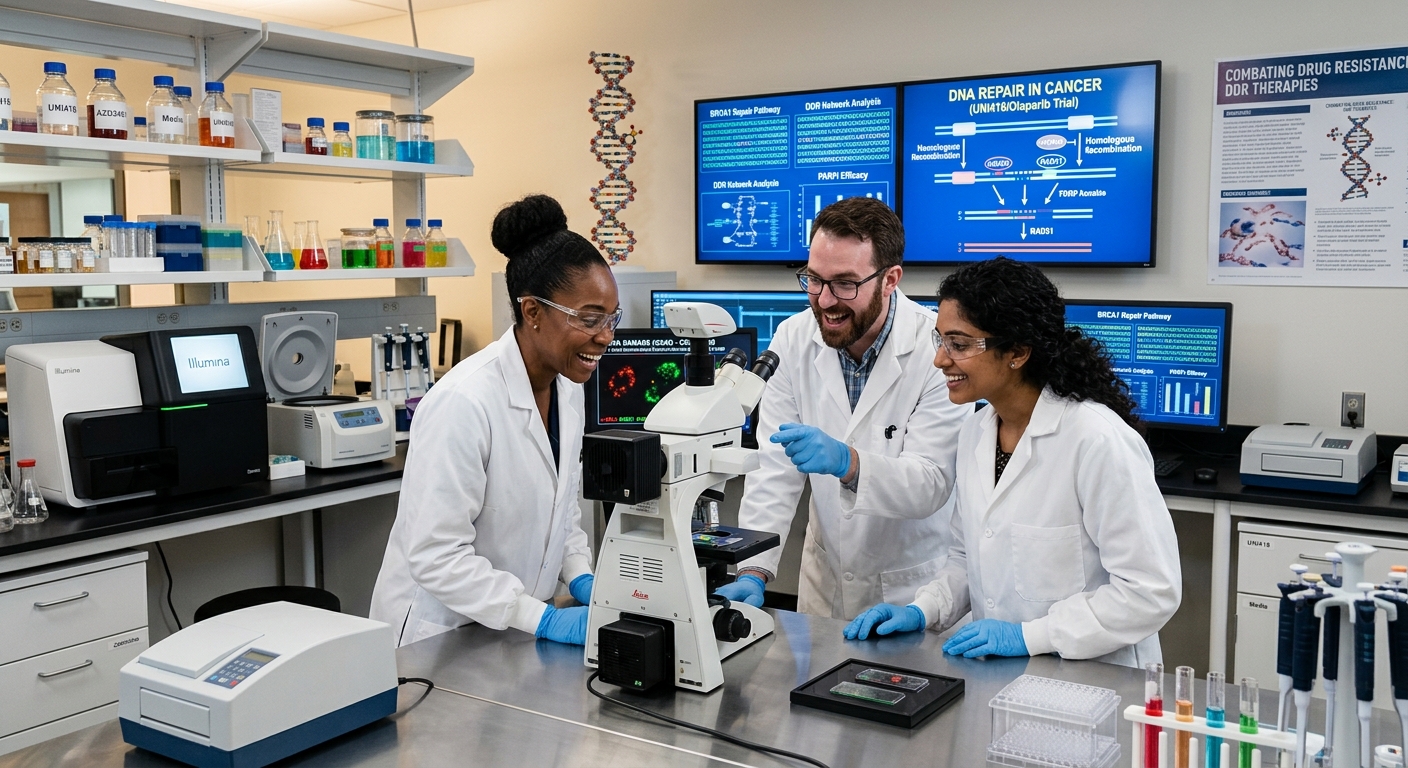
Researchers have identified UNI418 as an effective small molecule that disrupts the DNA repair processes in cancer cells. It targets critical HR proteins by activating the Cul4A ubiquitin ligase complex, leading to their degradation. This mechanism not only impairs cancer cells’ repair capabilities but also enhances the effectiveness of established treatments like the PARP inhibitor Olaparib, particularly in treatment-resistant cancers. This discovery opens up new pathways for developing targeted therapies that focus on overcoming drug resistance through disruption of DNA repair mechanisms.
Types of Cancer Targeted
Therapies targeting DNA repair mechanisms are being utilized across various cancer types, especially with PARP inhibitors and ATM kinase inhibitors. These treatments exploit vulnerabilities in cancer cells to enhance therapy effectiveness and manage drug resistance. In particular, breast, ovarian, and prostate cancers have benefited significantly from PARP inhibitors, leading to improved patient outcomes. Additionally, gliomas, leukemias, and other solid tumors are now being explored for their responses to these targeted therapies, showcasing the broad applicability of DNA damage response inhibitors.
Therapeutic Implications
Targeting DNA repair pathways represents a transformative approach in cancer therapy, especially in overcoming drug resistance. Inhibitors of key DNA repair proteins disrupt cancer cells’ ability to heal recurring DNA damage, thus significantly enhancing treatment responses to radiotherapy and chemotherapy. While PARP inhibitors have proven effective for HR-deficient tumors, ongoing research aims to understand and manage resistance mechanisms to optimize therapeutic strategies. The development of combination therapies that target multiple DNA repair pathways may further enhance treatment efficacy.
Clinical Applications and Protocols
DDR inhibitors have emerged as key therapeutic agents in oncology, particularly in cancers with known BRCA mutations. Ongoing clinical trials are refining their use by focusing on precision patient selection based on biomarkers that can predict treatment success. Despite promising results, managing the side effects associated with these inhibitors remains crucial in clinical settings, as the combination with chemotherapy can heighten risks. Continuous advancements in understanding drug interactions and toxicity profiles will help optimize protocols to enhance patient safety and effectiveness.
Safety and Adverse Effects
PARP inhibitors, while effective, come with common side effects like nausea and fatigue, primarily due to their mechanism of action. Hematologic toxicities, including anemia and thrombocytopenia, can lead to necessary dose adjustments during treatment. Understanding these safety profiles is vital for balancing treatment efficacy against potential adverse effects, ensuring patient well-being remains a priority throughout cancer therapy.
Impact and Reception
The breakthrough in disabling DNA repair mechanisms to combat drug resistance has garnered significant attention from the scientific community. This advancement is viewed as a critical step toward improving cancer treatment efficacy and reducing relapse rates. As a result, there is a growing emphasis on combining research efforts to develop novel therapies and understanding resistance mechanisms, which is essential for optimizing treatment protocols and improving long-term patient survival.
Future Directions
Future strategies in targeting DNA repair pathways involve developing next-generation DDR inhibitors that integrate seamlessly into standard treatment regimens. Emphasis on identifying biomarkers will allow for more personalized treatment approaches, ensuring patients receive the most appropriate therapies. Additionally, innovative combinations of DNA repair inhibitors with immunotherapy and other agents are being researched, with the goal of enhancing patient outcomes and overcoming therapy resistance effectively.
The content is provided by Sierra Knightley, Front Signals