
Summary
Unlocking the Mysteries: Understanding the Symbolism Behind Greek Mythology delves into the symbolic language of ancient Greek myths, reflecting on their impact on Western literature and culture. The study emphasizes the key symbols associated with various gods and heroes, illustrating how these symbols convey themes of divine power, human nature, and social values. Recognizing the myths as allegories for psychological and societal concerns enriches our understanding and highlights their relevance through time.
Historical Context
Greek mythology originated as a rich tapestry of stories about gods and heroes crafted by ancient Greeks. These myths adapted over time through the work of poets and dramatists, who reshaped narratives to align with evolving ideological and moral purposes. Notably, artistic representations played a crucial role in preserving these stories, reinforcing their connection to social status and shared cultural values, while interactions with neighboring civilizations influenced the incorporation of new deities and story elements.
Key Symbols in Greek Mythology
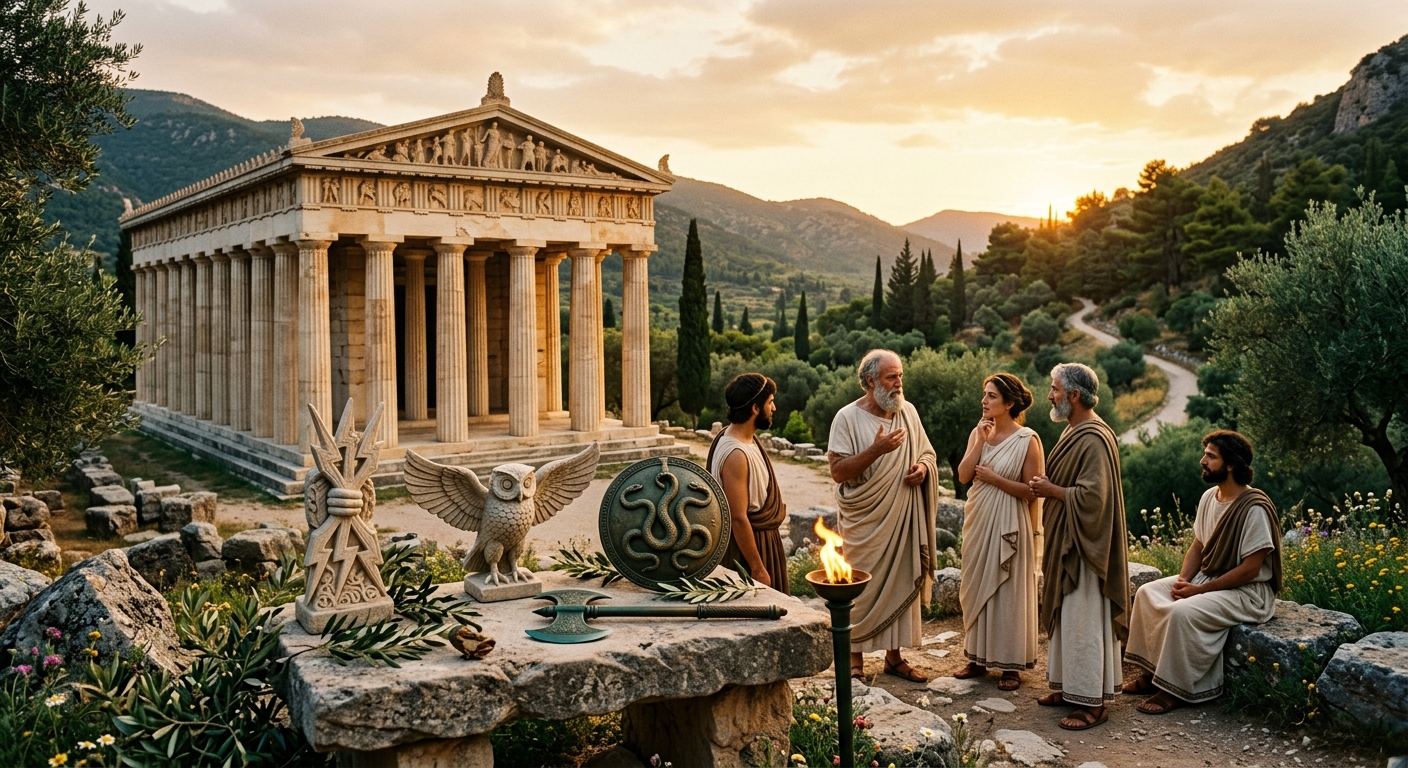
Symbols in Greek mythology identify deities while also representing deeper cultural meanings. Each Olympian god features symbols that reflect their divine roles. Zeus’s thunderbolt, Poseidon’s trident, and Hades’s Cerberus serve as powerful representations of their respective domains, while symbols of other gods, such as Athena’s owl or Dionysus’s grapevine, encapsulate wisdom, festivity, and divine protection.
Protective and Transformational Symbols
Many symbols in Greek mythology are associated with protection and transformation. The aegis, linked to Zeus and Athena, represents divine shielding and authority, while snakes signify renewal and hidden knowledge, particularly illustrated by the healing associations with Asclepius’s serpent-entwined staff. These representations embody key concepts of protection against chaos and the cyclical nature of life.
Ritual and Cultural Symbols
In addition to individual emblems, Greek mythology contains symbols with broader societal significance. The labrys, a double-headed axe, symbolizes divine authority and feminine strength, while the torch represents light and spiritual awakening, essential for understanding the divine order. These symbols contributed meaning to rituals and the cultural landscape of ancient Greece.
Symbolism and Interpretation
The symbolic depth of Greek mythology reveals insights into human nature and societal values. Myths explore themes of sacrifice, power, and the complexities of emotion, allowing for interpretations that address social and political concerns. Moreover, connections to modern psychological interpretations, such as those posited by Freud, illustrate how these ancient narratives continue to resonate in examining human behavior and ethics.
Impact on Literature and Art
Greek mythology has significantly shaped literature and art throughout history. Foundational texts like Homer’s epics profoundly influenced later literary works, while mythological themes were central in various artistic expressions, including pottery and sculpture. As these narratives evolved and adapted to fit new contexts, they retained their relevance, creating a lasting legacy that informs contemporary cultural and psychological insights.
The content is provided by Avery Redwood, Front Signals