Summary
Unveiling Tarot: Understanding Its Origins and Contemporary Appeal
Tarot cards began as 15th-century playing cards in northern Italy, evolving from entertainment to a significant cultural tool in art, psychology, and spirituality. The decks, like the Visconti-Sforza Tarot, initially reflected societal values and themes instead of mystical interpretations. Over time, tarot gained esoteric meanings largely influenced by French occultists in the 18th and 19th centuries, transitioning into a medium for personal growth and psychological exploration. Today, tarot is utilized globally for a variety of purposes, reflecting both its historical roots and modern cultural relevance.
Historical Origins
The intricate history of tarot cards is rooted in 15th-century northern Italy, particularly Milan, where they served as luxurious playing cards for the aristocracy. Early decks, such as the Visconti-Sforza, featured 22 trump cards introduced as a new element in card games. Originally designed for social entertainment, tarot imagery echoed themes from the cultural fabric of the time, including moral and social symbolism rather than occult meanings. As these decks spread throughout Europe, they developed along regional lines, leading to variations like the Tarot de Marseille.
Structure and Composition of Tarot Decks
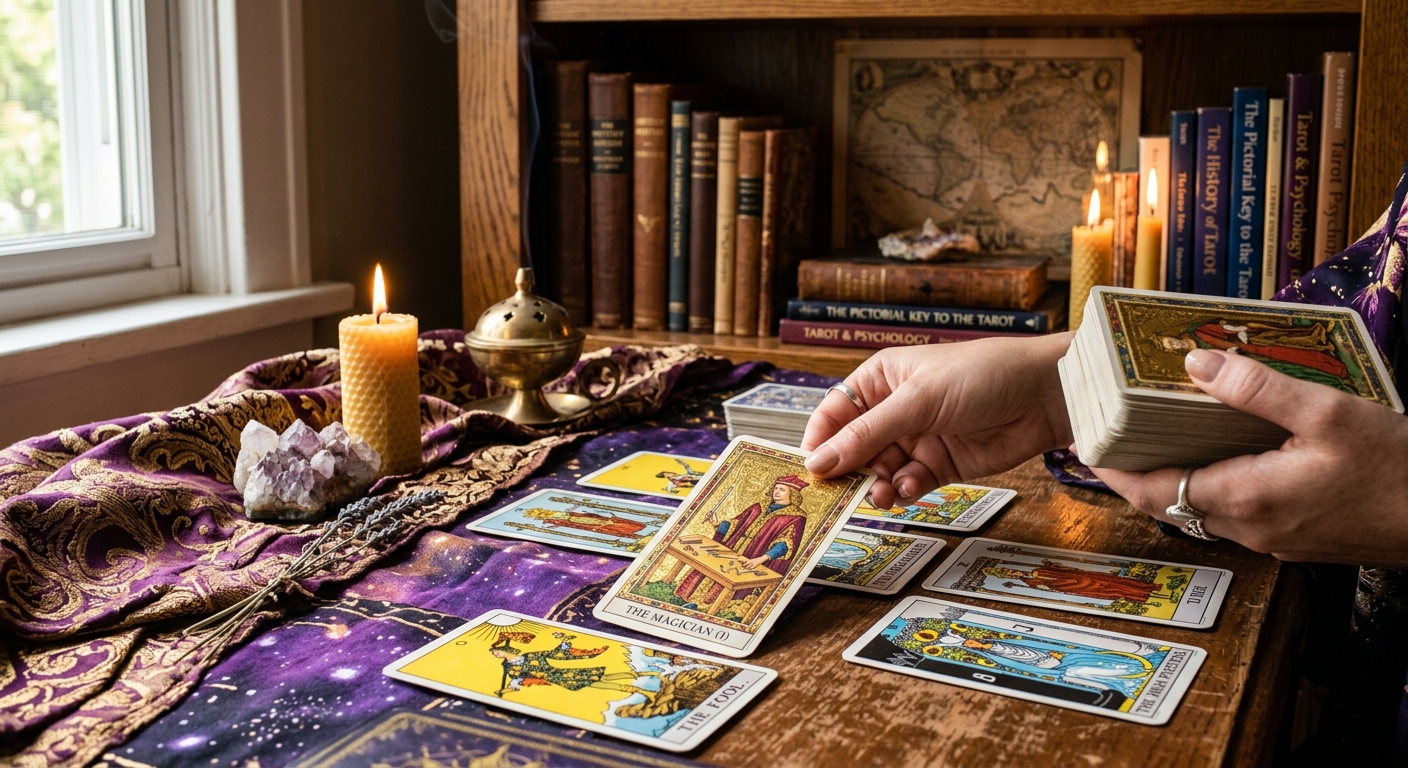
A tarot deck consists of 78 cards categorized into the Major Arcana and Minor Arcana, each serving distinct purposes. The Major Arcana contains 22 cards that embody key themes and spiritual lessons, while the Minor Arcana, made up of 56 cards in four suits, addresses everyday life aspects. Each suit, representing elements like fire and water, retains a historical connection to earlier European card games, illustrating the deck’s evolution and adaptability, providing a framework for various applications today.
Evolution of Tarot Iconography and Symbolism
The imagery of tarot cards has transformed since their inception, with early decks rich in Renaissance cultural symbolism. Over time, particularly in the 20th century with the Rider-Waite deck, these symbols began to reflect deeper psychological and spiritual insights, moving beyond mere gaming. Modern interpretations, influenced by psychological theories such as Jungian analysis, have led to the evolution of tarot as a reflection of personal growth and self-understanding, with new decks and themes continuing to emerge in diverse cultural contexts.
Transition from Playing Cards to Divination Tools
The shift from tarot as a gaming tool to a tool for divination began in the 18th century, fueled by claims of ancient wisdom that transformed its perception. Figures like Antoine Court de Gébelin and Jean-Baptiste Alliette reimagined tarot cards as mystical instruments associated with personal insight. This transition solidified in the early 20th century, with tarot becoming intertwined in esoteric practices, ultimately establishing its position not just as a fortune-telling method but also as a guide for personal discovery and transformation.
Esoteric and Mystical Frameworks in Tarot
Tarot’s significance is enhanced by various esoteric traditions, particularly Hermetic philosophy, which perceives the cards as symbols connecting to broader existential questions. Pioneers such as Éliphas Lévi linked tarot to Hebrew letters and mystical systems, reinforcing its role in spiritual exploration. The incorporation into organizations like the Hermetic Order of the Golden Dawn further formalized its use in magic and personal development, establishing a complex understanding of tarot beyond its initial playing card origins.
Cultural and Psychological Significance
Historically, tarot reflects the socio-political milieu of Renaissance Italy, evolving into a significant tool for psychological insight and spiritual growth. While initially a status symbol, tarot’s imagery has adapted over centuries to serve as a medium for exploring personal and collective narratives. Its flexibility enables individuals to derive personal meaning, allowing tarot to remain relevant across diverse contexts and contemporary practices.
Modern Usage and Practices
Today, tarot cards are widely recognized for their applications in divination, personal development, and spiritual exploration. Many contemporary readers engage with the rich symbolism of tarot, and the diversity of new and reimagined decks reflects changing cultural narratives and personal interpretations. This evolution underscores tarot’s ongoing relevance, highlighting its role as a dynamic tool for understanding oneself and the world.
Criticism, Skepticism, and Misconceptions
Debate surrounds the history and interpretation of tarot cards, particularly concerning their connections to Renaissance Hermeticism. Critics highlight the chronological discrepancies that challenge claims of ancient mystical origins and suggest that the evolving interpretations often reflect modern biases. Misconceptions about the symbolism, particularly regarding certain cards like The Devil, further demonstrate how cultural contexts have shaped tarot’s meanings over time. Ultimately, both admiration and skepticism stem from tarot’s adaptability and the complex interplay of its historical facts and mystical interpretations.
The content is provided by Avery Redwood, Front Signals