
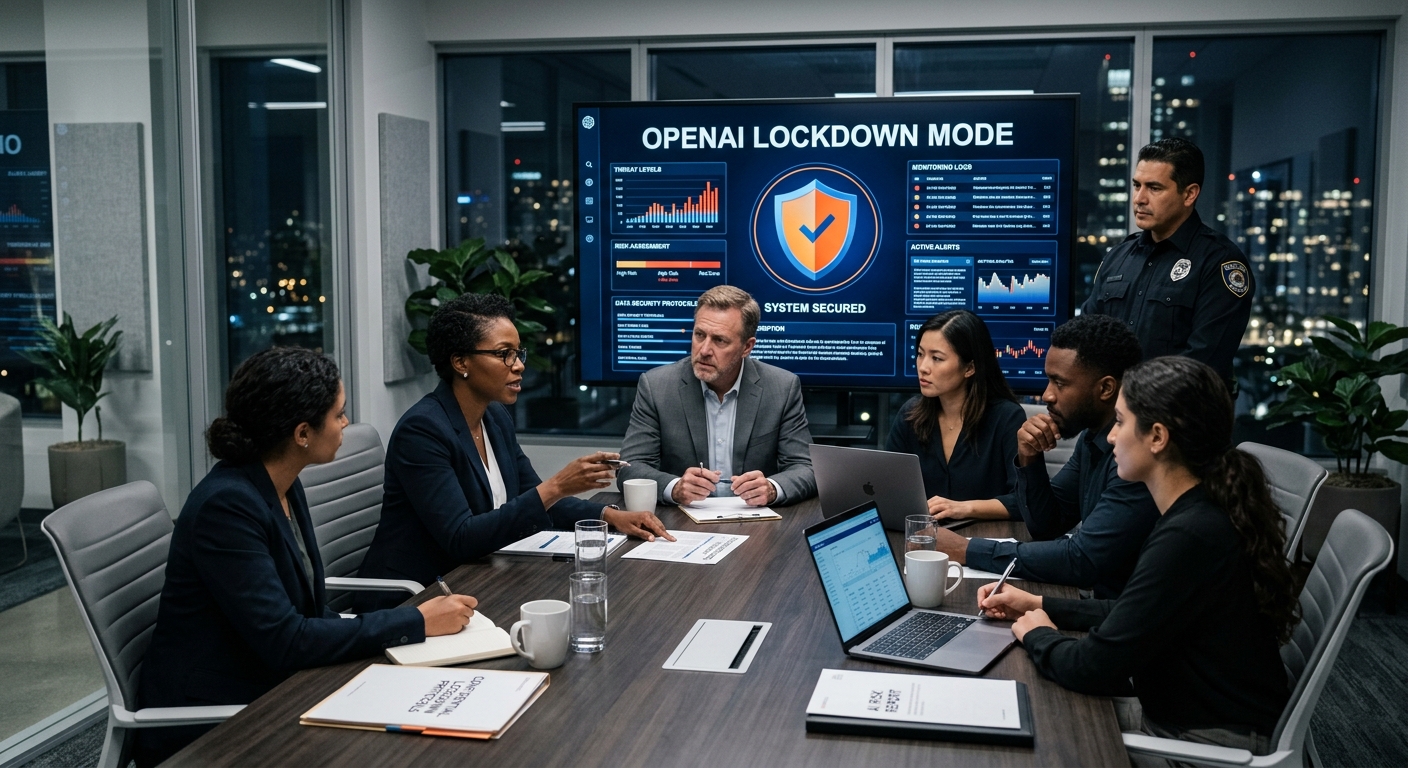
Summary of Lockdown Mode
OpenAI’s Lockdown Mode is an essential security feature aimed at protecting sensitive data from prompt injection attacks, a growing threat in AI. These attacks manipulate large language models (LLMs) like ChatGPT to disclose unauthorized information or create operational risks. With the integration of AI into more data-driven applications, Lockdown Mode serves to minimize risks by disabling certain functionalities that external threats could exploit, focusing on high-risk users, such as corporate executives or security personnel.
Understanding Prompt Injection Attacks
Prompt injection attacks manipulate the AI’s intended instructions, posing risks that can result in unauthorized data exposure. They can occur directly through user inputs or indirectly via hidden prompts in processed content. The complexity of these attacks is exacerbated by the way LLMs process unnatural language text, which allows malicious actors to exploit vulnerabilities in user interactions and external data sources.
How Lockdown Mode Protects Users
Lockdown Mode restricts various features in ChatGPT to prevent attackers from exfiltrating sensitive data. Key limitations include disabling live web browsing and certain integrations, significantly reducing potential attack vectors. Additionally, it works alongside enterprise-grade security measures like role-based access and monitoring to enhance overall data protection, ensuring only trusted applications are accessible under this mode.
Ongoing Security Challenges
While Lockdown Mode provides additional security, prompt injection remains a considerable challenge due to its evolving nature. Continuous updates and innovations in security strategies are necessary to address these risks. Effective mitigation also demands a layered approach, incorporating user training and strict controls to enhance AI security comprehensively.
Deployment and User Access
Lockdown Mode is being gradually rolled out to users who handle sensitive information, starting with personal and self-serve business accounts. Administrators can manage user access by creating specific roles to enforce security measures. This deployment aims to balance usability with heightened security in environments that utilize AI for sensitive tasks.
Reactions and Implications
The introduction of Lockdown Mode has been largely welcomed for enhancing user security but not without criticism. Experts note that while the feature adds substantial protections, it does not fully resolve intrinsic vulnerabilities associated with prompt injections. The importance of combining this technical safeguard with user education and policy frameworks is emphasized, as proper training can enhance the effectiveness of existing defenses against potential threats.
Future Enhancements
OpenAI plans to expand Lockdown Mode’s accessibility while also enhancing its functionality for better security. Future developments will include broader availability to different user tiers and additional security features. OpenAI acknowledges the continual threat posed by evolving attack techniques and the necessity for an informed user base equipped to handle potential risks when utilizing AI technologies.
The content is provided by Jordan Fields, Front Signals