Summary
Tarot cards, originating in 15th-century Italy, transitioned from elite gaming tools to instruments of divination and self-exploration. The standard deck features 78 cards, including the Major Arcana, representing universal themes, and the Minor Arcana, which consists of four suits highlighting various life aspects. Notable decks, such as the Rider-Waite-Smith and Thoth, merge artistic innovation with psychological insights, broadening tarot’s appeal beyond mere fortune-telling to encompass personal development and reflection.
History
Initially created as playing cards for the elite, early tarot decks like the Visconti-Sforza featured intricate designs reflecting Renaissance ideals. Over time, tarot expanded across Europe, with the Tarot of Marseille becoming prominent in France. By the 18th century, tarot began to be associated with mysticism, largely due to writings claiming ancient origins and linking it to secret societies. This made it a serious esoteric tool, further developed in the 19th century, reflecting shifts towards psychological interpretations in the 20th century.
Structure and Components
A traditional tarot deck consists of 78 cards: 22 in the Major Arcana and 56 in the Minor Arcana. Major Arcana cards symbolize key spiritual lessons, while Minor Arcana suits—Swords, Cups, Pentacles, and Wands—represent various aspects of life and societal hierarchies. Each card’s depiction has evolved, with modern decks like the Rider-Waite-Smith enriching symbolic narrative through detailed illustrations, making readings more accessible and intuitive.
Symbolism and Interpretation
Tarot symbolism is infused with historical and cultural contexts, mirroring societal themes and beliefs of different eras. Early decks reflected Christian virtues while later interpretations incorporated esoteric systems, making tarot a tool for mystical exploration. The Rider-Waite-Smith and Thoth decks present varied yet rich symbolic frameworks, demonstrating that interpretation is influenced both by the deck’s design and the context of the reading, with upright cards often conveying positivity and reversed cards indicating challenges.
Methods of Reading
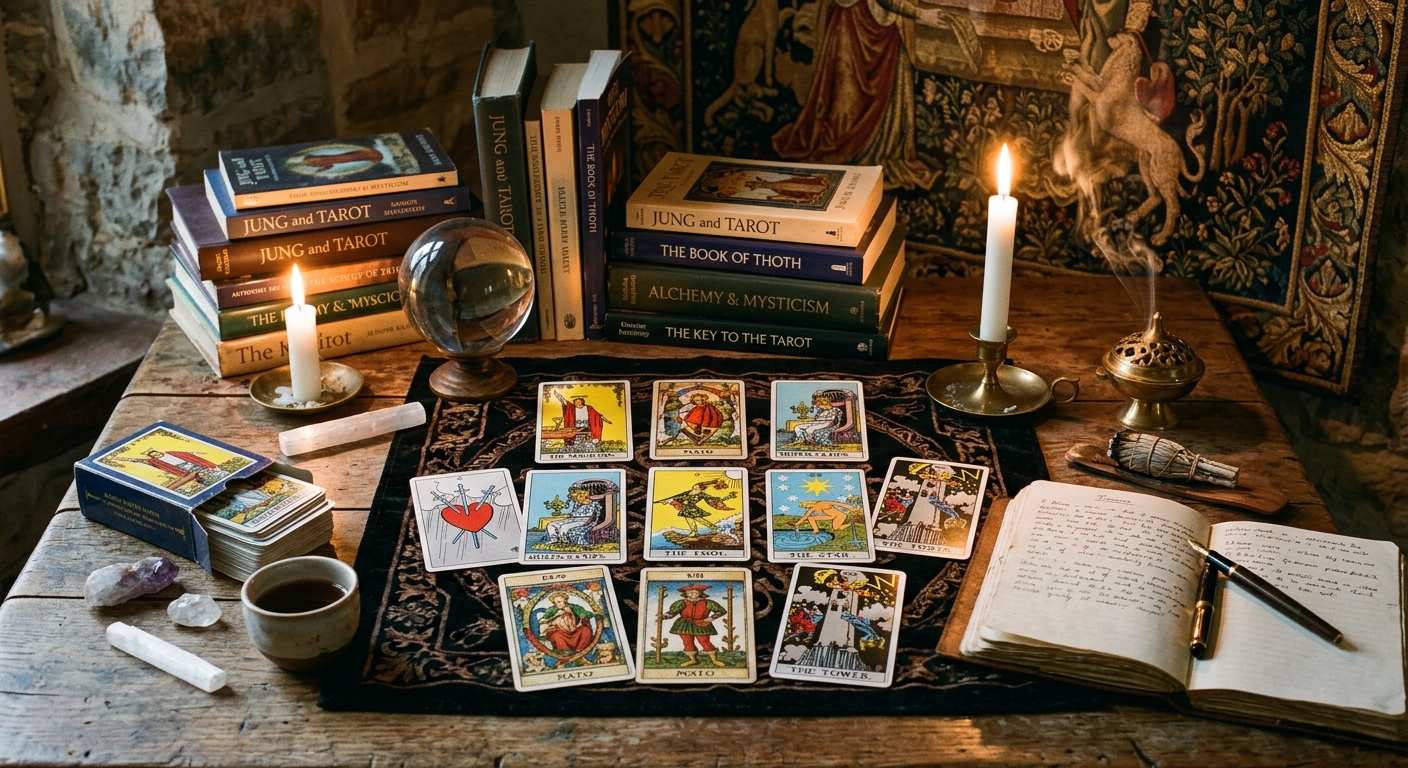
Methods for reading tarot cards range from simple to complex spreads tailored to specific queries. A beginner-friendly three-card spread addresses past, present, and future influences, while more detailed layouts like the five-card spread delve into specific life aspects with deeper analysis. Readers may rely on card symbolism and interpretive frameworks, with the chosen deck impacting the style and depth of insights during readings.
Contemporary Uses
Modern tarot has evolved into a multi-faceted tool for personal and spiritual growth. Many users now regard tarot cards as mirrors of personal experiences rather than merely predictors of fate. A variety of themed decks cater to diverse interests, allowing users to engage with the cards in ways that resonate deeply with their goals, whether for psychological exploration, healing, or general insight.
Criticism and Skepticism
Historically, tarot cards have faced skepticism, particularly regarding their origins, with some arguing that their primary function was as gaming cards before their association with divination emerged. Historians emphasize the constructed nature of many esoteric interpretations linked to tarot, underlining a tension between scholarly perspectives and popular beliefs regarding tarot’s historical significance and applications.
Collecting and Artistry
Beyond divination, tarot cards are valued for their artistic and historical significance. Early decks featured rich hand-painted imagery reflective of their time, evolving stylistically through various periods. Today, the tarot landscape encompasses numerous thematic decks, enabling collectors to choose visually and conceptually appealing cards that enhance their readings and personal insights.
The content is provided by Harper Eastwood, Front Signals