
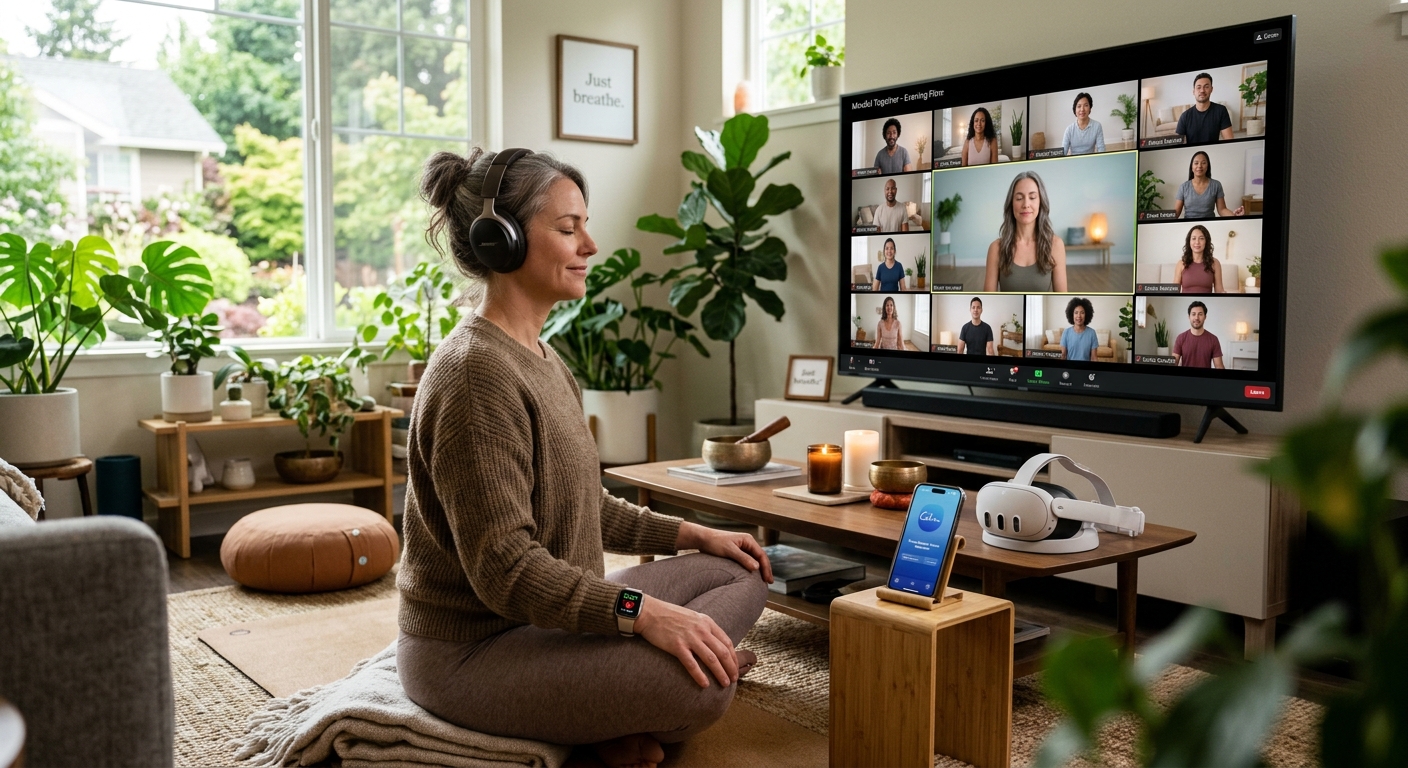
Market Overview
The U.S. meditation market has rapidly grown into a $24 billion industry, projected to reach approximately $33.82 billion by 2033 with a CAGR of 18.5%. This growth is largely driven by increasing awareness of mental health and wellness, highlighted by soaring demand for accessible meditation tools, including mobile applications and online platforms. The shift to digital services has made meditation more convenient, catering to diverse user needs and enhancing engagement through emerging technologies.
Digital platforms, especially meditation apps, are forecasted to hit a market size of $27.51 billion by 2030, growing at a remarkable 23.3% CAGR. This trend underscores the integration of AI and virtual reality, which enhance user experiences and drive market adoption across varied demographics. Furthermore, corporate wellness programs have begun incorporating these technologies, reflecting the increasing acceptance of meditation as a standard practice for employee mental health support.
Technological Innovations Driving Growth
The integration of technology, including AI and VR, is transforming how meditation services are designed and consumed. AI enables personalized sessions that adapt to users’ preferences, while VR offers immersive environments that enhance focus and engagement during meditation. This combination allows for real-time biofeedback and personalized guidance that optimizes user experiences and reinforces meditation practices.
Moreover, mobile technology has surged as the primary access point for users, bolstered by the demand for telehealth services during and after the COVID-19 pandemic. Virtual options have not only made meditation more accessible but have also created community dimensions through digital rituals and practices that connect individuals beyond geographical boundaries.
Effectiveness and Clinical Evaluations
Clinical studies increasingly support the effectiveness of virtual meditation, showing significant improvements in mental health symptoms such as stress and anxiety. Meta-analyses have revealed that mindfulness programs delivered through virtual platforms yield tangible benefits across diverse demographics, reinforcing the value of digital meditation interventions. Immersive technologies like VR have shown promise in facilitating meditation adoption, especially among beginners, by enriching the engagement and adherence to practices.
Ongoing evaluations highlight the need for standardized methodologies to ensure reliable outcomes and enhance the credibility of virtual meditation services. Attention to design, such as creating soothing virtual environments, further amplifies the therapeutic effects, making innovative meditation platforms critical in modern mental health care.
Demographic and Consumer Trends
Current user demographics reveal a predominance of highly educated, middle-aged females, primarily in Western states. However, younger generations show a higher engagement with digital meditation tools such as apps, demonstrating a shift in user profiles. Economic factors, like income levels and employment stability, affect consumer spending on meditation services, underscoring the importance of tailoring offerings to diverse populations.
The COVID-19 pandemic has also accelerated the transition from in-person to virtual meditation services, making practices more accessible for varied demographics. Understanding these trends helps in addressing inequities and improving engagement in meditation offerings across different consumer segments.
Ethical Considerations in Digital Meditation
The expansion of virtual meditation services raises significant ethical considerations regarding privacy, consent, and data ownership. As technology integrates deeper into the meditation landscape, addressing users’ rights and ensuring equitable access to services becomes paramount. Ongoing discussions around the ethical use of digital platforms ensure that meditation practices remain respectful of traditions and culturally sensitive to diverse populations.
As immersive technologies evolve, the need for regulatory frameworks to protect users while encouraging innovation becomes critical. Balancing these ethical imperatives with the growing demand for mental health solutions will shape the future landscape of the meditation market.
Future Outlook and Trends
The U.S. meditation market is expected to see substantial growth driven by technological advancements that enhance user experience. This includes ongoing developments in AI and community-driven practices that boost motivation and adherence. Innovations are poised to redefine the landscape by personalizing meditation experiences and making mental health support even more accessible.
Future trends will likely focus on integrating community-oriented solutions and refining digital wellness strategies. By anticipating consumer needs and leveraging emerging technologies, the meditation market can adapt to evolving mental health challenges, solidifying its role as a vital component of holistic well-being.
The content is provided by Harper Eastwood, Front Signals