
Unlocking Symbolism in Greek Mythology
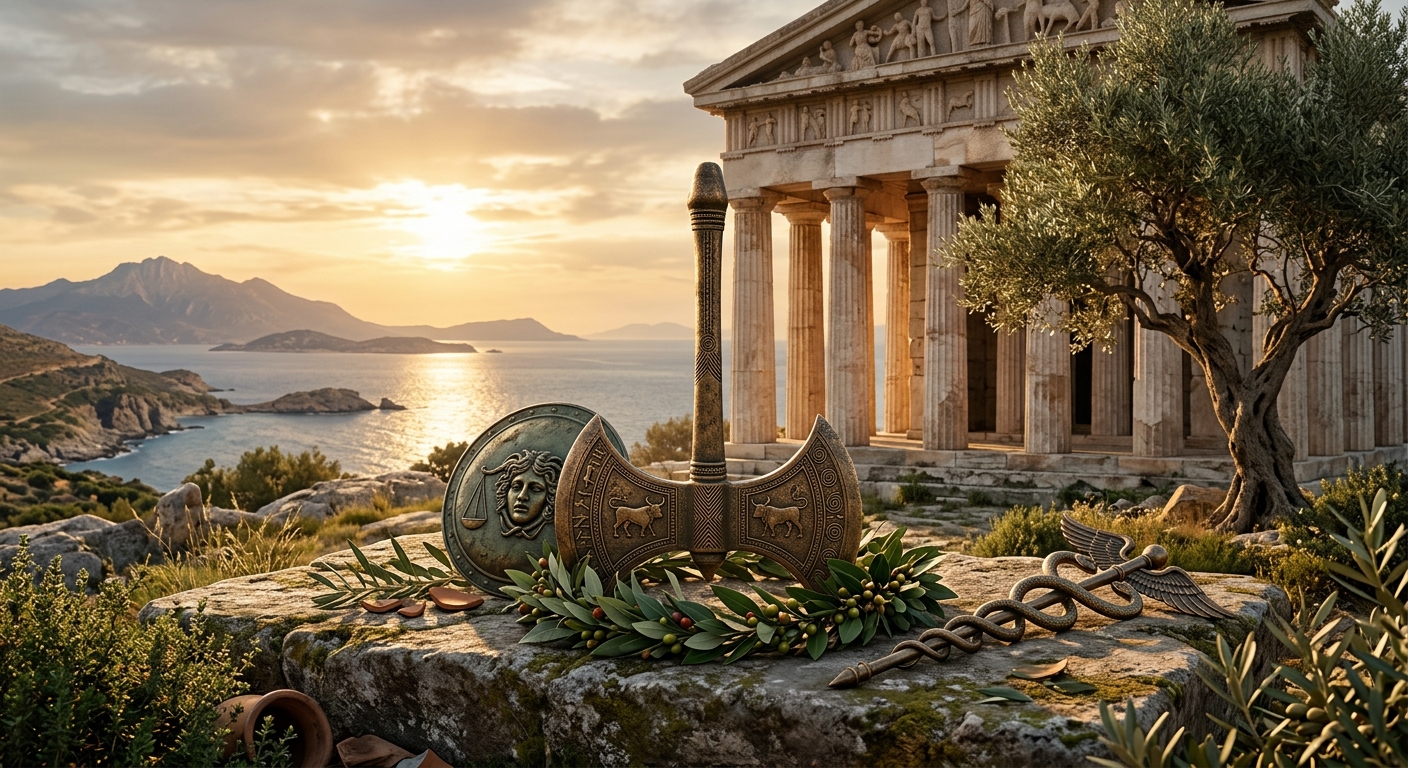
Greek mythology is rich with symbols that articulate complex ideas about power, morality, and the human experience. Objects like the labrys (double-headed axe) and figures such as Hermes’s caduceus serve not only as storytelling devices but also as connectors to divine attributes and societal values. Understanding these symbols is key to deciphering ancient narratives and cultural practices, which evolved over centuries and reflect significant philosophical and psychological dimensions.
The Importance of the Labrys
The labrys emerges as a leading symbol in Greek mythology, signifying female spiritual authority and duality. This symbol, originating from Minoan civilization, illustrates how early cultures influenced later Greek traditions. Recognizing its role in rituals and as a representation of fertility can provide insights into the gender dynamics and cultural exchanges of the Aegean Bronze Age.
Significant Symbols in Mythology
The pantheon of Greek mythology features various symbols, such as Apollo’s laurel wreath, Zeus’s aegis, and the protective torch associated with Helios. Each of these symbols embodies distinct values—achievement, authority, and guidance—while serving functional roles in religious practices. As such, they played an integral part in articulating the beliefs and narratives of ancient Greeks, influencing art and culture over time.
Symbols in Religious Rituals
In ancient Greece, symbols were fundamental to religious rituals and cult practices. Their presence in sacrifices and festivals underscored the Greeks’ belief in the gods’ profound influence on their lives. Priests and priestesses utilized these symbols to bridge the divine and the mortal realms, facilitating shared understanding and communal identity among worshippers.
Interpretations and Evolving Meanings
Interpretations of mythological symbols have transformed across centuries, reflecting philosophical and cultural shifts. Early allegorical readings viewed myths as moral lessons, gradually evolving into complex analyses that consider social, political, and psychological contexts. Current scholarship continues to explore these meanings, revealing a rich tapestry of insights that enhance our understanding of ancient Greek society.
Regional Variations in Symbols
Symbols in Greek mythology adapted over time and exhibited regional variations. Local cults and deities emerged alongside the major Olympians, demonstrating how cultural exchanges influenced symbolic interpretations. The labyrinth, for example, transcends its narrative origins to encapsulate themes of self-discovery, showcasing the dynamic nature of myth and its symbols throughout differing locales.
Artistic Representation and Material Culture
Ancient Greek art vividly expressed mythological symbolism, merging visual storytelling with cultural and religious significance. Key attributes of deities, such as Poseidon’s trident, became recognizable markers that reinforced the divine presence within everyday Greek life. These artistic representations not only conveyed worship but also solidified the shared beliefs binding ancient communities.
Lasting Legacy and Comparative Perspectives
The symbolism of Greek mythology has influenced diverse fields, from philosophy to art. Modern analytical frameworks reveal layered meaning and help dissect the dualities presented in myths. This nuanced understanding broadens the appreciation of mythological symbols, reflecting an interplay of cultural values and the human condition rather than a simple categorization of themes.
The content is provided by Jordan Fields, Front Signals