
Summary
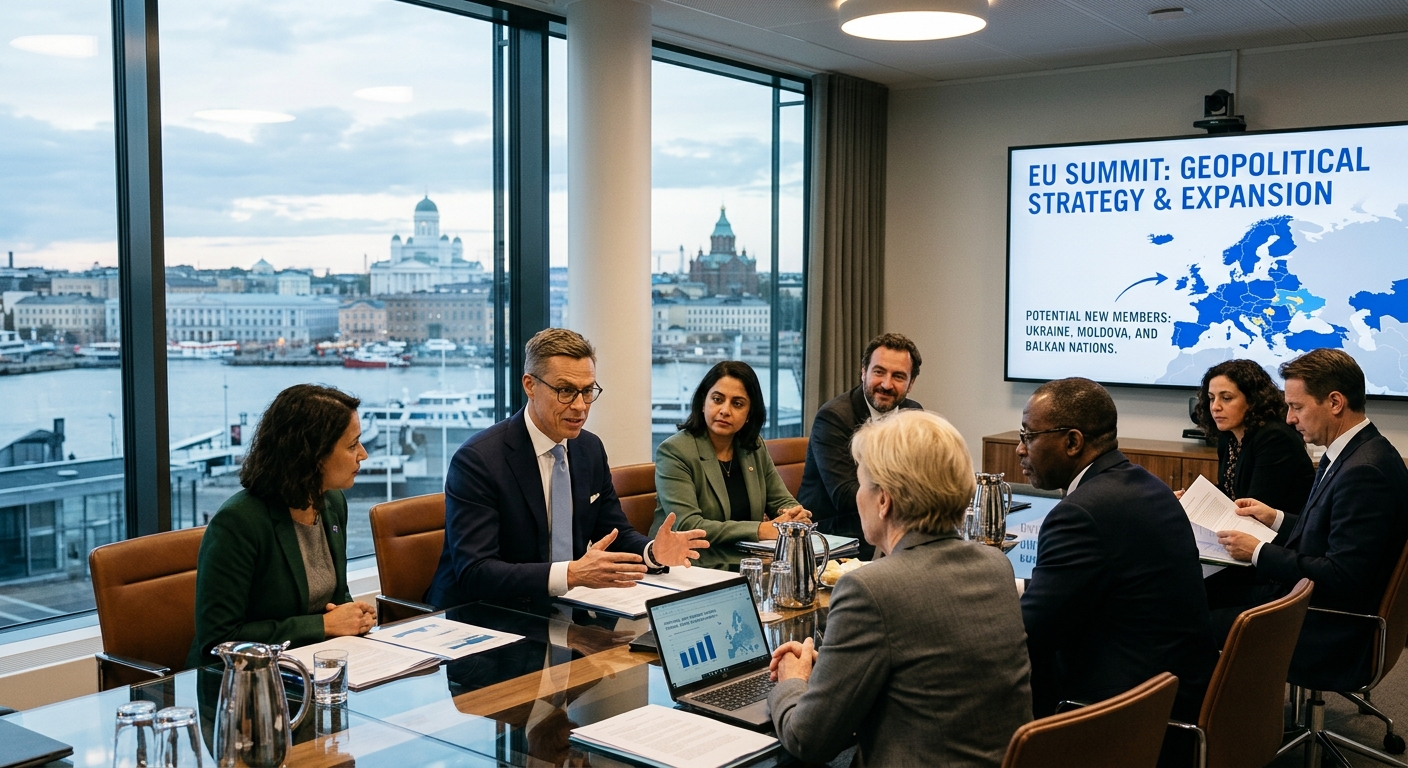
Finnish President Alexander Stubb’s proposal to enlarge the European Union (EU) from 27 to as many as 40 members, including countries like Canada, aims to enhance European integration and strengthen the EU’s global influence amid geopolitical uncertainties, particularly due to Russia’s actions in Ukraine. This approach supports a flexible integration model that accommodates varying readiness levels among prospective members, highlighting the importance of bringing in nations from the Western Balkans, Eastern Europe, and the Nordic region. Stubb’s vision challenges traditional boundaries of membership and underscores the need for a modernized strategy to adapt to evolving global dynamics.
Current Enlargement Context
As the EU faces its largest enlargement in recent years, with nine candidate countries seeking membership, the geopolitical landscape has driven this push—particularly the implications of Russia’s actions in Ukraine. Historical commitments to integrate Western Balkan countries and the potential inclusion of Ukraine and Moldova represent a continued emphasis on expanding EU unity. Stubb’s ambition emphasizes reinforcing ties with existing European nations while suggesting broader membership that includes strategic partners like Canada, which could reshape the EU’s approach and influence on the global stage.
Flexible Integration Model
Stubb’s proposal suggests a flexible model of integration with a conceptual framework comprising full EU members, associated countries, and a broader political community. This model addresses the varying readiness of prospective members and offers tailored membership options while promoting resilience across the continent. With potential candidates like Montenegro, Albania, and Ukraine, this vision incorporates a broader geographical scope, enabling the EU to adapt effectively to 21st-century challenges, including defense and economic security.
Political Landscape and Public Sentiment
The proposal has sparked mixed reactions in Finland, where the political environment is split between pro-EU and Eurosceptic factions. Support has come from parties like the National Coalition Party, advocating for a bold vision, while the Finns Party raises concerns about national sovereignty amidst cautious public sentiment toward significant EU expansion. This divided landscape reflects both optimism for enhanced security and wariness about the complexities of integrating a wider range of nations.
Legal Considerations for Expansion
Institutional and legal challenges accompany the ambitious push for expansion, as current treaties impose geographical limits on EU membership. Finland’s framework advocating flexible integration explores utilizing existing treaty mechanisms to manage diversity among members and expedite decision-making processes. However, potential candidates must align with the criteria established by Article 49 of the Treaty on European Union, raising questions about how non-European states can be included without legal reforms.
International Cooperation Frameworks
The EU has already established frameworks to enhance collaboration with non-European countries through research initiatives like Horizon Europe. This program enables equal participation among EU and associated nations, fostering international partnerships in research and innovation. Despite the limitations on membership, these cooperative arrangements illustrate the EU’s commitment to global collaboration even as it adheres to its foundational treaties regarding membership criteria.
Geopolitical and Economic Implications
This proposed expansion carries substantial geopolitical and economic implications, positioning the EU to better respond to global challenges and shifting dynamics, such as Russia’s aggression. The enlargement seeks to bolster the EU’s internal market capabilities and foster security cooperation with new members, potentially enhancing resilience against economic or security threats. A tailored integration approach for new nations could streamline accession processes and strengthen economic collaboration.
Future Outlook and Institutional Reform
Looking ahead, the proposal envisions revisions to the EU’s institutional architecture to adapt to expanded membership, with reforms aimed at enhancing democratic governance and operational efficiency. By exploring options for deeper collaboration, like broader participation in research programs, the EU can position itself as a key player in global governance. Successful expansion will require innovative political leadership, balancing flexibility with cohesive governance mechanisms to navigate the complexities of a larger, more diverse union.
The content is provided by Sierra Knightley, Front Signals