
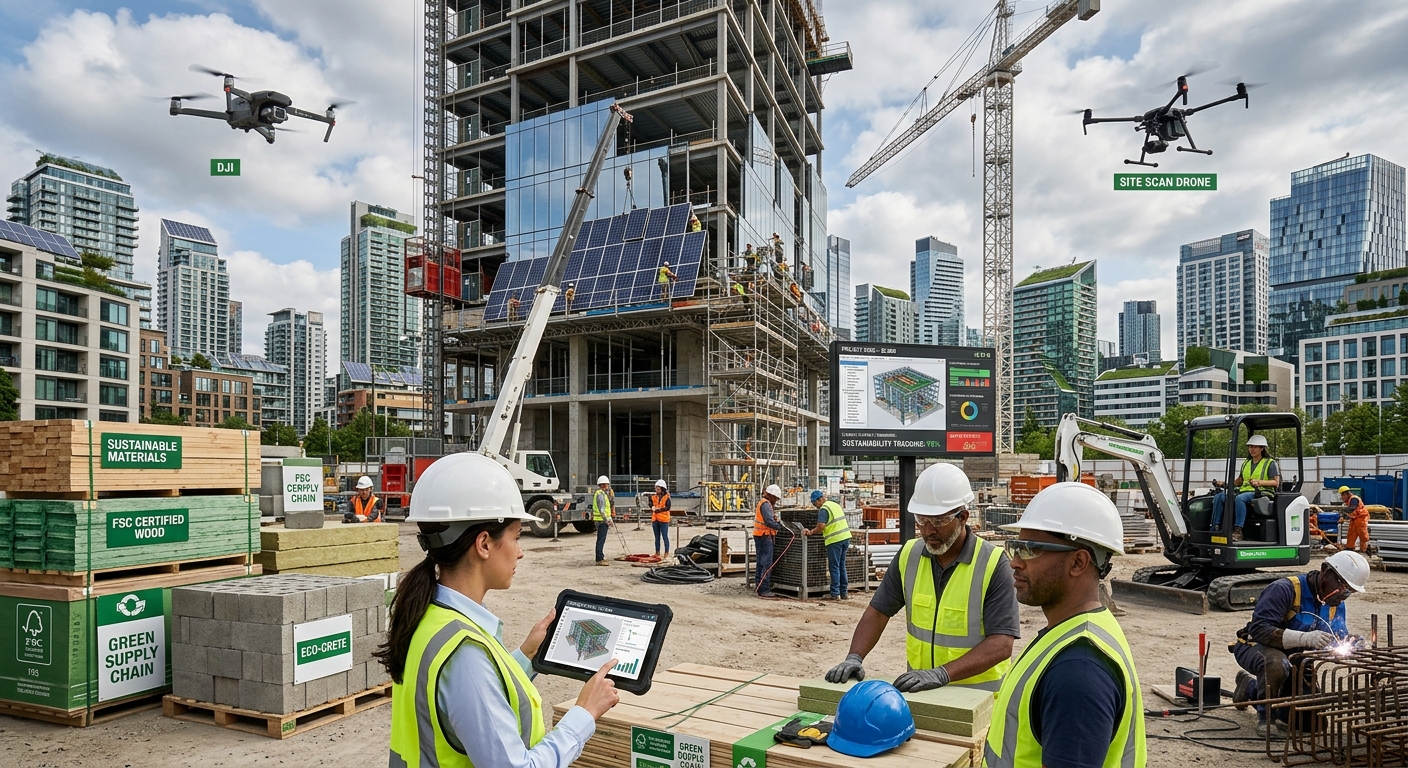
Summary of Industry Transformation
Construction supply is experiencing a significant shift due to advanced digital technologies and sustainability demands. Key innovations, such as digital supply chain management, BIM, AI, IoT, and blockchain, are redefining material sourcing and project management. While these technologies promise greater efficiency and transparency, they also highlight challenges, particularly for small and medium-sized enterprises (SMEs) amidst ongoing supply chain disruptions and rising costs.
The economic implications of adopting sustainable practices are substantial, offering long-term savings but requiring upfront investment. Firms must navigate market growth in green technologies while addressing skill gaps and ensuring project timelines are met. Ongoing concerns about data transparency and equitable access underscore the complexity of these changes in achieving an optimized construction supply chain.
Adapting to Digital Supply Chain Innovations
The construction supply chain is evolving as companies adopt digital management systems that automate and streamline processes, significantly improving project timelines and cost efficiency. BIM greatly enhances collaboration among stakeholders, facilitating real-time project tracking and logistics while blockchain ensures secure transactions.
IoT integration offers real-time monitoring of resources, automating procurement through smart contracts to reduce administrative burdens. Despite these benefits, many construction firms face obstacles in fully adopting these digital solutions, necessitating ongoing research and targeted implementation strategies to improve supply chain effectiveness.
Stakeholder Adaptations and Impacts
As construction practices evolve, stakeholders like suppliers, contractors, and the workforce must adapt to new technologies. Suppliers are leveraging smarter technologies to ensure timely delivery and inventory control, while contractors increasingly rely on digital tools for productivity and decision-making. The ongoing labor shortage presents challenges, but technology can help streamline operations and attract new talent.
The interplay among stakeholders highlights the need for efficient collaboration and integration throughout the supply chain. By embracing these advancements, industry players can enhance project outcomes and address environmental pressures more effectively.
Economic Shifts and Sustainability Drivers
The construction sector is shifting towards circular supply chains that prioritize sustainability and resource efficiency. Innovative strategies not only reduce emissions but also align economic benefits with environmental performance, fostering long-term profitability. However, the industry grapples with market challenges such as rising material costs, which complicate transitions toward greener practices.
While the demand for green building materials continues to grow, firms must also overcome obstacles related to regulatory compliance and accurate emissions accounting to fully realize their potential. This alignment of sustainability and economic outcomes is crucial as companies strive for efficiency and resilience in a changing marketplace.
Enhancing Supply Chain Resilience
Risk management in construction has become essential as the industry contends with material delays and other disruptions that can significantly impact profits. Adoption of AI and IoT technologies enables continuous monitoring and predictive analytics, providing insights to mitigate risks and improve decision-making throughout the supply chain.
Despite these advancements, true resilience requires comprehensive strategies that address data integration and stakeholder coordination. Transitioning to digital supply chains can optimize logistics and enhance operational efficiency, but significant barriers to adoption still exist.
Collaboration via Digital Platforms
Digital platforms are central to enhancing collaboration among construction supply chain participants, ensuring transparent communication and streamlined project workflows. These tools foster a coherent approach to project management while reducing errors and improving efficiency across various stakeholders.
Successful integration relies on establishing a shared technological framework that supports sustained engagement among all contributors. With improved access to critical data, the construction industry can adapt better to challenges and leverage new opportunities for growth.
Innovations Reshaping Operations
The integration of IoT and digital twins is transforming the construction landscape, allowing for enhanced monitoring and efficiency across lead times and resource management. Cloud-based workflows are becoming essential for real-time collaboration, although challenges remain regarding fragmented systems that hinder performance.
AI and machine learning are optimizing procurement and scheduling, enabling smarter decision-making while reducing dependency on manual labor. Innovations aimed at sustainability also promise substantial reductions in carbon emissions, adding to the momentum for change in construction practices.
Strategic Future Outlook
Looking ahead, the construction industry will continue to be shaped by technologies and sustainability imperatives. Companies that strategically manage resources and leverage legislative incentives are better positioned to capitalize on growth opportunities, particularly through enhanced digital competencies.
As the industry embraces digital tools and practices, workforce adaptation will be critical to mitigating labor shortages. Innovations in materials and methods are not only vital for meeting immediate demands but also for promoting sustainability in construction practices.
Challenges and Limitations Affecting Transformation
Despite the potential for transformation, the construction supply chain faces significant hurdles, including the need for real-time data to drive effective decisions on carbon reduction. Fragmentation among stakeholders complicates integration, making it essential to develop coherent strategies for leveraging digital platforms.
Moreover, economic pressures from rising material costs pose further challenges. The industry’s slow uptake of advanced technologies limits progress, emphasizing the need for sustained investment in skills and resources to support efficient construction practices going forward.
The content is provided by Jordan Fields, Front Signals