
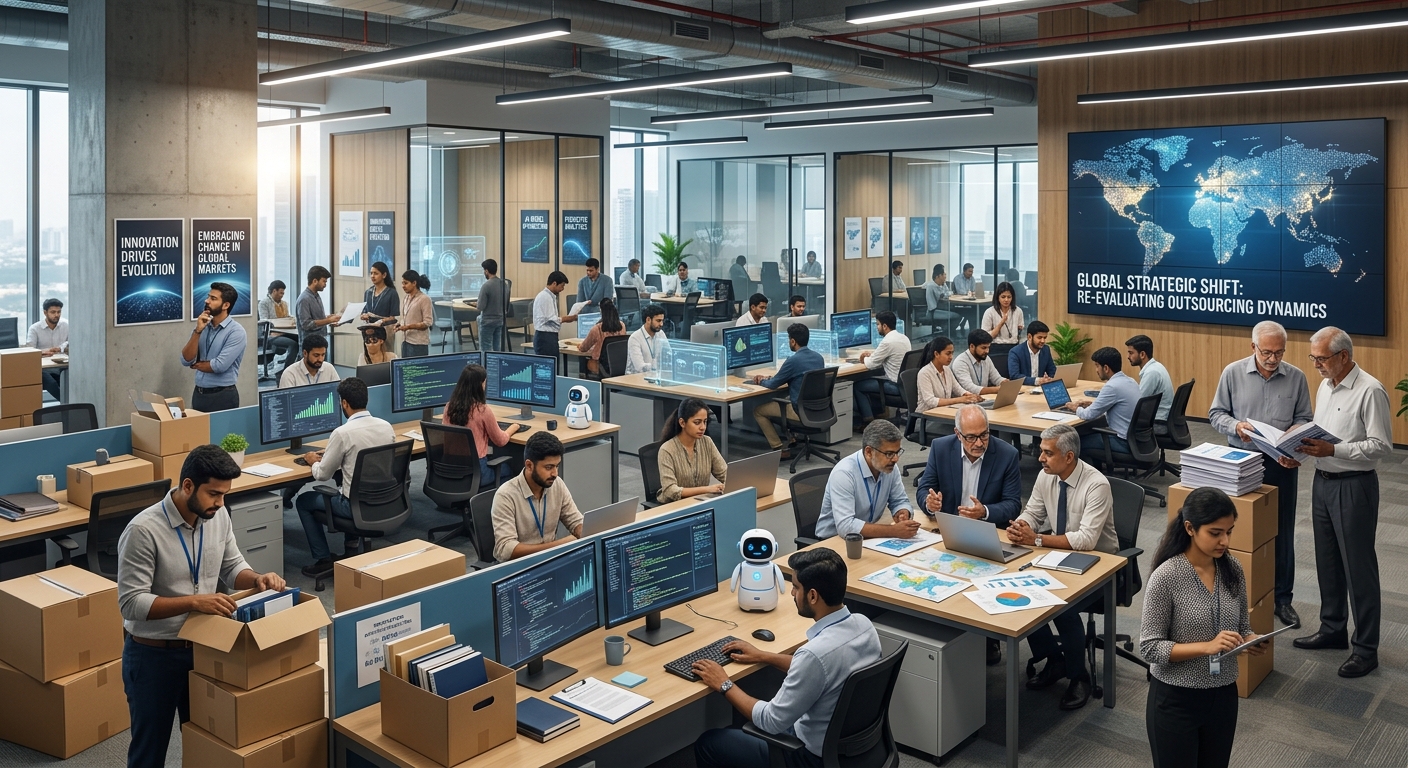
Summary of Opendoor’s Exit from India
Opendoor Technologies Inc. entered the Indian market in 2024, establishing offices to leverage its cost advantages and skilled workforce. However, by 2026, the company announced its exit, focusing instead on AI-driven operational models in the U.S. This strategic shift reflects industry trends where AI advancements reduce dependence on large offshore teams, emphasizing a move toward specialized, AI-augmented groups. Although the layoffs affected over 250 employees, Opendoor’s decision was based on operational efficiency rather than workforce quality, providing severance and transition support to impacted staff.
Opendoor’s Strategy in India
Initially, Opendoor hired around 250 employees in India, aiming to capitalize on the country’s technology talent. Yet, as AI and automation evolved, the company determined that traditional labor-intensive models were no longer sustainable. Their shift toward smaller, AI-native teams in the U.S. indicates a broader industry transformation where reliance on offshore operational structures is decreasing. Despite the layoffs, India remains a strong player in the technology sector, with experts noting the potential for new, skilled roles to emerge from this shift.
Strategic Reasons for Withdrawal
Opendoor’s exit was guided by a desire to streamline operations and enhance customer interaction by relocating roles closer to its primary market. While India offered significant cost savings, advancements in AI allow for operations that require fewer employees and deliver greater efficiency. This transition could serve as a broader signal for the industry, illustrating how evolving technologies are challenging traditional outsourcing norms and leading companies to reconsider their global staffing strategies.
Broader Implications for Outsourcing and AI Adoption
Opendoor’s departure brings to light the transformative potential of AI in outsourcing. Experts caution that as companies prioritize automation, demand for routine offshore jobs may decline significantly. While the Indian market remains robust, with millions employed in technology and services, the nature of jobs is shifting as firms adapt to AI integration. This transition may lead to a reduction in entry-level positions but offers avenues for higher-skilled roles that align with modern operational needs. Research indicates that rather than outright job loss, there is more a transformation of roles as automation takes hold.
Future Considerations for Industry Dynamics
Opendoor’s strategic exit reflects an ongoing evolution within the outsourcing landscape, especially as AI technology matures. The traditional cost-arbitrage model is being challenged, prompting companies to re-evaluate team structures and operational strategies. While this shift may threaten job stability in sectors reliant on manual tasks, it simultaneously creates opportunities for skilled labor. Looking ahead, the Indian outsourcing industry is expected to undergo significant changes, focusing on upskilling and adapting to new AI-driven demands, requiring a responsive approach to workforce management and operational design.
The content is provided by Avery Redwood, Front Signals