
Summary
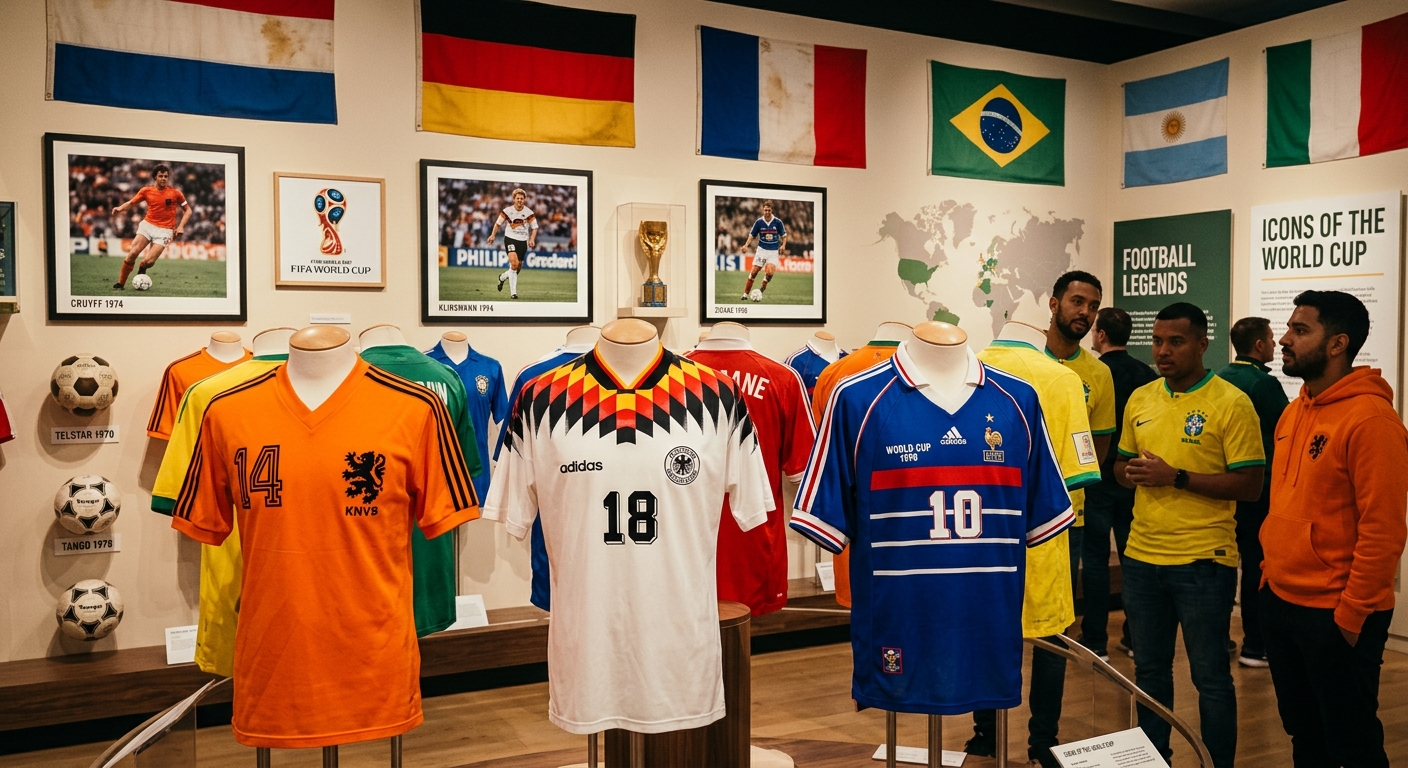
This collection of World Cup jerseys examines their cultural significance and evolving design, showcasing how they represent national identity and football’s history. From early heavy cotton kits to today’s sustainable designs, these jerseys reflect technological advancements and shifting attitudes. The article highlights memorable kits like the Netherlands’ 1974 jersey, which symbolizes tactical innovation, and Germany’s 1994 design, representing post-reunification pride, illustrating how jerseys serve as cultural canvases.
Historical Background
The evolution of World Cup jerseys parallels the growth of football as a global phenomenon. Early jerseys prioritized durability over performance, but advancements in materials have diversified their functionality and aesthetics. Iconic designs emerged, like the Netherlands’ 1974 jersey, which transcended sport to become a cultural emblem, while kits from Belgium and Argentina reflect local artistic heritage and national pride, enhancing the cultural narrative surrounding the tournament.
Design and Features of World Cup Jerseys
The design of World Cup jerseys has transformed significantly, moving from simple cotton shirts to vibrant expressions of national identity. The 1966 World Cup marked a turning point for visual impact, with colorful designs gaining prominence. Today, advanced fabric technologies allow creative graphics, while manufacturers focus on sustainability, as seen in recent designs for the 2026 World Cup that celebrate cultural identity while addressing environmental concerns. Major manufacturers dominate the market, shaping pricing strategies and balancing innovation with consumer engagement.
Iconic and Influential World Cup Jerseys
World Cup jerseys embody national pride, with several kits achieving iconic status due to their designs and historic victories. The Netherlands’ 1974 orange kit symbolizes a tactical revolution, while Germany’s 1994 geometric design represents national pride post-reunification. Memorable jerseys from France, England, and Mexico also illustrate how cultural motifs enhance football’s emotional resonance, highlighting their roles as enduring symbols of national identity that evolve yet maintain historical connections.
Cultural and Social Impact
World Cup jerseys are powerful symbols of national identity and cultural heritage. The global stage of the tournament fosters connections among diverse fans, and media narratives shape public perception of teams and their kits. Jerseys like Germany’s 1994 design and Mexico’s home shirt reflect deep cultural ties, showcasing how these garments facilitate collective memories and community pride, while also carrying significant economic value in the collectibles market.
Collecting and Market for World Cup Jerseys
The market for World Cup jerseys has grown, fueled by nostalgia and social media, with vintage items from iconic tournaments commanding high prices. Collectors value jerseys connected to historic moments or celebrated players, while the upcoming 2026 World Cup heightens demand for memorabilia. Stable demand for popular teams and the collectible status of unique designs—such as Germany’s 1990 kit—underscores the influence of World Cup jerseys on both emotional and financial levels.
Manufacturing, Licensing, and Commercial Aspects
World Cup jersey production involves intricate manufacturing and licensing processes, predominantly by major brands like Adidas, Nike, and Puma. These companies supply over 75% of national teams’ kits for the 2026 World Cup, while smaller manufacturers gain traction. The collaboration emphasizes the balance between brand innovation, cultural representation, and market demand, shaping the overall commercial landscape of soccer apparel.
The content is provided by Blake Sterling, Front Signals