
Summary
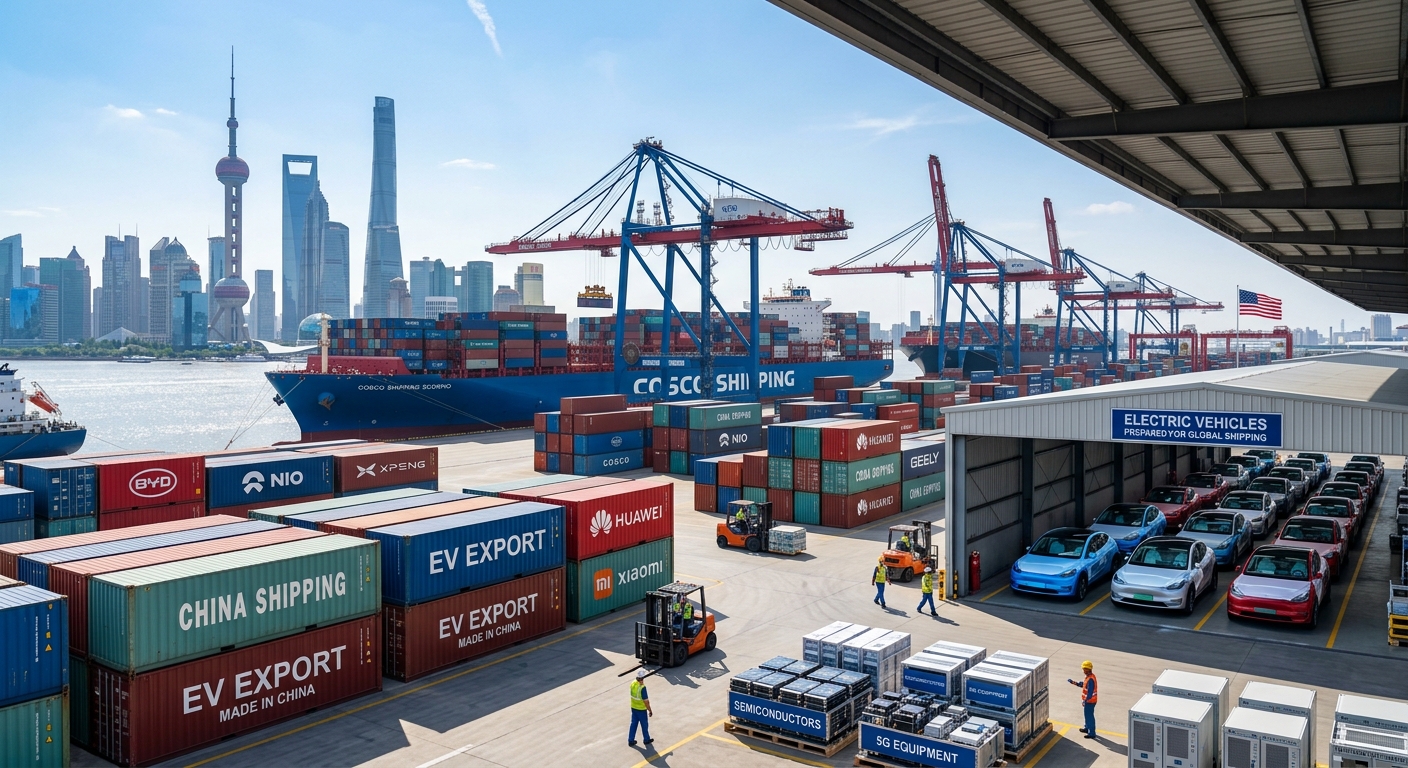
In May 2026, China’s exports grew by 19.4%, largely driven by high demand for technology products and electric vehicles (EVs). This growth highlights China’s transition from traditional manufacturing to high-value sectors, reinforced by government policies such as the dual-credit system, which encourages higher production of EVs. As a result, China has become the leading manufacturer and exporter of EVs, with export values soaring from $295 million in 2018 to $36.7 billion in 2023. However, challenges such as increasing global competition, particularly from U.S. manufacturers, and geopolitical tensions related to supply chain dependencies pose risks for future growth.
Export Growth and Economic Impact
China’s export boom aligns with strategic domestic policies favoring technology and EV manufacturing. Significant government investment has supported this transition, and exports of machinery, electronics, and EVs now represent crucial segments of international trade. The country’s reliance on high-tech exports over labor-intensive goods reflects enhanced industrial capacity and self-sufficiency. Increased competition and regulatory challenges could disrupt these gains, particularly with U.S. and European responses to market dynamics affecting both supply chains and consumer preferences.
Sector Analysis and Future Trends
China’s export landscape is increasingly focused on technology and EVs, accounting for a substantial share of total shipments. High-tech goods and EV exports are expanding, driven by improvements in quality and aggressive pricing in foreign markets, particularly in Latin America and Southeast Asia. The rapid increase in EV production underscores a strategic shift that positions China favorably in high-value markets, yet it risks domestic overcapacity and stiffer competition from international competitors. Efforts to expand semiconductor production capabilities and improve localization further emphasize China’s commitment to maintaining a leading role in global trade.
Competitive Landscape
The strengthening of China’s position in the global marketplace poses significant challenges to established U.S. and European manufacturers. While competition is intense, especially in the EV sector, trade dynamics are shifting as countries seek alternatives to reliance on Chinese imports. The interplay between rising domestic manufacturing capabilities in the U.S. and China’s strategic push into new markets complicates the competitive landscape, signaling ongoing adjustments in international trade relations. Monitoring these developments will be crucial for assessing future market opportunities and risks.
Challenges Ahead
Despite the impressive export growth, numerous challenges threaten China’s trade environment. Potential overreliance on Chinese technology raises cybersecurity concerns for importing countries, which must navigate the balance of economic benefits against these risks. Additionally, Europe’s efforts to develop alternative battery supply chains may be impacted by China’s dominance and export policy shifts. These pressures, along with global economic uncertainties and trade tensions, present ongoing risks that require careful navigation to sustain export growth.
Future Export Outlook
Looking ahead, China is expected to maintain strong export momentum driven by technology and EV sectors. Key trends such as digitalization of trade and compliance with international standards will likely enhance supply chain efficiencies. While domestic market fragmentation poses challenges, continuous innovation and regulatory support will mitigate risks, promoting further export expansion. China’s proactive investment in semiconductor and EV technologies also positions it well amidst global electrification trends, reinforcing its role as a pivotal player in future trade dynamics.
The content is provided by Sierra Knightley, Front Signals