
Company Overview
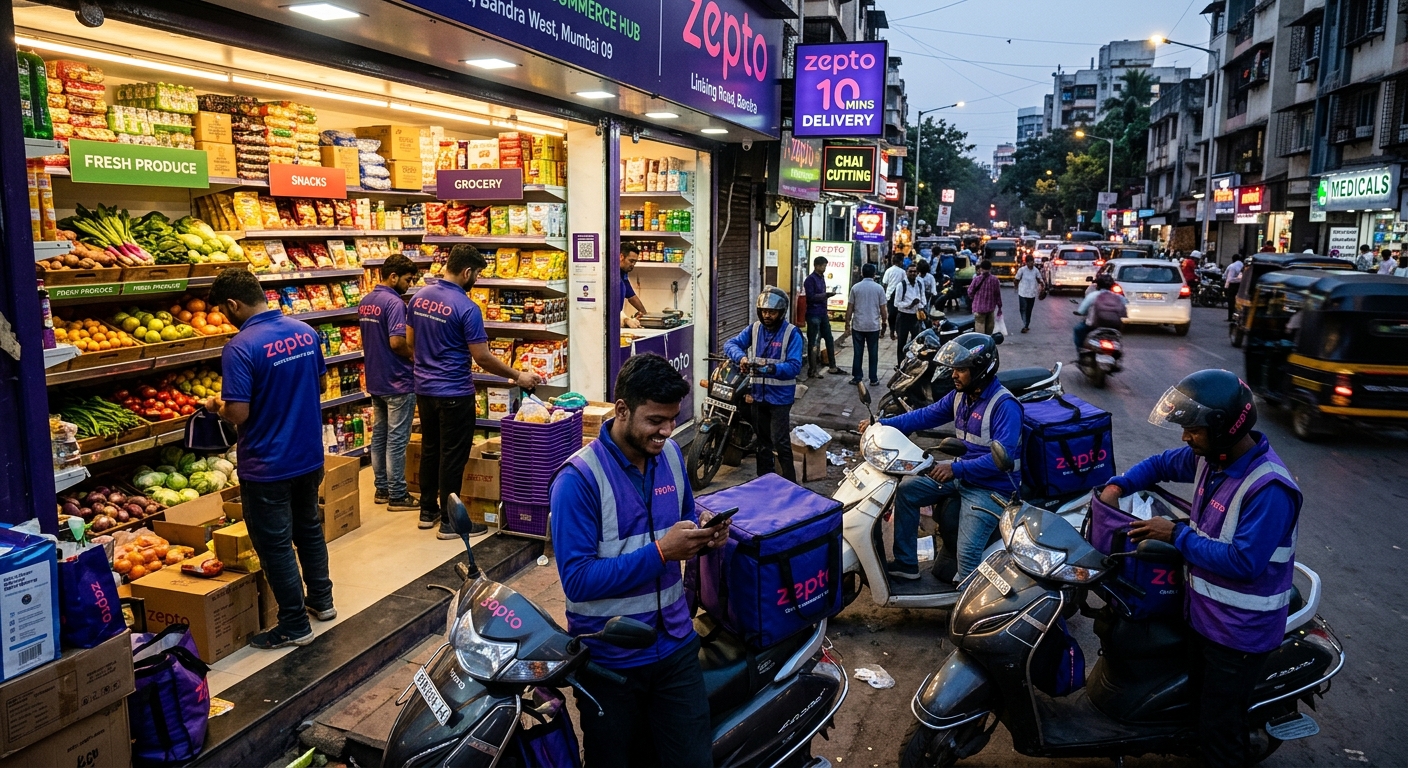
Zepto, a prominent Indian quick-commerce startup, specializes in rapid grocery delivery, driven by a network of strategically positioned dark stores and advanced logistics. Founded in 2021, it has quickly expanded to secure a significant market share within India’s growing quick-commerce sector, reporting an annual gross order value nearing $4 billion by mid-2025. The company faces challenges such as rising operational costs and heavy competition, especially from established players like Blinkit and Swiggy Instamart, which complicate its pursuit of sustainable profitability.
IPO Preparation
As Zepto gears up for its IPO, estimated at a valuation of around $1.1 billion, it has undergone corporate restructuring to align with Indian regulations. While it reported impressive revenue growth — doubling operating revenue to ₹22,624 crore in FY26 — the company is also confronting scrutiny from regulators, including inquiries regarding foreign investments and pricing structures. These factors must be carefully evaluated by potential investors as they assess the company’s long-term viability amid significant losses and evolving regulatory landscapes.
Revenue Model
Zepto’s revenue primarily derives from grocery sales through its app, complemented by advertising and delivery fees. The dense network of dark stores enables quick assembly and delivery, maintaining lower operational costs. To enhance customer loyalty, subscription services like the Zepto Pass offer perks such as free deliveries and discounts, contributing to its rapid revenue increase. However, with delivery costs rising more than 90% in FY26, Zepto’s path to profitability remains tenuous and hinges on high order volumes amidst intensive market competition.
Financial Outlook
Although Zepto reports considerable revenue growth, profitability is a critical concern. The company narrowed its net loss in FY26, but ongoing substantial delivery and operational costs persist. Achieving EBITDA breakeven is projected within the next ten months, but consistent profitability will require addressing high operational expenses while securing higher order volumes. Investors need to weigh these challenges carefully against the backdrop of potential rapid growth and market expansion.
Strategic Growth Initiatives
Zepto’s growth strategy focuses on enhancing operational efficiency and expanding into under-penetrated Tier 2 and Tier 3 cities. The company is aggressively scaling its dark-store network to capitalize on increased demand. However, its operational model faces risks related to regulatory changes that could elevate costs, particularly concerning gig workers. Balancing expansion with regulatory compliance will be crucial for sustaining its competitive edge both in urban and emerging markets.
Regulatory Compliance and Risks
Amidst its rapid expansion, Zepto faces significant regulatory scrutiny, including inquiries from the Enforcement Directorate regarding foreign investments and compliance with market practices. These issues have been recognized as material risks in its IPO filings, underscoring potential impacts on investors’ decisions. Maintaining transparency in responding to these investigations will be vital as Zepto navigates complex regulatory requirements in the fast-evolving quick-commerce landscape.
Competitive Landscape
Zepto has positioned itself as a formidable contender in India’s quick commerce market, capturing a 29% market share despite facing competition from players like Blinkit and Swiggy Instamart. Its approach of establishing a network of fulfillment centers allows better control over inventory, enhancing customer satisfaction through consistent delivery performance. As the competitive landscape intensifies, Zepto’s focus on rapid service and market responsiveness will be pivotal in reinforcing its stature within the sector while driving strategic initiatives to capture further market share.
Industry Influence and Future Prospects
Zepto’s innovative approach is reshaping consumer expectations in grocery delivery, leveraging technology and operational metrics to set new benchmarks. Market growth projections suggest significant potential, with the sector expanding from $6 billion in 2025 to $100 billion by 2035. However, Zepto’s ability to maintain its rapid growth trajectory amidst operational challenges and regulatory scrutiny will determine its long-term impact and success within the market.
The content is provided by Sierra Knightley, Front Signals