
Key Themes from the Hearing
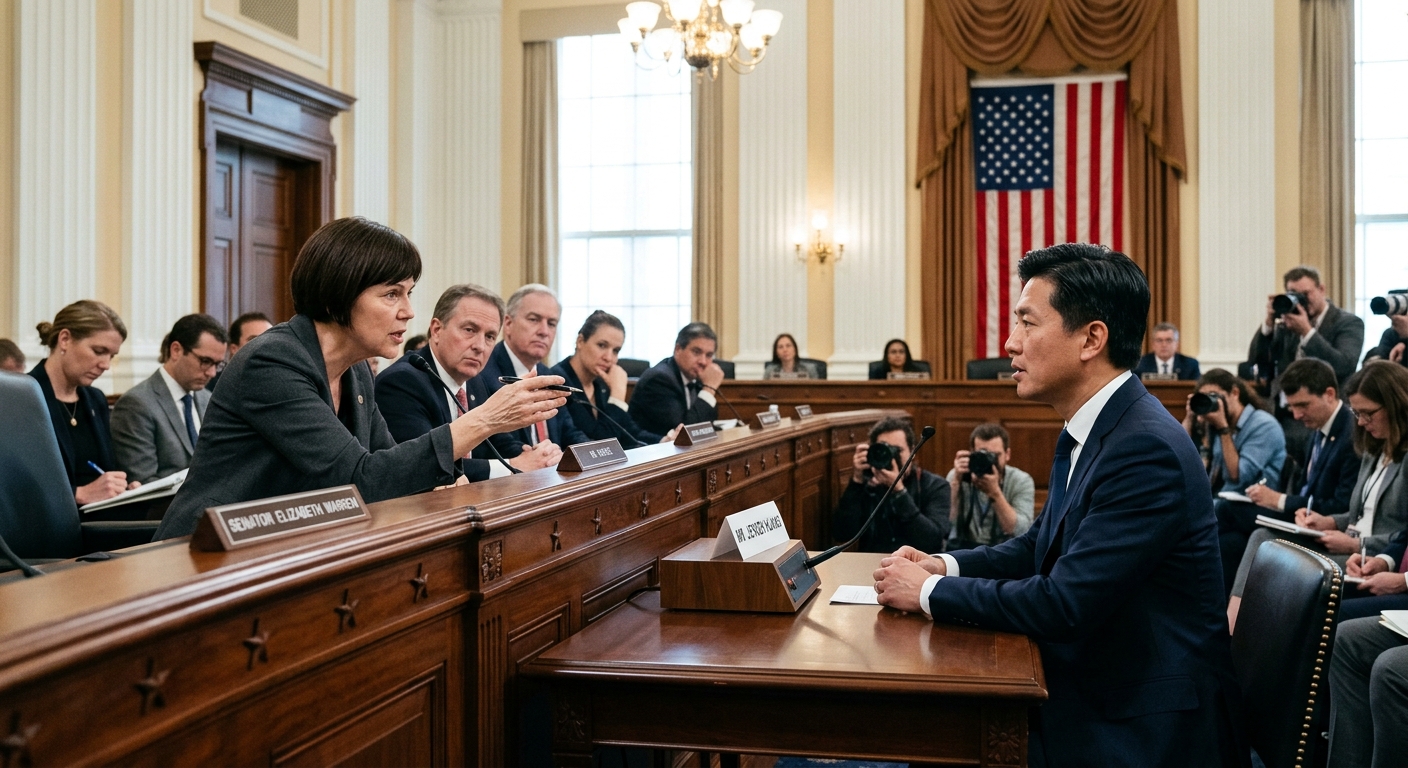
The June 2026 Senate Banking Committee hearing featuring Nvidia CEO Jensen Huang centered on the company’s sales of advanced AI chips to China and compliance with export control regulations. This discussion was propelled by concerns that such sales could bolster Chinese military and surveillance capabilities, potentially undermining U.S. national security. Senator Elizabeth Warren’s questioning revealed tensions between preserving U.S. dominance in technology and the risks posed by technology transfer to foreign adversaries.
Controversies Surrounding Nvidia’s Practices
Warren’s inquiries addressed allegations of unauthorized diversions of Nvidia’s high-end AI chips to China, challenging Huang’s assertions of compliance and oversight. She highlighted reports of substantial chips being funneled to China through intermediary countries, which contravened U.S. export regulations. The senator’s scrutiny reflects bipartisan apprehension about the effectiveness of Nvidia’s compliance measures and the potential implications for national security related to advanced technology exports.
Jensen Huang’s Defense
During the hearing, Huang defended Nvidia’s practices, outlining the complexities of export control compliance and arguing that restrictive regulations might inadvertently accelerate Chinese self-sufficiency in semiconductor technology. He stated that while Nvidia has ceased direct sales of its most advanced chips to China, the country continues to develop its AI capabilities with support from domestic manufacturers. This claim underscores the debate over whether selling chips to China could be counterproductive for U.S. interests.
Regulatory Landscape and Compliance Concerns
The U.S. has established stringent export controls for advanced AI chips to thwart their use by adversarial nations like China. These regulations require companies to maintain strict oversight to prevent unauthorized sales. Lawmakers, particularly Warren, have pressed for rigorous enforcement and examination of Nvidia’s compliance, citing ongoing investigations into supply chain integrity and allegations of illegal diversion practices.
Broader Implications for U.S. Technology Leadership
The hearing has spurred wider discussions about the implications of U.S. export controls on technological innovation and global competitiveness. Concerns have been raised that excessive restrictions might hamper U.S. industries while failing to inhibit China’s technological advancements. Experts suggest that, in the evolving landscape of AI development, the resolve to maintain a technological edge may hinge more on the industry itself rather than solely on policy measures.
Media Coverage and Public Perception
The Senate hearing garnered significant media attention, focusing on the national security concerns stemming from Nvidia’s chip sales to China amidst geopolitical tensions. Coverage underscored the urgency for regulatory scrutiny and the implications for U.S. technology firms operating within the competitive AI space. The intersection of national security and commercial interests continues to capture public discourse, reflecting a critical juncture in U.S.-China technological relations.
The content is provided by Jordan Fields, Front Signals