
Summary
The electrical trade in 2026 is a vital profession at the intersection of technological innovation and infrastructure development, particularly in the context of Germany. With sectors like renewable energy and building automation on the rise, electricians now require advanced technical knowledge to navigate regulatory standards focused on safety and sustainability. Comprehensive vocational training programs, which blend theoretical education with hands-on apprenticeships, are essential for shaping a skilled workforce that addresses the complexities of modern electrical systems.
These vocational programs typically span 3.5 years, combining on-the-job training with coursework that prepares apprentices in traditional skills and emerging fields. However, the industry faces challenges such as latent discrimination and ergonomic health risks, necessitating further training and flexible career pathways for sustained professional growth. Legal reforms have expanded support measures for upskilling, particularly benefiting small and medium enterprises, which in turn fosters workforce resilience. Hence, the electrical trade stands out as a commitment to innovation and long-term sustainability in today’s labor market.
Background and Context
In 2026, electricians are integral to technological advancement and infrastructural progress, particularly in the realm of renewable energy and smart technologies. The profession requires not only technical skills but also adherence to updated electrical standards critical for safety and reliability. Continuous education is vital for electricians to stay aligned with industry expectations, as changes in standards demand ongoing knowledge development.
Vocational training is heavily emphasized, combining practical experiences with theoretical knowledge. Public funding is significant, underpinning educational frameworks tailored to cultivate competency. While structured educational programs exist, challenges like discrimination remain barriers, indicating the necessity for inclusive training approaches that offer equitable opportunities within the trade.
Program Overview
The Electrical Apprenticeship Program at the RWU Extension School offers a structured pathway to becoming a skilled electrician. This program, designed for those enrolled in registered apprenticeships, integrates classroom learning with hands-on training to develop essential skills required for success in the electrical industry. The curriculum emphasizes critical areas including safety and technical skills needed for installing, maintaining, and repairing electrical systems across various settings.
Participants gain practical experience that prepares them for entry-level positions, emphasizing key competencies such as innovative problem-solving and physical stamina. This comprehensive educational approach not only supports the immediate job market needs but also fosters long-term career advancement in related engineering fields.
Structure and Duration
The apprenticeship for electricians in 2026 follows a dual system, lasting 3.5 years, merging practical training with theoretical education. This approach ensures a thorough learning experience, guided by qualified mentors who provide insights beyond the classroom, thus enhancing practical knowledge and expertise.
Modernized training modules focus on crucial industry aspects such as renewable energy and automation alongside traditional wiring skills. This comprehensive training equips apprentices to meet the evolving demands of the industry effectively.
Curriculum and Training Content
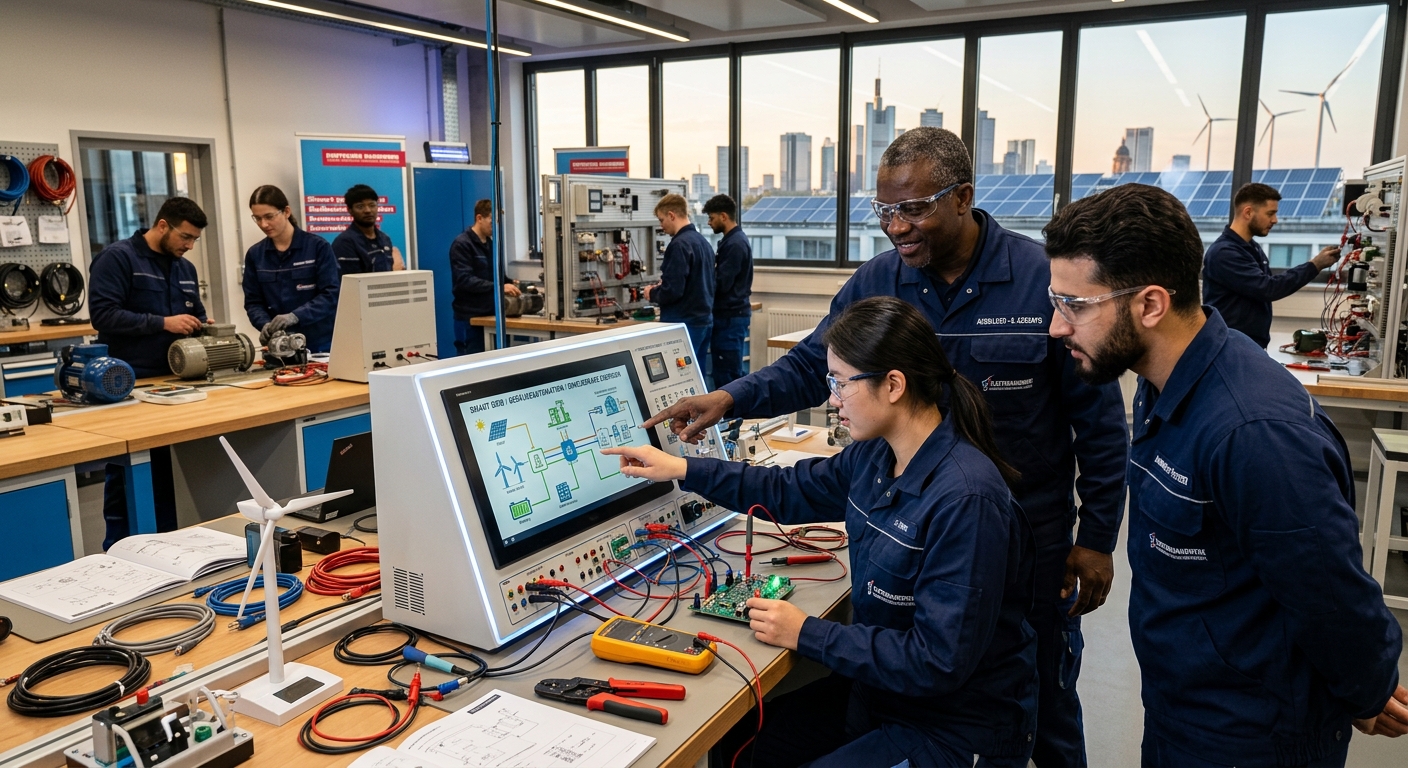
The curriculum for electrician training encompasses both theoretical knowledge and practical skills, preparing trainees to meet modern electrical trade requirements. Key components include electrical theory, safety protocols, and modules on renewable energy systems. The approach integrates hands-on simulations to help trainees practice installing and maintaining systems across various environments.
To bridge gaps for smaller training enterprises, inter-company vocational training centers augment in-company instruction, while parallel courses support trainees in exam readiness. Emphasizing practical safety and compliance in line with updated standards, the curriculum nurtures skills essential for the future of electrical work.
Mentoring and Support Systems
Mentoring within the apprenticeship framework is vital, providing apprentices with hands-on guidance from experienced professionals. This collaboration helps trainees understand industry nuances critical for their development and reinforces best practices in safety and regulations.
Moreover, establishing a robust support system, including in-house additional courses, strengthens the links between theory and practice, nurturing confidence among apprentices. The digitalization of mentoring systems also streamlines communication, enhancing accessibility for both mentors and trainees.
Career Development and Employment Transition
The trajectory for electricians has shifted from a traditional model to a more dynamic, continuous learning approach due to technological and economic changes. Career advancement now emphasizes competency over seniority, pushing electricians to obtain specialized certifications to boost their employability.
This transformation underscores the importance of lifelong learning and adaptability, especially as legislative reforms offer new support mechanisms to enhance training access and opportunities for employees at risk of job displacement. Electricians can leverage structured programs to connect with job opportunities, streamlining their transition into the workforce.
Working Conditions and Industry Challenges
Electricians’ working conditions in 2026 are demanding, particularly for those involved with high-voltage systems. Physical resilience is essential, yet concerns such as repetitive strain injuries remain prevalent, prompting the implementation of guidelines aimed at improving workplace ergonomics.
Recruitment challenges necessitate new hiring paradigms, urging companies to embrace flexible working arrangements that align with the evolving demands of the workforce. Promoting diversity and inclusion has become a significant industry focus, underpinned by legislative reforms that support ongoing training and development.
Legal and Economic Implications of 2026 Reforms
The 2026 reforms introduce significant legal changes affecting vocational training and workplace safety in the electrical trade. Enhanced unemployment insurance and coaching initiatives are designed to mitigate disparities and facilitate smoother transitions for those re-entering the labor market.
Public investment remains crucial in supporting vocational education, with substantial funding directed toward maintaining high standards in training systems that align with technological advancements in areas like renewable energy. Compliance with updated international safety standards further shapes the profession in response to emerging risks.
Partnerships and Collaborations
Collaboration among training institutions and businesses is pivotal for sustaining quality vocational education in the electrical trade. Inter-company vocational training centers help address the limitations of small enterprises, ensuring that apprentices receive comprehensive training aligned with current market needs.
These partnerships not only foster resource-sharing but also promote diversity and inclusion within training frameworks, enriching the skill set of future electricians. A multi-stakeholder commitment reinforces the training ecosystem, aiming for a robust and future-ready workforce.
Future Outlook and Developments
The electrical trade is on an upward trajectory in 2026, driven by its crucial role in innovative sectors like renewable energy and smart technology. Upcoming regulatory changes further emphasize the need for electricians to adhere to evolving safety protocols while facilitating workforce adaptability through financial support mechanisms and continuing education opportunities.
This synergistic approach positions the electrical trade as a sustainable career choice, ensuring that training frameworks remain responsive to both technological advancements and the broader labor market’s demands.
The content is provided by Jordan Fields, Front Signals