
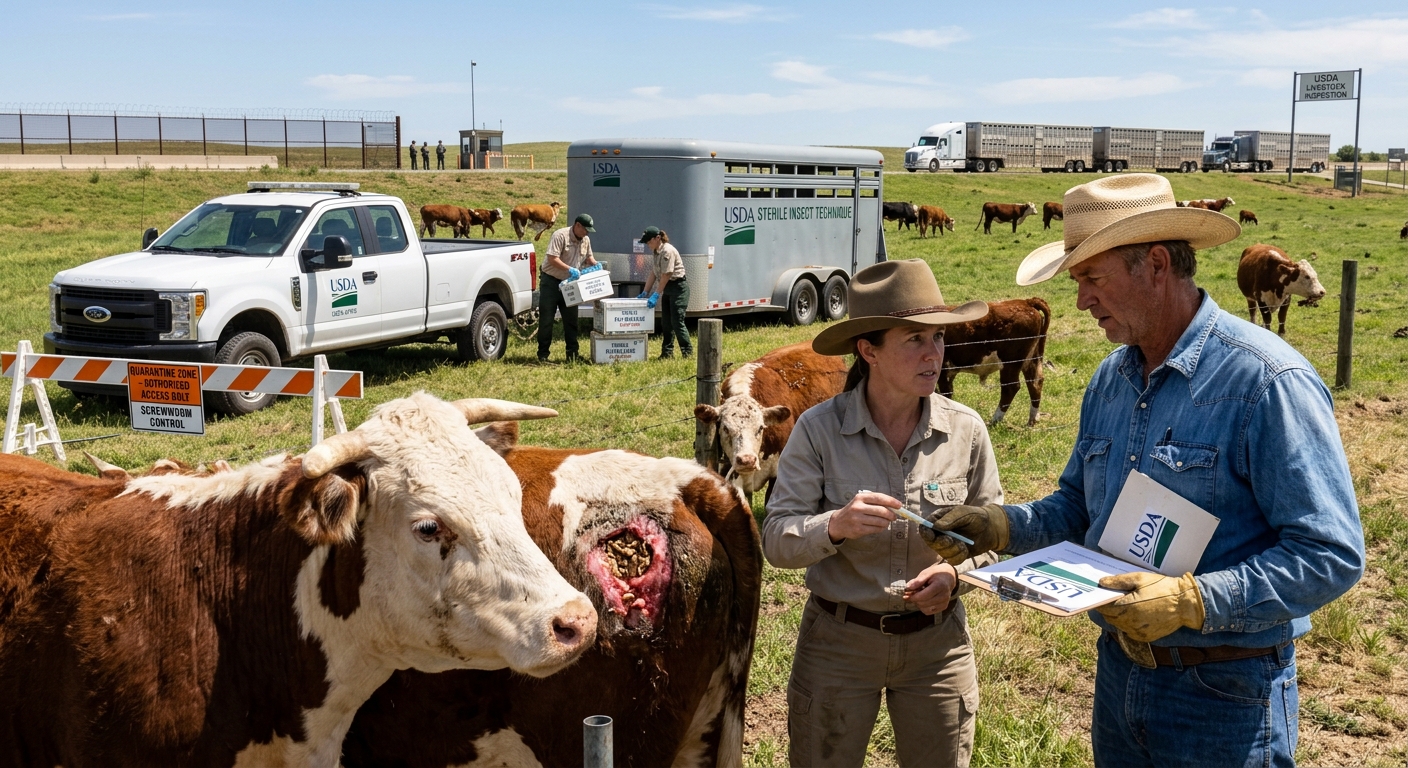
Summary of the Screwworm Resurgence
The New World screwworm (Cochliomyia hominivorax) larvae infest warm-blooded animals, particularly livestock, leading to serious health issues and economic losses. After successful eradication in the U.S. during the 1960s, the species has re-emerged due to favorable conditions in Mexico and Central America. The USDA has initiated a coordinated plan involving mass sterile fly releases, animal movement controls, and increased surveillance to combat this resurgence. However, ongoing debates between federal and state officials highlight the complexity of the response amid economic concerns.
Characteristics and Impact of Screwworm
The New World screwworm is identifiable by its distinctive coloration and significant parasitic behavior, which leads to severe tissue damage in hosts like livestock and wildlife. Infestations can drastically decrease animal productivity and contribute to increased risks of secondary infections. Despite past successful eradication efforts like the sterile insect technique (SIT), the screwworm remains endemic in Mexico and Central America, posing continuing challenges to control efforts and animal health.
Ecological and Economic Consequences
Screwworm infestations disrupt not only livestock health but also local ecosystems. Infested animals often experience decreased growth and production, incurring elevated operational costs for ranchers. The economic impact has been significant, with estimated annual benefits of previous eradication programs reaching $200 million, underscoring the financial implications for agricultural producers facing ongoing infestations and associated market instability.
Geographic Spread and Outbreak History
The current outbreak, traced since 2023, has been exacerbated by environmental factors and large populations in northern Mexico, leading to infestations in several U.S. states. The USDA has verified cases in livestock and pets, indicating the extensiveness of the spread despite previous regional containment strategies. Continued vigilance and strategic action are critical due to the sporadic nature of outbreaks and the threat they pose to both animal health and economic stability.
USDA’s Comprehensive Response
The USDA has adopted a strategic approach to manage the screwworm outbreak, employing the sterile insect technique to reduce pest populations effectively. With increased sterile fly production and ground release efforts, the agency aims to curb the pest’s expansion and safeguard livestock. Stringent animal movement controls and extensive outreach to stakeholders are also part of this strategy, ensuring preparedness and compliance in affected regions.
Public Communication Strategies
The USDA has launched initiatives for public awareness, including the Screwworm.gov portal for information sharing among stakeholders. Engaging local communities and producers is essential for promoting vigilance and immediate reporting of potential infestations. This proactive communication approach is supported by heightened surveillance and collaboration with state and federal partners, ensuring a comprehensive response to the ongoing threat.
Current Status and Forward Strategy
The USDA’s ongoing efforts include substantial investments in eradicating the screwworm, with weekly releases of millions of sterile flies. Coordination with federal agencies enhances overall response strategies, fostering stakeholder cooperation to ensure effective surveillance and containment. While barriers remain due to the pest’s resilience, the USDA’s focused approach aims to eradicate the screwworm threat and protect the agricultural sector.
Controversy Surrounding the Response
The USDA’s handling of the screwworm outbreak has drawn criticism, particularly from Texas officials regarding the perceived sluggish response and its consequences for cattle producers. Acknowledgment of the economic stakes marks the discussions, as ongoing quarantine measures impact livestock movement. Despite differing opinions on strategies, the importance of a collaborative response underscores the complexities of managing this agricultural pest.
The content is provided by Sierra Knightley, Front Signals