
Summary of Recent Developments
The Trump administration is finalizing a war resolution regarding Iran, reflecting heightened concerns over presidential war powers under the War Powers Resolution of 1973. This initiative follows significant diplomatic and military actions, including a briefing by Israeli Prime Minister Benjamin Netanyahu and congressional efforts to assert authority over military involvement. The resolution aims to require congressional approval for any continued military actions, amidst escalating hostilities and ongoing negotiations instigated by Iran’s 14-point proposal for a swift end to the conflict.
Core Issues in U.S.-Iran Relations
The relationship between the U.S. and Iran is shaped by decades of conflict, starting from historical events such as the 1953 CIA-led coup and the 1979 Islamic Revolution, which molded Iran into an adversary. Tensions have significantly increased in recent years, particularly following the U.S. killing of Qasem Soleimani and Iranian missile responses. This turbulent history contributes to ongoing military engagements and the current war resolution discussions aimed at reconciling executive powers with congressionally mandated oversight.
Resolution Details and Legislative Intent
The proposed resolution seeks to reaffirm Congress’s authority over military actions regarding Iran, mandated by the War Powers Resolution. It stipulates that the Trump administration withdraw forces unless receiving explicit congressional authorization, aligning with the requirement for accountability in military engagements. The resolution facilitates expedited congressional measures to either continue or terminate military involvement, reflecting bipartisan concerns about executive overreach and the need for legislative input in wartime decisions.
Political Divisions and Public Sentiment
Political reactions surrounding the U.S. military involvement in Iran reveal deep divisions, particularly within Congress. A recent House resolution passed marginally to end military actions, indicating a significant rift within the Republican Party on handling war powers. This divide suggests underlying public discontent due to rising petrol prices and opposition toward ongoing hostilities, which is impacting legislative priorities and broader Republican unity as the midterm elections approach.
International and Domestic Implications
Internationally, reactions to potential resolutions reflect varying political interests and regional instability resulting from U.S. military actions and responses. The Trump administration’s support for allies through arms sales emphasizes strategic commitments that potentially circumvent standard legislative processes. Domestically, an escalating conflict poses challenges to the political fabric, prompting ongoing debates about the War Powers Resolution and the balance of authority between Congress and the President, which are critical in shaping U.S. foreign policy.
Prospective Outcomes and Strategic Relevance
The potential for a broader conflict with Iran carries significant geopolitical ramifications, including economic repercussions resulting from disruptions in oil supply. U.S. sanctions and military posturing complicate diplomatic resolutions and increase the risks of conflict escalation. As these dynamics unfold, they highlight the complexities of governing foreign military actions and the necessity of effectively navigating legislative and public sentiment amidst pressing strategic concerns.
Key Events Timeline
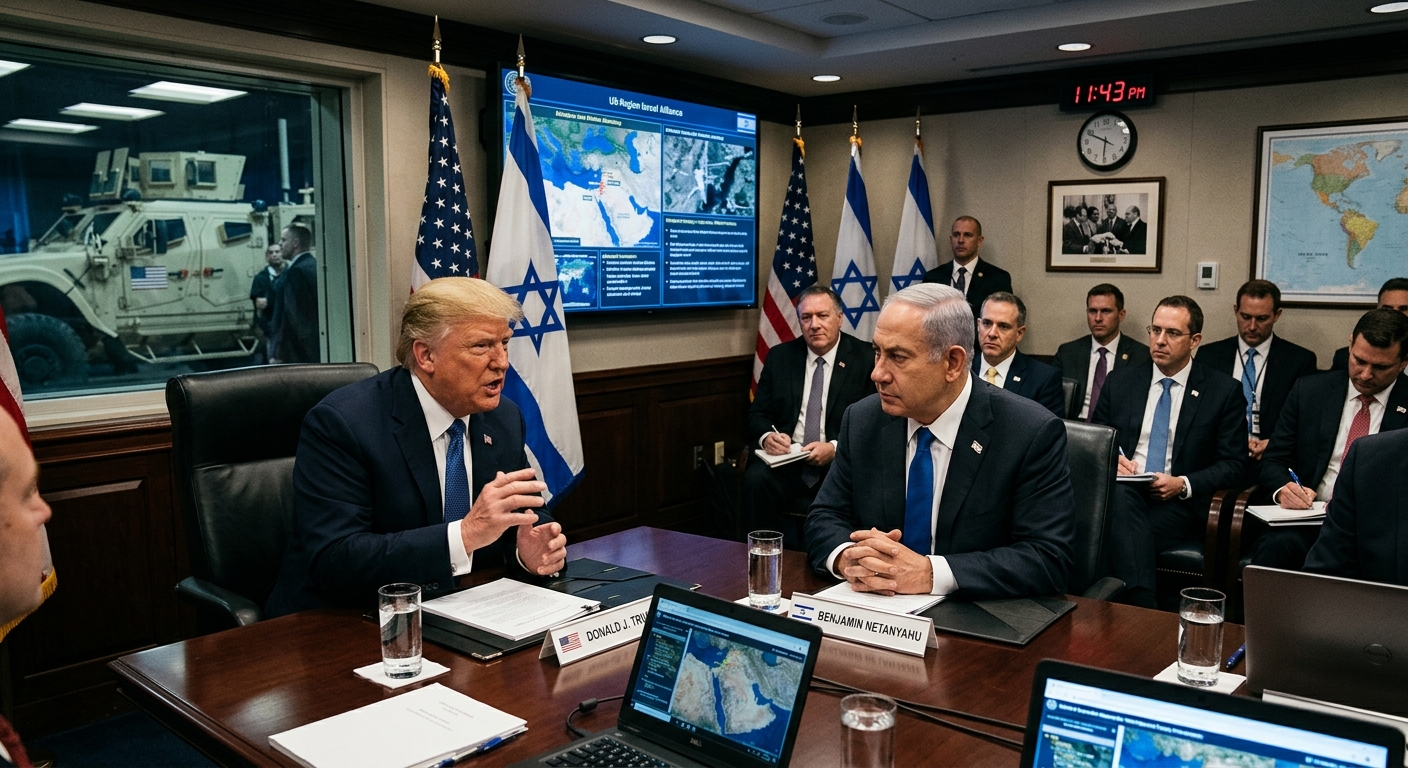
In February, Israeli Prime Minister Benjamin Netanyahu briefed President Trump on potential military actions against Iran, raising questions about U.S. engagement in the ongoing conflict. This presentation underscored the critical nature of alliances and the strategic decisions facing U.S. foreign policy, which will shape future initiatives in the region.
The content is provided by Harper Eastwood, Front Signals