
Summary
Unlocking the Secrets: The Profound Symbolism of Greek Mythology Explained delves into how ancient Greek myths offer profound insights into human emotions, virtues, and social values. The article examines key themes and symbols associated with gods and heroes, illustrating their influence on art and culture. By revealing the symbolic layers of Greek mythology, it emphasizes their significance in understanding moral and existential questions throughout history.
Historical Background
Greek mythology is anchored in ancient narratives detailing the origins of gods and the cosmos, exemplified by Hesiod’s Theogony, which outlines the creation of the universe and divine genealogies. This foundational text illustrates how myths reflect societal structures, and their evolution across various forms of literature and art underscores their dynamic nature. The artistic interpretations, like those found in Homer’s epics, further reveal the myths’ integration into daily life and religious practices, emphasizing their role in both cultural identity and moral teachings.
Major Themes and Symbolism
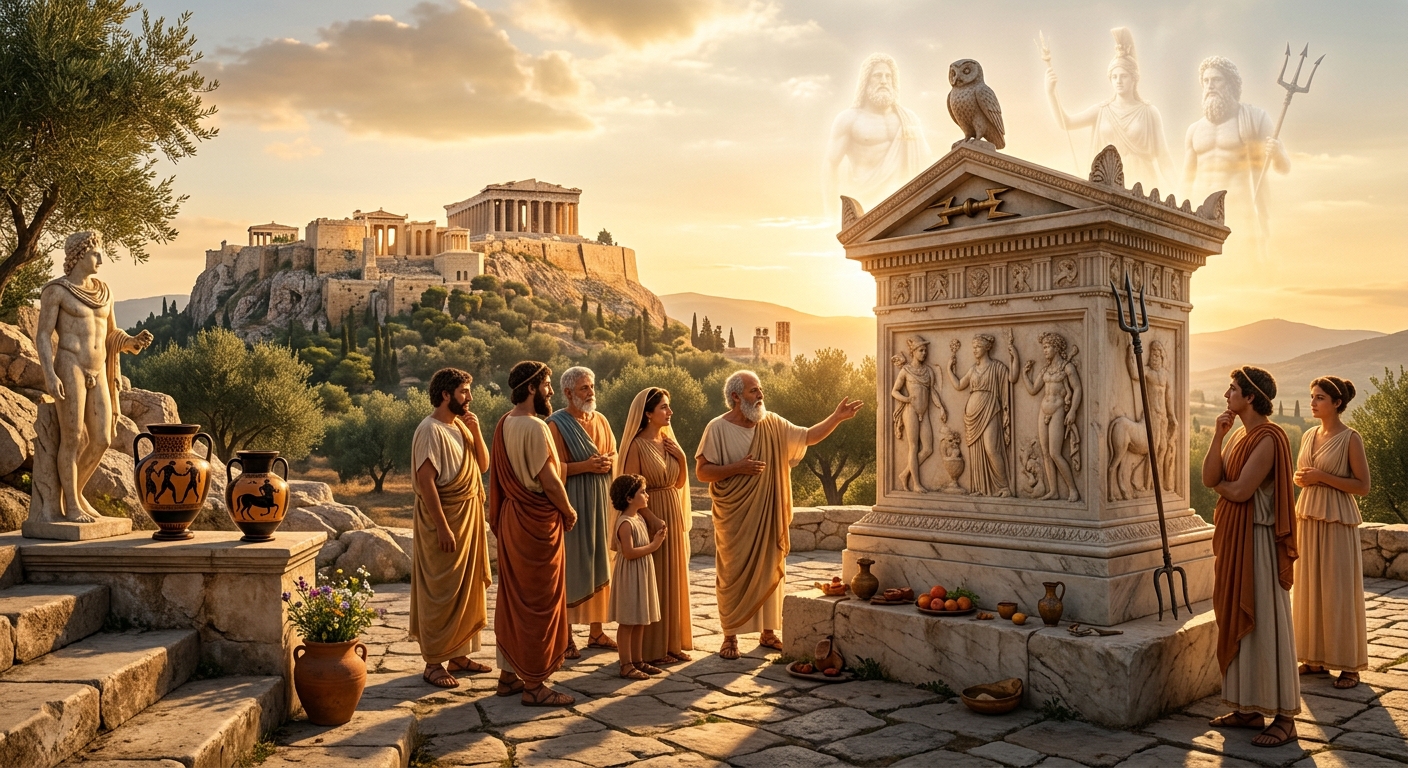
The myths prominently feature gods and heroes whose adventures epitomize human qualities and struggles. Each god is linked with symbols that encapsulate their divine attributes, like Zeus’s thunderbolt and Athena’s owl. These symbols serve as shorthand for complex ideas, enriching the cultural landscape of ancient Greece and offering timeless insights into the human condition.
Symbolism of the Olympian Gods
The Olympians represent various aspects of human experience, with each god associated with specific symbols reflecting their powers and influence. Zeus’s thunderbolt signifies authority, Athena’s owl symbolizes wisdom, and Poseidon’s trident conveys mastery over the sea. These icons not only define the gods but also illustrate larger moral and philosophical themes within the myths.
Mythological Themes
Key thematic elements manifest in the struggle between chaos and order, prominently featured in Hesiod’s works. Additionally, the celebration of heroism and physical excellence resonates through myths depicting competitive feats, reinforcing cultural ideals. These overarching themes continue to provide a narrative framework applicable to modern existential queries.
Symbolism in Art and Culture
Mythological symbolism extends across various artistic mediums—pottery, sculpture, and architecture—each depicting stories infused with cultural values. Iconic imagery such as lightning bolts or olive branches becomes narrative devices, showcasing the deep integration of myth into daily life and ritual practices, thus enriching the cultural essence of ancient Greece.
Influence of Symbolism on Ancient Greek Religious Rituals and Society
Symbols were crucial in Greek religious practices, acting as conduits between humanity and the divine. They anchored everyday devotion, with objects like Apollo’s lyre linked to specific rituals, enhancing communal interaction with the gods. This vital role in shaping worship practices illustrates how symbols fostered cohesion across diverse Greek communities while reinforcing a shared cultural identity.
Comparative Symbolism in World Mythologies
The symbolism of Greek mythology bears resemblances to other global traditions, revealing shared themes and archetypes. Connections, particularly with Near Eastern myths, demonstrate the adaptability and influence of Greek narratives across cultures. As a shared visual language, these symbols create a common understanding of humanity’s challenges and aspirations, fostering a collective approach to interpreting existence.
Psychological and Social Functions of Mythological Symbols
Mythological symbols embody enduring human virtues and flaws, aiding individuals in navigating life. They serve to unify Greek cultural identity, with representations reinforcing shared morals and societal structures. By linking narratives to authoritative figures and moral lessons, these symbols help integrate personal experiences within a broader communal context.
Symbolism in Major Literary Works
Major texts like Hesiod’s Theogony and Ovid’s Metamorphoses utilize mythological narratives to discuss complex themes like order, conflict, and transformation. Hesiod illustrates divine hierarchy and generational conflicts, while Ovid emphasizes change and human interactions with the divine. Together, they provide a rich exploration of mythology that resonates with moral and existential themes across time.
Legacy and Modern Interpretations
The influence of Greek mythology extends throughout Western culture, manifesting in literature, art, and language. These myths articulate complex human experiences and societal values, serving as foundational texts for understanding cultural identity. Their reinterpretations in various artistic contexts highlight their adaptability, ensuring the enduring relevance of Greek mythology as a vital component of modern cultural heritage.
The content is provided by Sierra Knightley, Front Signals