
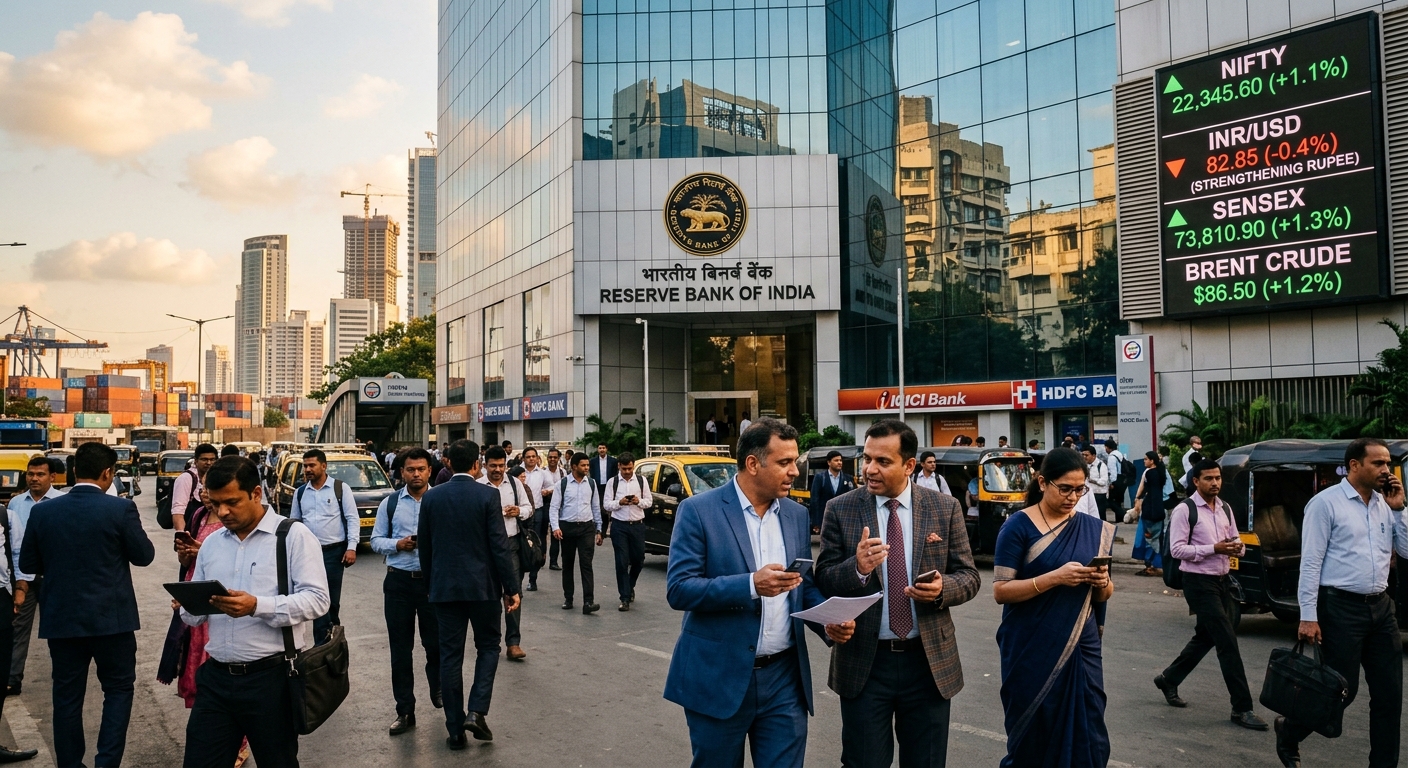
Indian Rupee’s Recent Strengthening
The Indian rupee strengthened by 20 paise, closing at 95.41 against the US dollar on June 9, 2026. This increase was influenced by domestic monetary policies and international market conditions. The Reserve Bank of India (RBI) adopted a neutral stance on interest rates, keeping the repo rate unchanged at 5.25%, which helped stabilize investor confidence amid rising crude oil prices and global uncertainty.
Crude oil prices surged due to geopolitical tensions in the Middle East, creating risk for the rupee. However, government measures to attract foreign portfolio investments, alongside the RBI’s interventions, mitigated depreciation pressures. The rupee’s appreciation reflects a balance between bolstered foreign inflows and ongoing inflation concerns.
Drivers of the Rupee’s Gain
The strengthening of the rupee on June 9 resulted from multiple factors, particularly the RBI’s decision to maintain a neutral monetary stance during times of external pressure. With over 85% of crude oil being imported, the rise in prices heightened risks of depreciation, yet regulatory measures aimed at attracting foreign investment offered significant support to the currency. The RBI’s active interventions and capital flow management strategies played a significant role in stabilizing market expectations and reducing volatility.
Global market dynamics also influenced the rupee’s gains. Indications of easing geopolitical tensions and favorable economic signals from the US enhanced market sentiment, supporting the rupee’s appreciation despite persistent inflation risks.
Reserve Bank of India’s Intervention Strategies
The RBI employs a multi-faceted approach to manage volatility in the USD-INR exchange rate while supporting the rupee’s value. Direct intervention in the foreign exchange market is a key tactic, where the RBI sells US dollars to stabilize the currency during periods of demand from importers. Methods like sterilized interventions, including buy-sell swap auctions, help absorb excess liquidity that affects domestic interest rates and economic growth.
These interventions are tailored to market conditions, aiming to reduce speculation that can destabilize the rupee. Complementary measures are taken whenever direct interventions alone are insufficient to sustain currency strength, showcasing the RBI’s proactive strategy in maintaining financial stability.
Economic Indicators Affecting the Rupee
Key economic indicators significantly shape the rupee’s value, including the RBI’s monetary policy, interest rates, and global crude oil prices. Stable interest rates from the RBI generally attract foreign investments, supporting rupee strength. Recent efforts to ease investment norms for foreign portfolio investors have also positively influenced rupee appreciation, underscoring the impact of these indicators.
Crude oil prices pressure the rupee due to India’s substantial dependency on oil imports, where rising costs increase demand for dollars. Fluctuating oil prices directly influence the exchange rate, highlighting the complexity of managing trade balances and domestic inflation, which policymakers must consider carefully to maintain economic stability.
Implications of the Rupee’s Appreciation
The appreciation of the rupee has significant implications for India’s economy. Cheaper imports resulting from a stronger rupee help reduce inflation pressures and improve household spending, particularly in import-heavy sectors. However, this strength can also diminish export competitiveness, making Indian goods pricier in foreign markets and potentially hindering export growth.
The relationship between rupee strength and macroeconomic indicators is complex. While an appreciating currency generally alleviates inflation through lower import expenses, it can also create short-term challenges for exporters. Therefore, understanding these trade-offs is critical for stakeholders considering the broader economic impact of currency fluctuations.
Future Outlook for the Rupee
The future trajectory of the rupee will hinge on several factors, including RBI monetary policy decisions, inflation trends, and international economic conditions. Analysts anticipate a modest appreciation of about 3% against the dollar, potentially reaching ₹87.5 per dollar later in the fiscal year, influenced by anticipated foreign capital inflows and overall economic stability.
As the RBI maintains a focus on managing inflation and fostering capital flows, its policies will be vital in curbing volatility and supporting the rupee’s value. The interplay of domestic economic performance and global market shifts will continue to define the rupee’s path in the short to medium term, essential considerations for investors and policymakers alike.
The content is provided by Harper Eastwood, Front Signals