
Summary
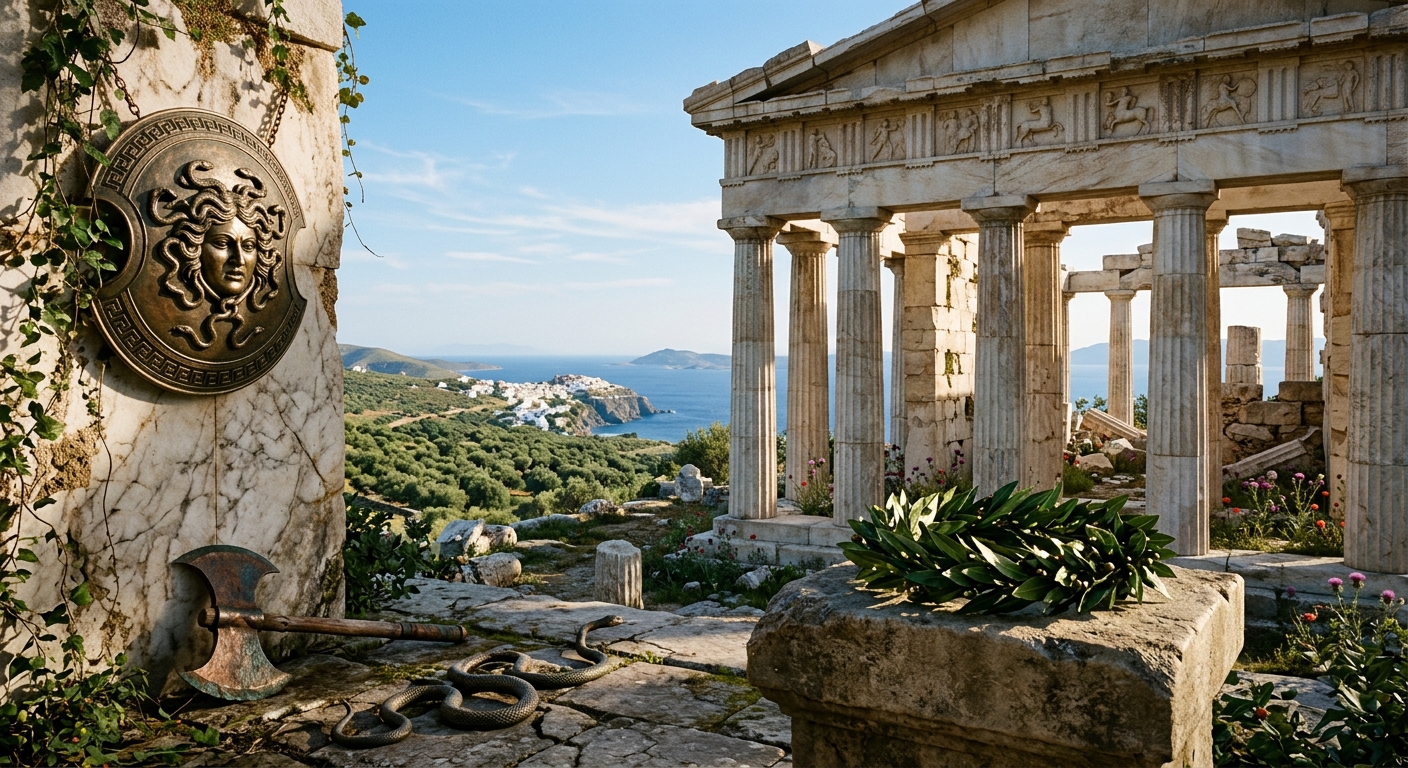
Unlocking the Secrets of Greek Mythology: A Deep Dive into Symbolism and Its True Significance focuses on the symbolism in Greek mythology and its relevance to both ancient and modern contexts. The article navigates through the historical roots of Greek myths, connecting them to contemporary interpretations that inform our understanding of cultural identity and human psychology. By examining symbols like the aegis, labrys, snakes, and laurel wreath, the piece uncovers layered meanings that resonate with themes of protection, transformation, and honor, illustrating how these motifs explain natural phenomena and moral lessons.
Historical Context
Greek mythology’s origins lie deep within the cultural practices of ancient Greece, tracing back to the Mycenaean civilization and oral traditions. Mythical references like the aegis appear as early as the 8th century BCE in Homeric texts, indicating a continuity of mythological themes. Visual art from the Geometric period onward reinforces these narratives, revealing regional variations in storytelling while asserting the interconnectedness of mythology and daily life through deities overseeing specific domains such as commerce, fertility, and war.
Mythological narratives were influenced by intercultural exchanges, especially with Near Eastern civilizations, suggesting that a complex tapestry of influences shaped Greek religious symbolism through the ages. The authority of these myths was maintained through oral traditions, literature, and art, creating a rich repository of stories and symbols reflective of societal values. As a result, these myths have left a profound legacy in shaping Western thought and culture.
Major Themes and Symbols
Central to Greek mythology are recurring themes and symbols that convey moral and cultural values. Common motifs include the hero’s quest, human flaws, and the triumph of intelligence over strength. Each of these themes serves to illustrate human experiences and interactions with the divine realm. Additionally, symbols hold significant meanings tied to specific gods and narratives, such as Pandora’s Box representing the consequences of curiosity or the olive branch symbolizing peace. Understanding these symbols provides insights into the ancient Greeks’ worldview and the cultural ideals of their society.
The Olympian gods and heroes embody various aspects of life, each associated with distinctive symbols that reflect their powers and domains. For instance, Poseidon’s trident signifies dominion over the sea, while Athena’s owl represents wisdom. These symbols also encapsulate heroic attributes, such as Heracles’ club reflecting strength. Collectively, these themes and symbols create a framework for understanding ethical teachings and cultural narratives central to Greek mythology.
Symbolism in Greek Mythology
Symbols in Greek mythology communicate complex ideas and serve as explanations for natural phenomena and cultural beliefs. The aegis symbolizes divine protection, embodying both majesty and terror, while the labrys signifies feminine strength and spiritual authority, rooted in Minoan culture. Snakes symbolize transformation and healing, as exemplified by the rod of Asclepius. The laurel wreath signifies victory, rooted in the myth of Apollo and Daphne, illustrating how symbols reinforce cultural values and ideals.
Other motifs like the labyrinth and Pandora’s Box emerge frequently throughout myths, reflecting moral lessons and human experiences, reinforcing their relevance and depth. Creatures such as Cerberus encapsulate themes of fate and the afterlife, illustrating the intricate interplay between divinity and mortality in Greek mythology.
True Significance and Impact
The significance of Greek mythology lies in its role as a framework through which ancient Greeks understood their world. By personifying elements of nature and society, the myths imparted moral lessons and reflected societal values, emphasizing the interconnectedness of life and the divine. The myths also serve as vital cultural touchstones that supported religious practices and community identity, solidifying their relevance throughout history.
These themes and symbols have influenced subsequent literary and artistic movements, reflecting timeless human concerns. Educational approaches that explore these mythological narratives continue to provide insight into literary analysis, human psychology, and historical contexts.
Influence on Western Literature and Art
Greek mythology has significantly shaped Western literature and art, offering a rich source of inspiration for poets, writers, and artists over centuries. For instance, the adaptations of Roman poet Ovid in his Metamorphoses have left a lasting impact on European literature, infusing Greek myths into Christian allegories and humanistic themes. Similarly, classic symbols found in artworks help unravel deeper meanings connected to themes of commerce, fate, and human experience.
Understanding these symbols enhances appreciation for classical and modern artistic expressions, highlighting the enduring motifs that resonate across cultures and eras. Themes such as human flaws and justice continue to inspire contemporary narratives, demonstrating the vitality of Greek mythology in shaping our cultural landscape.
Modern Interpretations and Studies
Recent analyses of Greek mythology reflect ongoing interpretations relevant to both art and cultural studies. Understanding symbols like the Staff of Hermes offers insight not only into ancient societal norms but also into modern psychological themes such as hubris, as seen in Icarus’s tale. This broader perspective allows for a deeper appreciation of how these narratives served as early forms of storytelling that illuminate humanity’s relationship with the divine and natural world.
These studies underscore the importance of Greek mythology as a lens through which to engage with human experiences, providing a rich context for understanding both individual and collective identities through historical narratives.
The content is provided by Jordan Fields, Front Signals