
Unlocking Opportunities: How U.S. Energy Firms Gained Advantage
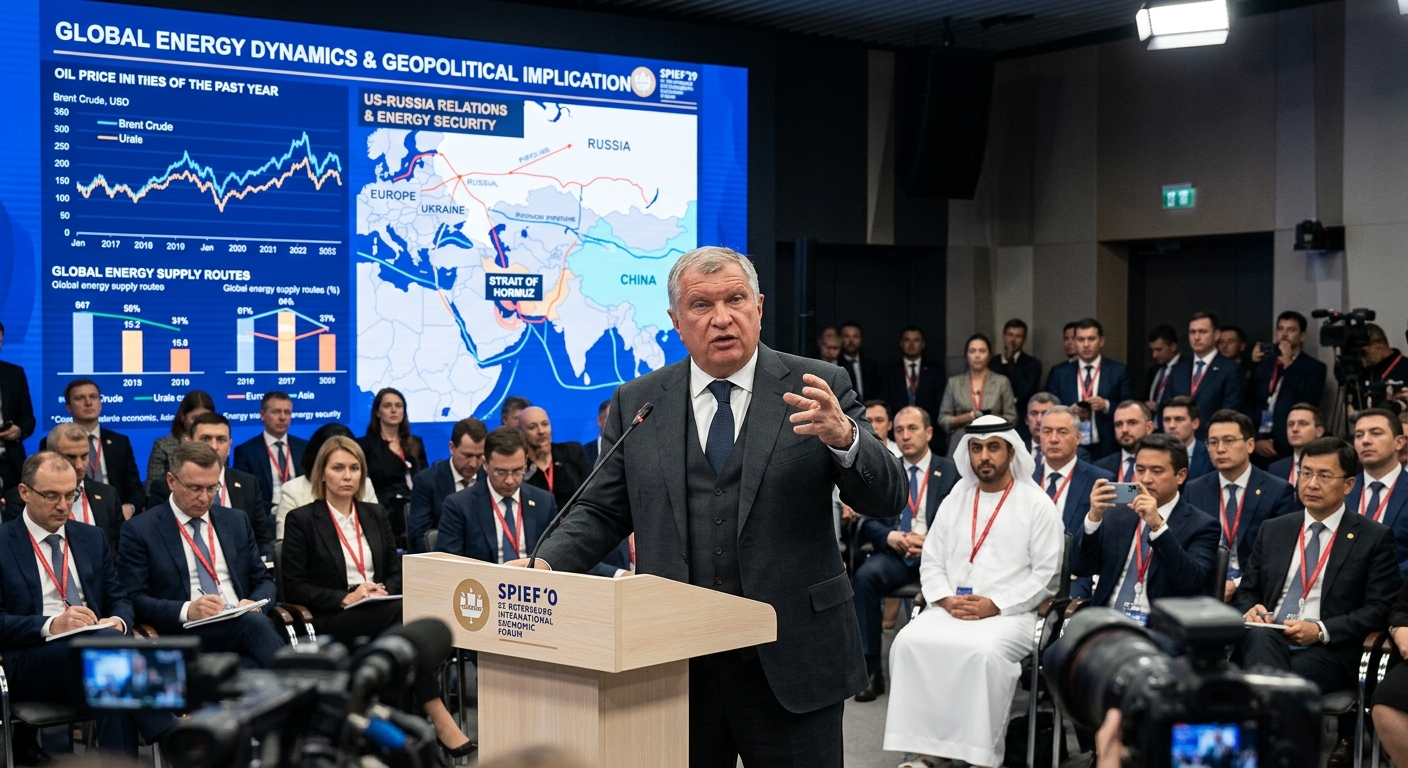
Igor Sechin, CEO of Rosneft, discussed the significant shifts in the global energy market during the St. Petersburg International Economic Forum, emphasizing how disruptions in the Strait of Hormuz have benefited U.S. energy companies. These disruptions, driven by geopolitical tensions, have allowed American firms to secure non-competitive advantages, gaining the ability to supply oil at elevated costs due to the instability in the region. This has reshaped market regulations and created a landscape that disproportionately favors U.S. companies, resulting in high oil prices that have inflated costs globally.
Impacts of Strait of Hormuz Disruptions
The closure of the Strait of Hormuz has had profound implications for global energy dynamics, particularly affecting Asian economies that heavily rely on oil shipments through this critical chokepoint. With over 80% of their oil imports passing through the strait, these nations face heightened vulnerability to supply interruptions and significant price volatility. In contrast, while U.S. producers have capitalized on the resulting market shifts, the broader consequences—such as inflation and slowing economic growth—pose challenges to global stability.
Rosneft’s Strategic Positioning
Despite facing stringent Western sanctions, Rosneft has navigated the turbulent energy landscape by strategically minimizing its exposure in hostile markets. Sechin framed U.S. sanctions as deliberate measures to create competitive advantages favoring American firms, severely impacting Russian exports. Nevertheless, Rosneft has benefited from its partnerships and increased energy exports, focusing on sustainability initiatives to bolster its position within the evolving market. The company’s “Rosneft-2030” strategy aims to address carbon emissions while diversifying energy resources, highlighting a long-term commitment to adapt amidst uncertainties.
Competitive Dynamics and Future Outlook
Sechin’s insights underscore the intensifying competitive dynamics in energy markets, where U.S. companies leverage disruptions to extend their market share, while Russian companies confront systemic pressures due to ongoing sanctions. The evolution of relationships within OPEC+, notably with key members like Saudi Arabia, influences oil production and pricing strategies, making it essential for firms to stay adaptive amid geopolitical unrest. As market conditions fluctuate, experts anticipate that oil prices could stabilize in the coming years, contingent on the reopening of vital maritime routes, which underscores the importance of strategic collaborations in solidifying market leadership.
The content is provided by Avery Redwood, Front Signals