
Summary
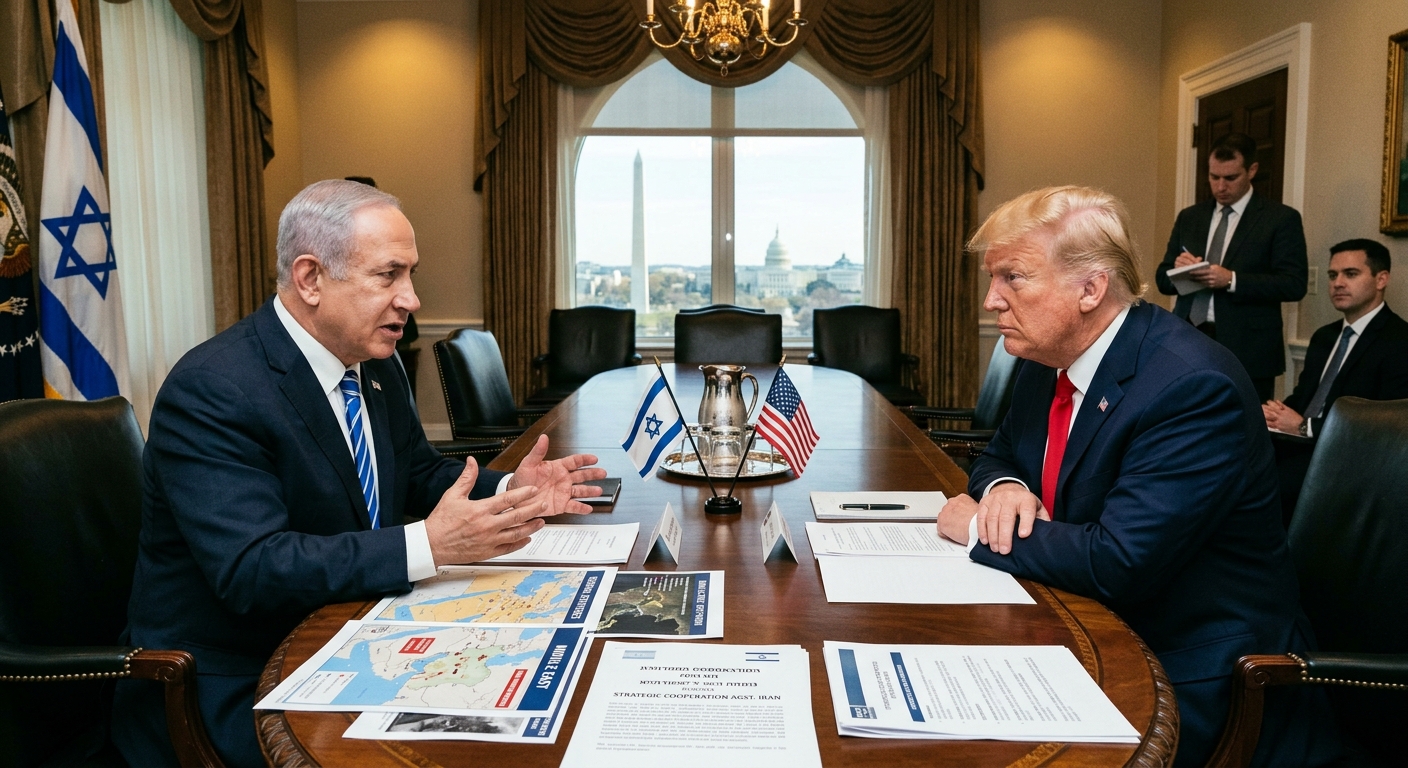
Israeli Prime Minister Benjamin Netanyahu and former U.S. President Donald Trump share a strategic vision of countering Iran’s nuclear ambitions, yet their tactical approaches exhibit significant differences. Both leaders perceive Iran as a crucial threat and aim for regime change, driving unprecedented military collaboration, including joint operations against Iranian assets. However, Netanyahu favors aggressive military tactics, while Trump advocates a more cautious approach shaped by U.S. global responsibilities and domestic considerations, leading to tensions over military actions and their timing. Netanyahu’s domestic challenges further complicate his reliance on military escalation for political advantage, whereas Trump aims to balance assertiveness with regional stability.
Background
Netanyahu’s political career has focused on countering Iran, framing the conflict as vital for Israel’s future. His strategy encompasses military offensives in Syria and Lebanon and aims to bolster Israeli supremacy while sidelining Palestinian issues. However, this militarized approach has led to immediate tactical gains but lacks long-term strategic benefits, raising concerns over overreach and regional stability. Trump, while aligned on the overarching threat, approaches Iran with a wider lens that includes global responsibilities, creating friction in their military strategies.
Shared Vision on Iran
Netanyahu and Trump maintain a unified stance against Iran’s nuclear capabilities, highlighting a commitment to regime change. Their rhetoric aligns closely, urging the Iranian populace to act against their regime. While security concerns drive this shared vision, Israel focuses on immediate threats from Iranian proxies, whereas the U.S. maintains broader strategic goals, such as promoting democracy and avoiding extended military conflicts. Despite tactical differences, both leaders persist in using military and diplomatic pressure to deter Iran’s ambitions and instigate political change.
Tactical Approaches to Iran
Their tactical approaches diverge significantly, with Netanyahu favoring aggressive military actions and Trump preferring negotiation and caution. Netanyahu’s doctrine prioritizes preventing nuclear threats through preemptive strikes and military operations, primarily targeting Iran’s proxies. Critics argue his strategies have failed to yield lasting results. Conversely, Trump’s administration combines military operations with diplomatic efforts, wary of provoking a broader conflict. This tactical divergence reflects their respective domestic political pressures, shaping their willingness to escalate or restrain military engagements.
Key Tactical Disagreements Between Netanyahu and Trump
Despite agreement on preventing Iran’s nuclear developments, tactical disagreements persist, particularly regarding military action’s timing and severity. Netanyahu has requested immediate strikes, frustrated by what he perceives as Trump’s hesitations, while Trump emphasizes caution to avoid destabilization. The U.S. approach reflects broader geopolitical considerations and domestic economic factors, which guide decision-making and highlight the complexity of their alliance amid conflicting methods to confront Iran.
Manifestations of Tactical Disagreements
The Iran conflict has revealed distinct strategic priorities, with Netanyahu pushing for increased military interventions while Trump adopts a more restrained stance. Netanyahu’s domestic challenges compel him to demonstrate military success, while Trump seeks to balance military operations with diplomatic solutions. This tension illustrates competing perspectives within their partnership and emphasizes the importance of carefully weighing military and diplomatic avenues in confronting Iranian influence.
Domestic Political Influences on Netanyahu’s Tactical Decisions
Netanyahu’s decision-making is heavily influenced by domestic political pressures, including legal challenges and opposition to his judicial reforms. His reliance on military escalation aims to assert Israel’s strength while deflecting attention from internal controversies. However, critics argue that short-term tactical successes have not translated into strategic advancements, as Iran’s threat remains unmitigated and regional tensions persist.
Impact on Israel–United States Relations
The interplay of military strategies amid the Iran conflict has accentuated differing priorities between Israel and the U.S. Israel pushes for aggressive military actions, while the U.S. seeks to manage its influence without overextension. This divergence reflects a broader conversation about military engagement and its implications for regional and global stability, challenging the coherence of the U.S.-Israel alliance amidst evolving geopolitical dynamics.
Reactions and Criticism
Criticism surrounding military actions taken by both leaders reveals concerns over their effectiveness and strategic goals. Within the U.S., some voices advocate for a more restrained foreign policy, questioning the rationale behind aggressive tactics that exacerbate regional tensions. Israeli leadership also faces scrutiny, notably for decisions influenced by U.S. guidance that impact military efficacy. The ongoing negotiation dynamics between the allies underscore the complexities of aligning their strategies while navigating internal and external pressures.
The content is provided by Jordan Fields, Front Signals