
Summary
Uncover Your Heritage: A Comprehensive Guide to Tracing Your Roots and Discovering Your True Ethnicity offers insights into genealogical research methods, emphasizing the significance of combining documentary analysis with genetic testing. This guide provides practical guidance for individuals seeking their family histories and identities but also highlights the associated challenges, especially with genetic data privacy and accuracy. The work reveals how advancements in technology have reshaped ancestry exploration, making it an essential resource for understanding one’s cultural roots and connections.
Historical Background
Genealogical research has historically relied on records, such as early census data from the 1700s, which evolved to incorporate more comprehensive details by the mid-19th century. The integration of these records with modern DNA testing has enhanced the research process, making ancestry exploration more accessible and detailed. Understanding this evolution assists individuals in leveraging both historical records and genetic information effectively in their heritage tracing efforts.
Understanding Ethnicity and Identity
Ethnicity is defined through shared characteristics including ancestry and culture, influencing both personal identity and social dynamics. As concepts of ethnicity have evolved, researchers recognize its socially constructed nature, which encompasses not just individual traits, but collective experiences that shape community relations. This understanding encourages individuals to view their ethnic identity as complex and interconnected with broader social and political contexts.
Methods of Tracing Heritage
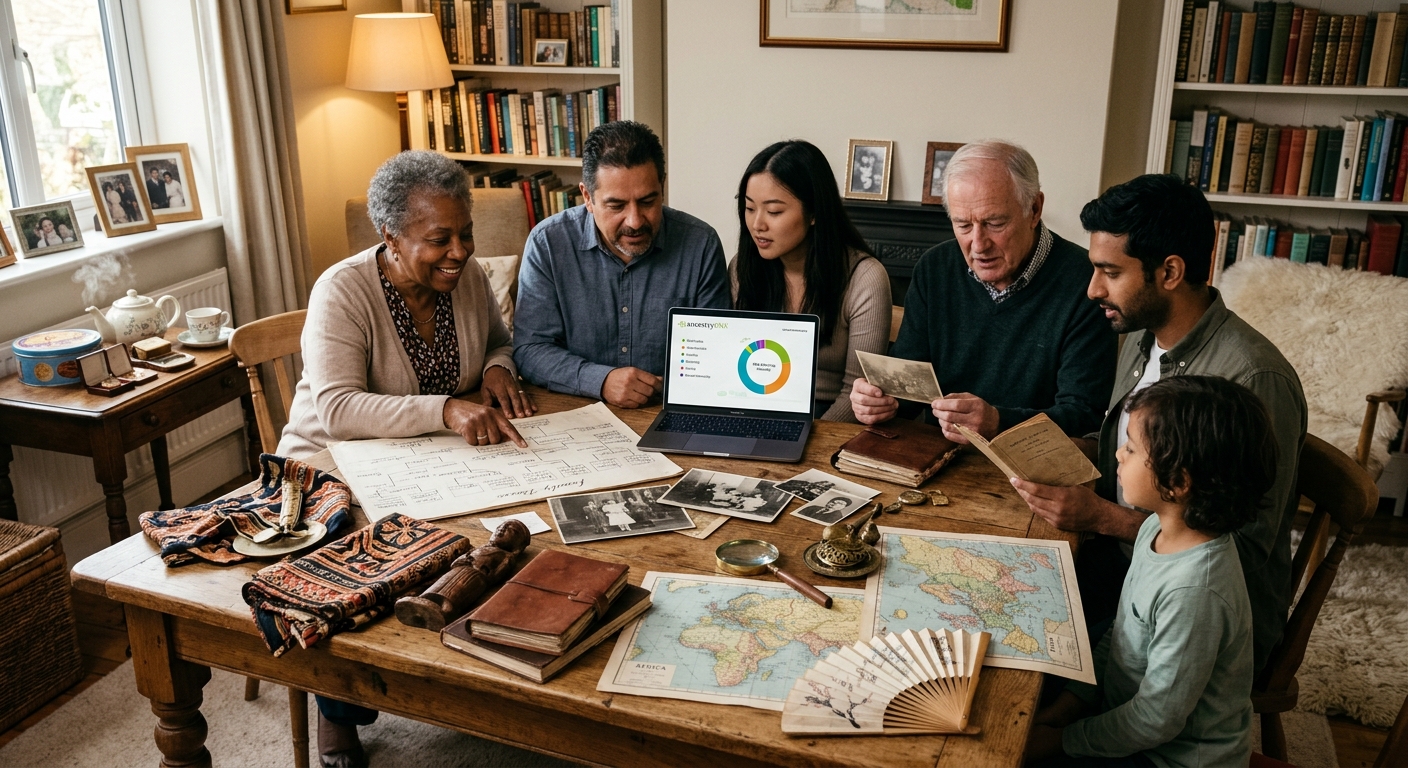
Tracing your heritage effectively combines traditional genealogy, oral histories, and genetic testing to create a rich, accurate family narrative. Each method offers unique insights: DNA testing reveals biological connections, oral histories provide personal narratives, and documentary research validates facts through historical records. Using these methods together ensures a comprehensive exploration of one’s ancestry and may guide further research directions.
Genetic Genealogy
DNA testing has transformed heritage tracing by providing insights into biological relationships that may not appear in traditional records. This approach allows researchers to identify ethnic origins and familial connections, benefiting from services like MyHeritage DNA. However, understanding that results can vary between different testing companies is crucial for interpreting the data accurately.
Oral Histories and Family Interviews
Conducting interviews with family members can reveal essential narratives about personal history not documented elsewhere. These shared stories contribute significantly to genealogical research, enriching family identities despite potential inaccuracies. It’s vital to combine these narratives with documentary evidence to build a reliable family history.
Documentary and Archival Research
Genealogists utilize historical records, such as census data and vital statistics, to construct family trees and verify facts. Understanding the nuances and potential errors in these records is essential for accuracy in research. Relying on multiple sources strengthens the credibility of findings and ensures a comprehensive understanding of one’s ancestry.
Combining Methods for Comprehensive Research
Success in heritage tracing hinges on integrating oral histories, documentary research, and genetic data for a well-rounded view of ancestry. This holistic method not only enriches personal connections but also preserves family identities through accurate genealogical records.
Tools and Resources for Heritage Research
A variety of resources are available for heritage research, including genealogical databases and DNA testing services. Online platforms like Ancestry.com and 23andMe offer insights into ethnic backgrounds while raising questions about privacy and data use. A mix of genetic testing and traditional document research can enhance the understanding of one’s ancestry while ensuring ethical considerations are understood.
Ensuring Accuracy in Genealogical Research
Accuracy in genealogical research is paramount, guided by the Genealogical Proof Standard. This methodology emphasizes comprehensive research, careful analysis of evidence, and clarity in findings. By adhering to these standards, researchers can construct reliable family histories while addressing inherent uncertainties in genealogical data.
Challenges in Tracing Heritage
Researchers face numerous challenges including inconsistencies in historical records and biases in data sources. Furthermore, while DNA testing offers profound insights, it introduces complexities surrounding privacy and the interpretation of results. Acknowledging these limitations is vital for maintaining a critical approach towards genealogical research.
Cultural Significance of Heritage Discovery
Discovering one’s heritage fosters personal connections and a deeper understanding of cultural identity. This journey promotes engagement with traditions and historical narratives, encouraging individuals to explore and celebrate their backgrounds. Ultimately, heritage discovery enriches personal identity and strengthens community ties, reflecting the multi-faceted nature of ethnicity.
Practical Tips for Heritage Exploration
Embarking on your heritage exploration begins with establishing knowledge of your family history and employing structured research methods. Evaluating the credibility of each source found, alongside immersing oneself in cultural practices, personalizes the journey of discovery while enhancing understanding of one’s roots. This multifaceted approach builds meaningful connections to both the past and contemporary relatives.
Case Studies and Examples
Examining real-life case studies showcases how diverse records and DNA testing can illuminate individual and communal histories. These examples underscore the value of combining traditional genealogical methods with genetic analysis, highlighting both the capacity for deepened understanding and the ethical concerns surrounding genetic research.
Impact of Direct-to-Consumer DNA Testing
Direct-to-consumer DNA testing has reshaped how individuals explore their ancestry, offering insights into ethnic origins and increased participation in research efforts. While raises important discussions around privacy and data use, DTC testing also encourages users to engage with their heritage actively. Understanding the implications associated with genetic data is essential to making informed choices in genealogy exploration.
The content is provided by Sierra Knightley, Front Signals