
Screwworm Resurgence Overview
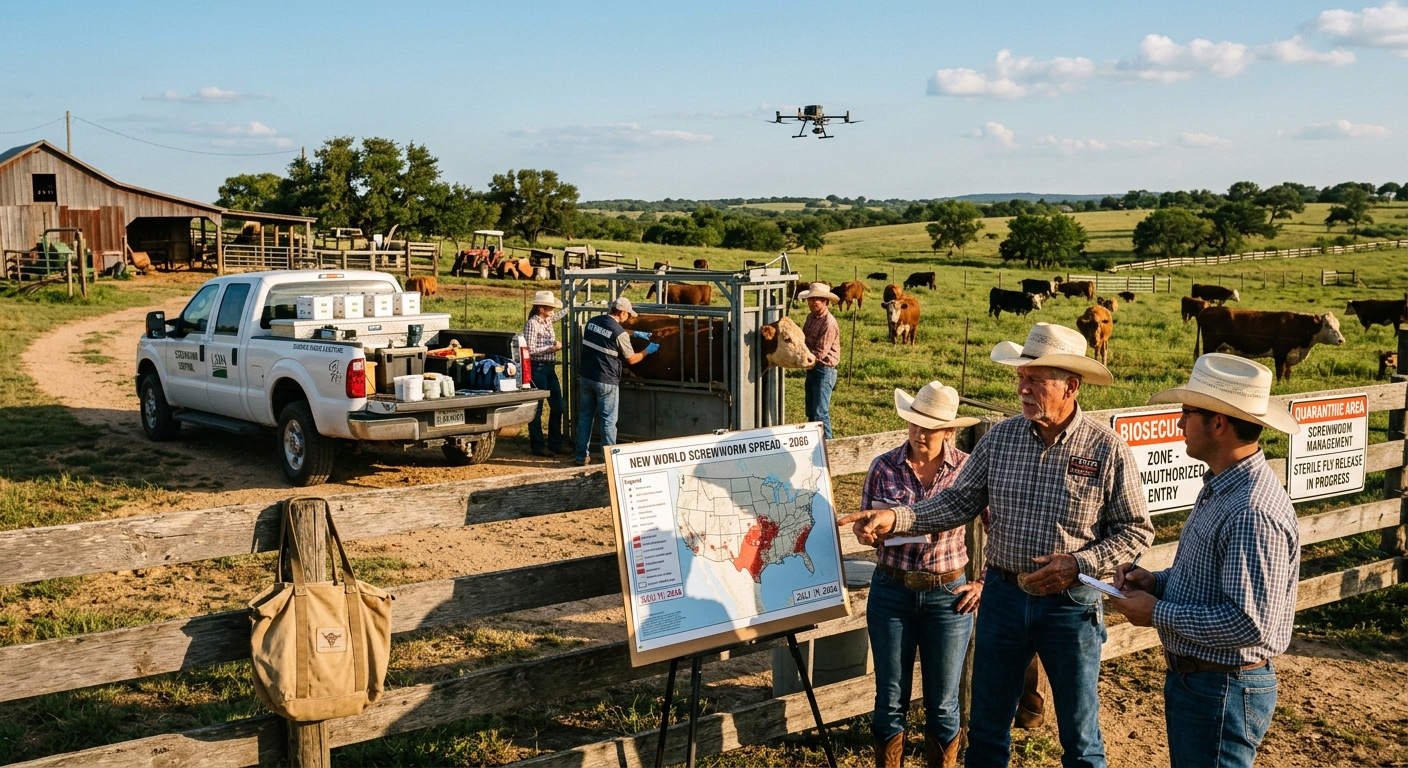
The New World screwworm (Cochliomyia hominivorax) is experiencing a resurgence in the U.S., last detected in the 1960s, now confirmed in southern Texas since June 2026. This occurrence is linked to failures in quarantine measures following breaches in Panama and has already raised alarms about livestock health and economic impacts. Notably, the economic stakes are high, with losses projected to reach hundreds of millions for Texas, a critical state for cattle production. Responding effectively to this outbreak is essential to safeguarding both animal health and economic stability.
Impact on Livestock and Economic Concerns
The resurgence of the screwworm presents a dire threat to Texas’s livestock industry, with potential losses estimated at up to $1.8 billion annually. This includes heightened cattle mortality and increased operational costs for producers. Historical data indicates that similar outbreaks in the past have resulted in substantial financial impact; hence, effective monitoring and management strategies will be paramount in mitigating risks and preserving the agricultural economy.
Control Measures and Response Strategies
State and federal authorities have mobilized to contain the screwworm outbreak through strict quarantine measures and rapid response protocols. Movement restrictions have been implemented in affected counties, complemented by immediate veterinary treatments for infested animals. The Sterile Insect Technique (SIT) involving the release of sterile male flies is a cornerstone of current suppression efforts, demonstrating established effectiveness in past eradications. Continuous monitoring and quick action are critical to controlling this invasive pest’s spread.
Changes in Farming Practices and Vigilance
In light of the outbreak, livestock producers have adopted modified practices, emphasizing compliance with movement restrictions and vigilance for infestation signs. Early detection is critical; producers are urged to regularly check for symptoms like discharge or foul odors in livestock. Heightened surveillance and adherence to new protocols are necessary to minimize spread and economic repercussions.
Scientific Developments and Research Efforts
Efforts to combat the screwworm outbreak have driven advancements in scientific research focusing on detection and control methodologies. The utilization of SIT is pivotal; ongoing research aims to refine breeding techniques and improve sterile fly production to ensure effective pest suppression. Enhanced biosecurity measures, including collaborative efforts with neighboring countries, are also part of the strategy to curb the infestation effectively.
Public Awareness and Communication
The recent outbreak has garnered considerable media attention, emphasizing the need for public awareness regarding the situation. Authorities have engaged with media to disseminate critical information about infestation signs and control measures. Ongoing communication with cross-border partners is vital to prevent the wider spread of the screwworm, ensuring stakeholders remain informed and vigilant.
Lessons from the Outbreak
This recent screwworm incursion underscores the need for prompt and coordinated responses to invasive pests. The experience reinforces the effectiveness of established eradication methodologies and highlights challenges in adapting farming practices effectively. Recognizing past outbreaks’ implications will inform future strategies, emphasizing the critical nature of vigilant monitoring and adaptive management in agricultural practices.
The content is provided by Jordan Fields, Front Signals