
Summary
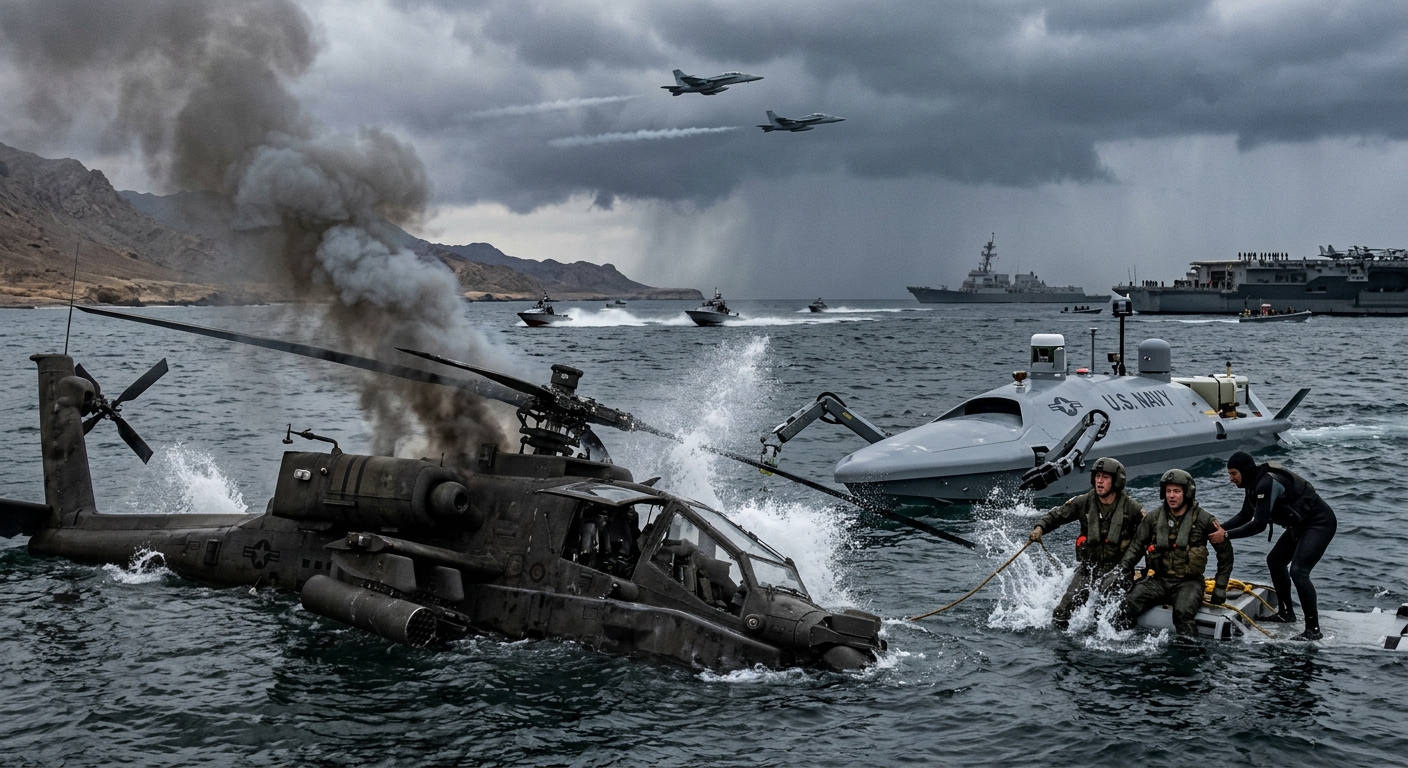
The downing of a U.S. Army AH-64 Apache helicopter near the Strait of Hormuz on June 8, 2026, heightened tensions between the U.S. and Iran during a critical maritime conflict. Struck by an Iranian Shahed drone, this incident not only marked the loss of a significant military asset but also showcased the innovative use of an unmanned surface drone in a successful rescue of the crew members. This escalation reflects increased Iranian aggression in the region and the potential for broader military confrontation, impacting global energy markets and maritime security.
Strategic Importance of the Strait of Hormuz
The Strait of Hormuz serves as a vital artery for global energy, with about 25% of the world’s seaborne oil and a significant share of liquefied natural gas transiting through it. Tensions have historically been high, with Iran frequently employing aggressive tactics such as drone strikes and blockades that threaten navigation freedom. The current environment, exacerbated by a U.S.–Israeli conflict with Iran, raises risks for commercial shipping and amplifies global energy market vulnerabilities.
The Helicopter Attack and Initial U.S. Response
On June 8, 2026, an Iranian drone downed a U.S. Apache helicopter amid escalating regional hostilities, marking the first Apache loss since the conflict began. Although the crew was safely rescued using a naval drone, the incident emphasizes the fragility of the cease-fire and the ongoing Iranian military maneuvers in the Strait. The response from President Trump indicated a potential military escalation while the U.S. increased its military presence in the region, reflecting a unified strategy to ensure navigation security despite ongoing threats from Iran.
Iranian Naval Activities and Strategic Posturing
Iran’s naval forces, including the Islamic Revolutionary Guard Corps (IRGC), maintain a significant presence in the Strait of Hormuz, conducting aggressive operations that challenge foreign naval activity. The IRGC employs fast boats and missile systems to assert control, often resulting in confrontations with U.S. forces. Continuous threats to disrupt shipping in response to sanctions indicate Iran’s intent to leverage its naval capabilities for regional influence, contributing to an unstable maritime security environment.
Regional and International Reactions to the Incident
The incident sparked a robust response from the U.S. and other nations, underscoring the geopolitical significance of the Strait. The U.S. condemned Iranian actions as piracy while enhancing military operations to safeguard maritime routes. International partners, including GCC countries and major powers, coordinated efforts to maintain security in the strait, with some nations beginning to reroute oil exports, reflecting heightened risk perceptions among global stakeholders.
Broader Context and Implications
The helicopter incident occurred in a broader context of rising tensions and confrontations involving Iran, Israel, and the U.S., with implications for freedom of navigation in the Gulf. The operational landscape has dramatically shifted due to aggressive Iranian tactics and U.S. military responses, highlighting the volatile nature of the region. Potential disruptions in the Strait of Hormuz could lead to severe consequences for global oil markets and strain international commercial shipping routes.
Aftermath and the Future Landscape
In the wake of the helicopter attack, the U.S. military successfully conducted a multi-branch rescue operation, emphasizing its commitment to safeguarding crew members and responding assertively to regional threats. As the frequency of military encounters continues to rise, the situation remains precarious, with the potential for significant disruption to global energy supply chains. Ongoing tensions in this critical maritime chokepoint necessitate increased diplomatic efforts and security measures to ensure navigation remains open and secure amid escalating hostilities.
Strategic Analysis
The incident is viewed as a critical moment in the regional power dynamics, highlighting the intersection of military strategy and energy security. The helicopter’s downing showcased Iran’s capability to challenge U.S. dominance and disrupt vital maritime routes. The potential for economic ramifications from any prolonged regional conflict underlines the necessity for enhanced international cooperation in maritime security, aiming to uphold the free flow of energy resources through the Strait of Hormuz.
The content is provided by Avery Redwood, Front Signals