
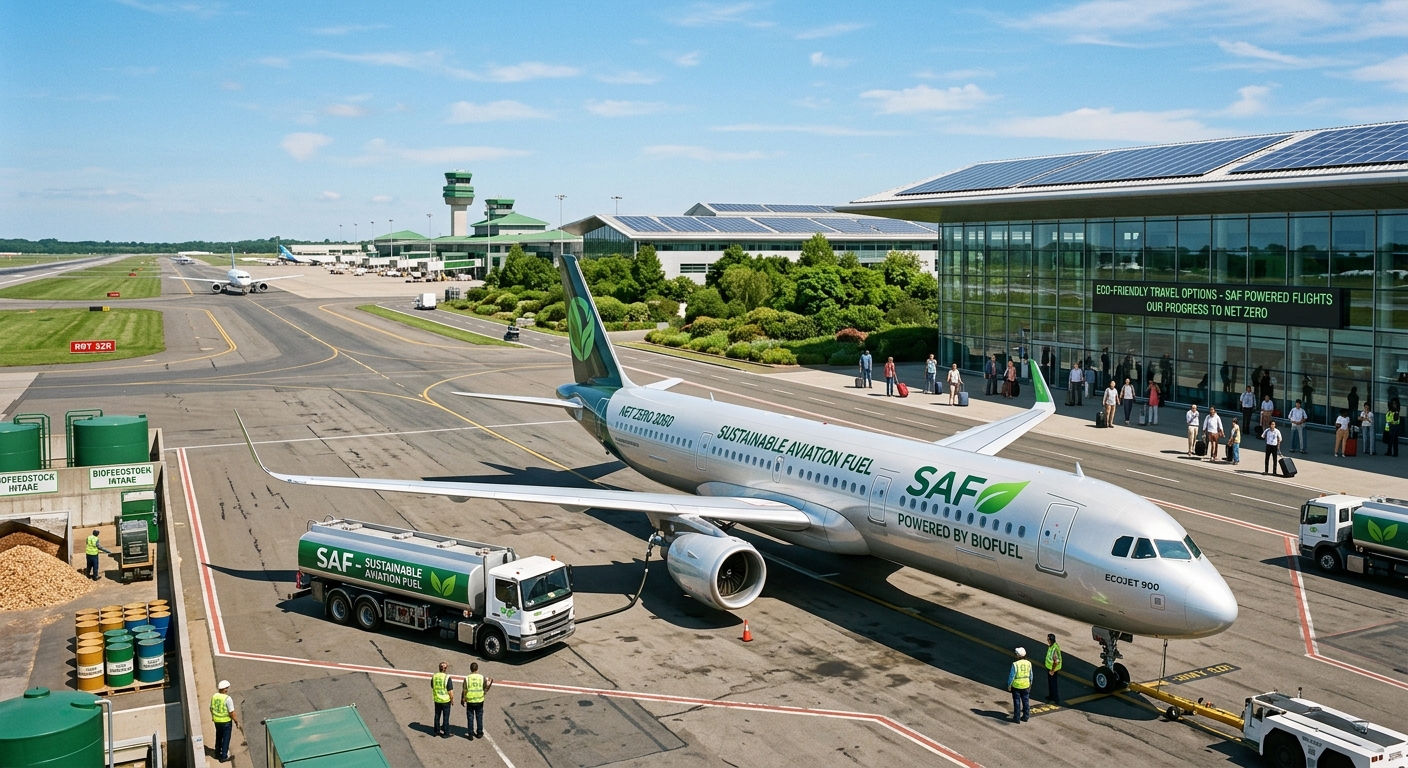
Current Status of Sustainable Aviation Fuel
Sustainable Aviation Fuel (SAF), made from renewable and waste feedstocks like used cooking oil and biomass, currently accounts for only 0.8% of total aviation fuel used globally. This limited share arises from high production costs, feedstock availability issues, technological hurdles, and fragmented sustainability standards. While SAF is essential for the aviation sector’s goal of net-zero carbon emissions by 2050, its current low market penetration highlights the complexities in scaling up its production and adoption.
Current SAF production primarily utilizes Hydroprocessed Esters and Fatty Acids (HEFA) technology, which reduces lifecycle greenhouse gas emissions but is constrained by supply and economic viability. Regulatory frameworks in regions such as the European Union, United States, and United Kingdom are evolving, yet the gap between current production capacity and ambitious decarbonization targets remains vast. Industry collaborations, such as the U.S. Sustainable Aviation Fuel Grand Challenge and the EU’s ReFuelEU Aviation regulation, aim to tackle these challenges but are still influenced by economic variables like fossil fuel prices.
Barriers to SAF Adoption
Several hurdles hinder the widespread adoption of SAF, including unclear business cases and market demand. This uncertainty impacts investor confidence across the aviation value chain, as stakeholders hesitate to lead the transition away from fossil fuels without assurance that others will follow. Certification and regulatory challenges complicate the entry of new SAF production pathways, necessitating extensive testing before compliance can be achieved under varying global standards.
Even as production technology advances, economic factors remain a significant barrier, with high production costs for SAF compared to conventional jet fuel. Constraints on feedstock availability due to competition from other industries further limit scalability, alongside logistical challenges in developing infrastructure. Developing cohesive, supportive government policies and standardized sustainability criteria are essential in addressing these issues and ensuring a viable market for SAF.
Technological Innovations and Industry Initiatives
Significant technological advancements in SAF production aim to optimize feedstock utilization and increase manufacturing capacity. Innovations focus on integrating diverse feedstocks and improving production efficiency to meet decarbonization targets effectively. Leading companies, such as Neste and TotalEnergies, are investing in next-generation SAF technologies to drive down costs and enhance scalability, recognizing the importance of localized feedstock cultivation and safety certification in this process.
Government initiatives and strategic partnerships among various stakeholders are crucial in supporting these technological developments. In the U.S., federal agencies coordinate to escalate SAF production, targeting a reduction in lifecycle greenhouse gas emissions alongside practical infrastructure investments. The establishment of a globally recognized sustainability certification system is also essential for fostering equity and transparency within the SAF market.
Future Prospects and Strategic Pathways
Looking ahead, the success of SAF hinges on overcoming production and supply chain challenges to meet the aviation industry’s ambitious decarbonization goals. This requires rapid technological advancements and significant investments in expanding production capacity. Building strategic partnerships will be vital in addressing barriers related to logistics, costs, and feedstock availability, while ongoing innovation in SAF production pathways will be necessary to foster a more robust sustainable aviation market.
Effective policy frameworks enabling access to renewable energy and sustainable feedstocks will significantly enhance SAF deployment. Recommendations for policymakers include establishing national SAF policies with blending mandates, funding mechanisms linked to fossil fuel obligations, and bolstering moderate-scale production facilities. By integrating robust sustainability criteria, the aviation sector can make meaningful strides towards achieving its net-zero emissions targets by 2050, with SAF poised to contribute considerably to these efforts.
The content is provided by Avery Redwood, Front Signals