
IPO Overview
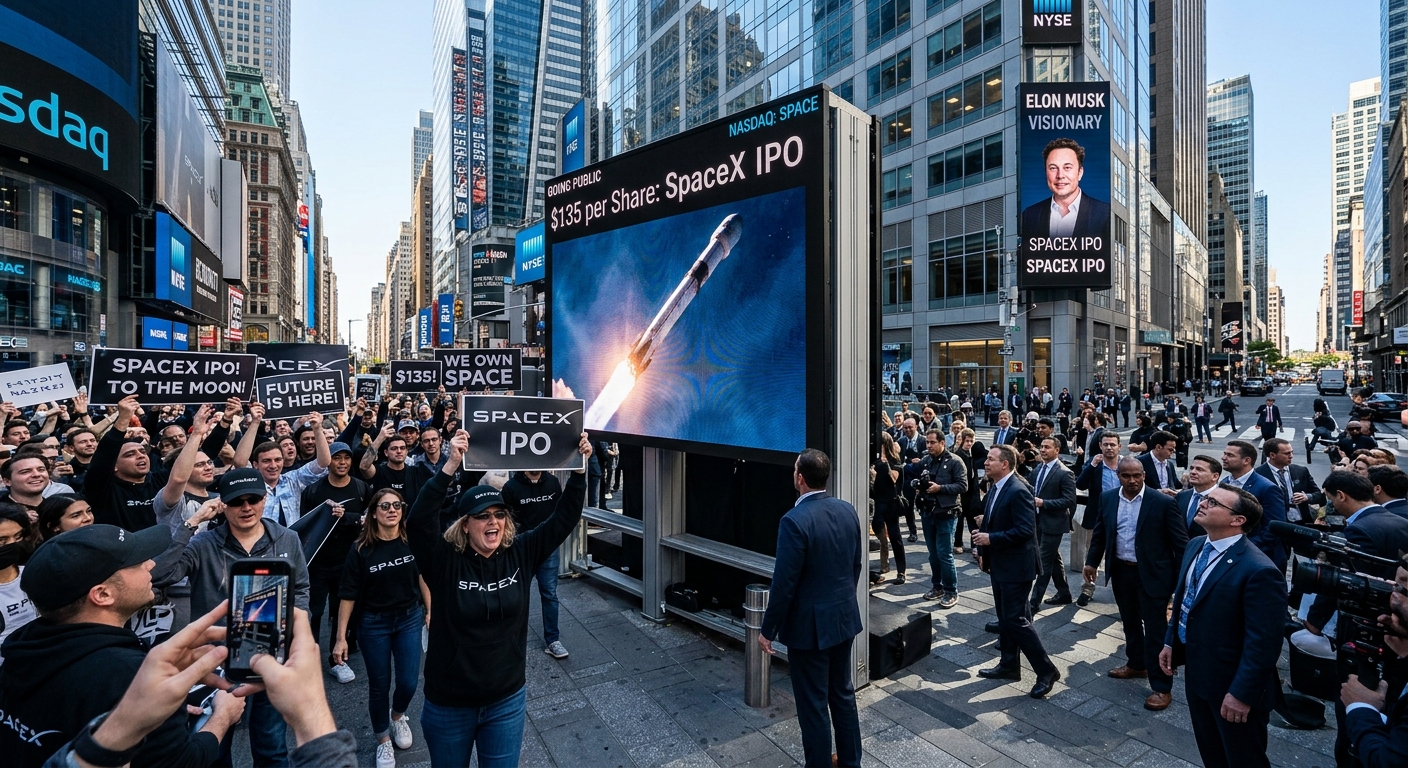
SpaceX’s IPO, priced at $135 per share, values the company at about $1.75 trillion, making it one of history’s largest offerings. Targeting $75 billion through the sale of over 555 million shares, the IPO showcases SpaceX’s leadership in commercial space launch services, where it commands over 60% of the market. However, concerns arise from its concentrated ownership under Elon Musk and the ambitious yet uncertain timelines for projects like the Starship launch vehicle and orbital AI systems, which are not expected to achieve commercial viability until at least 2028.
Market Sentiment and Demand
Investor enthusiasm for SpaceX is palpable, yet analysts highlight the inherent risks associated with the IPO. While a significant portion of shares (30%) is allocated for retail investors, many may struggle to secure allocations given high demand. SpaceX’s unusual pricing strategy and preemptive announcement during market hours indicate its deviation from traditional IPO approaches, signaling a potential volatility in aftermarket performance as supply remains limited.
Technological Aspirations and financial outlook
The IPO filing underscores pivotal technical goals, primarily the development of the Starship for reusable launches and scalable orbital AI infrastructure. These advanced systems are integral to realizing SpaceX’s long-term vision, but substantial investment—estimated at over $12 billion for AI technologies—highlights the risks associated with ambitious growth targets. Market analysts caution that uncertainties regarding execution outcomes and revenue models may affect long-term valuation despite initial market excitement.
Governance Structure and Ownership Risks
SpaceX’s governance raises essential considerations for investors, particularly due to Elon Musk’s substantial control, owning about 42% of equity and maintaining around 79% of voting power. Such concentration of power may limit minority shareholders’ influence and raise what analysts term “key-person risk.” The presence of arbitration clauses further complicates the governance landscape, prompting potential investors to mindfully assess these risks in context with expected market performance.
Employee Impact and Market Considerations
Employees at SpaceX face complex tax implications related to their equity compensation, especially with the IPO imminent. Different equity types, including RSUs and stock options, come with varied tax treatments that can create liquidity challenges for employees. As the company transitions to public status, strategic planning around equity management becomes critical for employees aiming to minimize tax burdens and maximize potential long-term gains.
Future Growth and Strategic Initiatives
SpaceX’s future growth is expected to be propelled by its expanding Starlink satellite division and ambitious launch initiatives. The company’s focus on orbital AI infrastructure and the potential for a Starlink IPO could significantly enhance its market valuation. However, successful execution of these initiatives hinges on overcoming significant technical challenges and establishing operational efficiencies that align with its expansive market ambitions.
Public and Regulatory Perspectives
The public, media, and regulatory reactions to SpaceX’s IPO signify a critical moment of transition from private to public scrutiny. Analysts and experts caution that while the potential for transformative impact exists, the IPO may expose SpaceX to competitive pressures and accountability challenges inherent in the public markets. Concerns surrounding governance, especially Musk’s control, warrant attention as they may affect investor confidence and expectations moving forward.
The content is provided by Sierra Knightley, Front Signals