
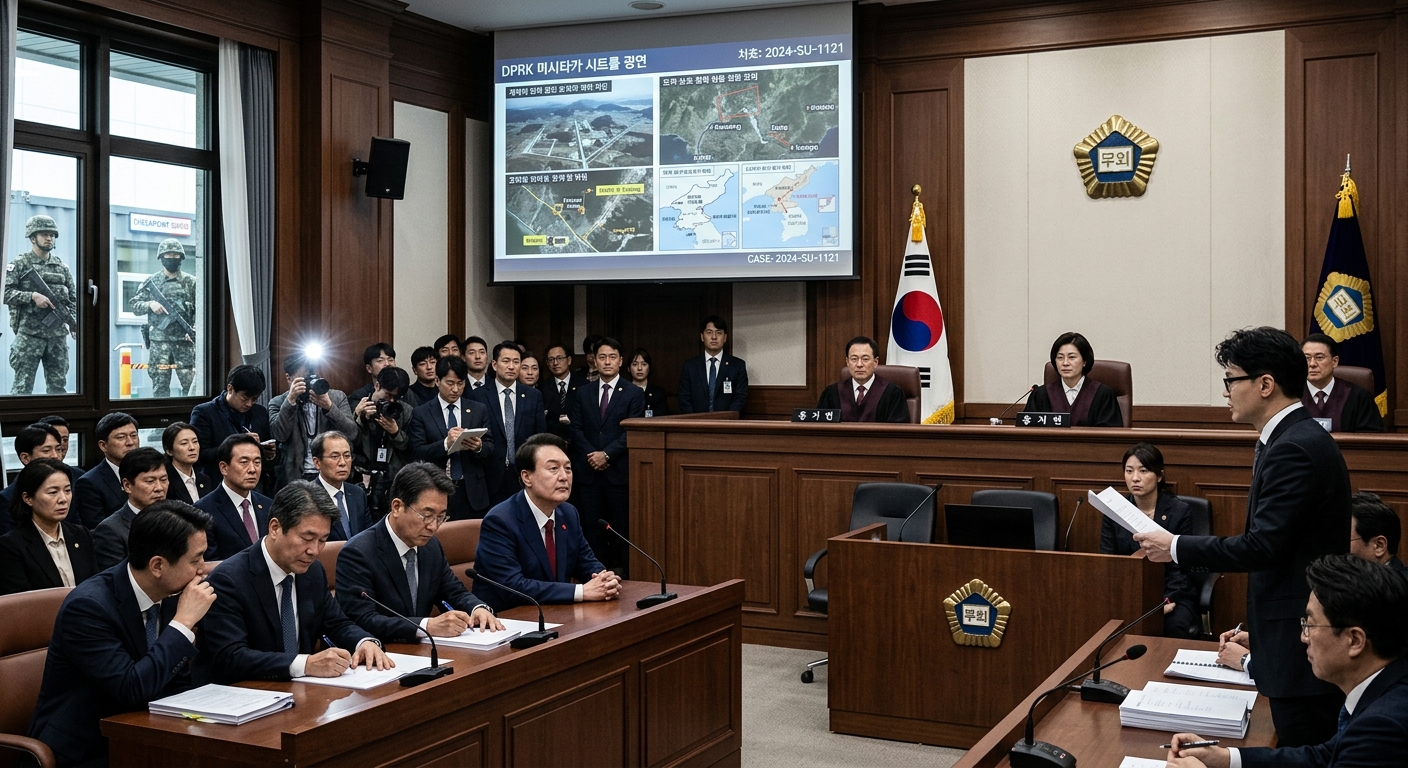
Summary of Yoon Suk-yeol’s Conviction
In 2026, former South Korean President Yoon Suk-yeol received a life sentence for orchestrating controversial drone operations over Pyongyang in 2024, escalating tensions between North and South Korea. His administration was charged with abuse of power and treason after prosecutors linked the drone flights to a declaration of martial law, aimed at creating a national crisis for political gain. The operations included over 230 flight plans targeting key sites in North Korea, leading to severe democratic repercussions and Yoon’s eventual impeachment.
Escalating Tensions Leading to Martial Law
The political climate in South Korea deteriorated significantly with Yoon’s drone operations, which North Korea labeled as provocations. These incursions, including at least three missions in October 2024, targeted sensitive areas in North Korea and were interpreted as attempts to undermine the neighboring regime. Yoon’s martial law declaration in December 2024, framed as a response to alleged threats, further polarized South Korean politics and suspended crucial democratic activities.
Details of the Drone Operations
The 2024 drone operations marked a significant escalation in North-South Korean tensions. South Korea’s drone missions were aimed at dropping propaganda leaflets but were also perceived as a strategy to provoke a military confrontation, raising risks for national security. The operations were intimately connected to Yoon’s leadership, as prosecutors later showed evidence that implicated him directly in the decision-making process, linking these provocations to broader political goals.
Legal Consequences for Yoon Suk-yeol
Following his ousting, Yoon faced serious legal challenges relating to charges of obstruction of justice, treason, and abuse of power for his actions during the drone crisis. His trial revealed a pattern of authoritarian measures that compromised South Korea’s democratic framework, leading to a life sentence for rebellion and additional penalties for espionage. Despite his defense arguing for the legitimacy of his actions as self-defense against North Korea, the court ruled that the risks posed by his decisions justified the severe consequences.
Sentencing and Public Reaction
Yoon’s sentencing on June 12, 2026, underlined the severity of his actions, as the court determined that his directives regarding drone flights constituted treasonous behavior that elevated military tensions. The ruling was part of a larger crackdown on officials associated with his administration, indicating a shift towards accountability and democracy restoration in South Korea. Public perception remained divided, with Yoon’s supporters arguing for his appeal based on claims of self-defense against external threats.
Implications for South Korea’s Political Landscape
The aftermath of Yoon’s conviction marked significant political upheaval, leading to widespread protests and economic instability in South Korea. His martial law declaration generated public outcry, and the ongoing tensions with North Korea showed a grim continuation of a hostile inter-Korean relationship. Yoon’s situation raises questions about the future of South Korea’s democracy amid concerns of rising authoritarianism and the complex dynamics with North Korea, which continues to enhance its military posture despite the political turmoil in the South.
The content is provided by Sierra Knightley, Front Signals