
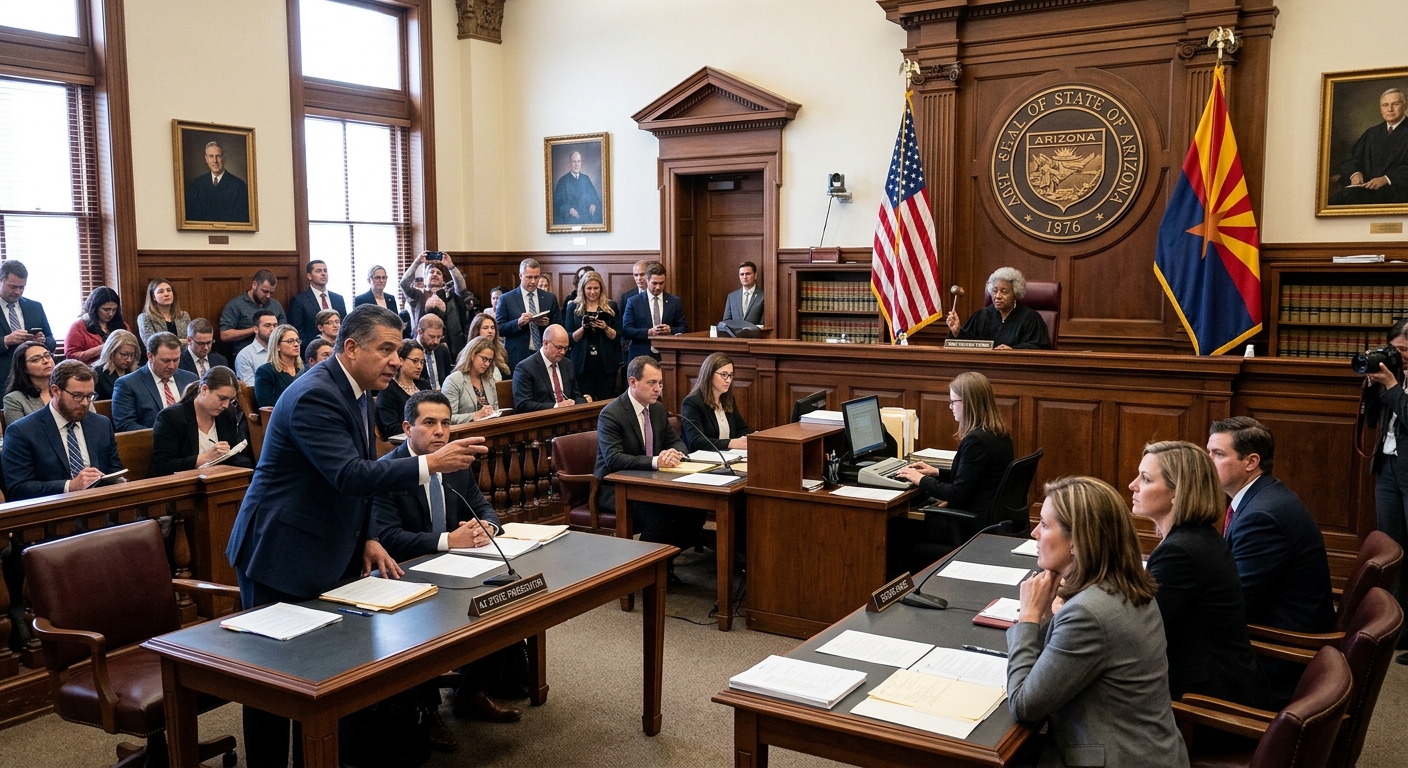
Summary of the Arizona Supreme Court’s Decision
The Arizona Supreme Court’s June 2024 ruling to reject the prosecutors’ attempt to revive the fake elector case is a significant progression in the legal battles stemming from the 2020 election. This case involves 18 Republicans, including associates of Donald Trump, accused of attempting to submit false elector slates to challenge Joe Biden’s victory. Prosecutors assert the defendants engaged in conspiracy and fraud, while the court’s decision highlights procedural complexities, particularly regarding the interpretation of the Electoral Count Act.
Legal Challenges and Context
The legal landscape surrounding the fake elector case is complex, as it involves interpretations of both state and federal laws pertaining to presidential elector certification. Central to the conflict is the pre-2022 version of the Electoral Count Act, which the defense claims allowed for alternative elector slates under contested circumstances. A 2022 amendment to the Act, which clarified procedures, does not apply retroactively, framing the current legal debates and influencing court decisions.
Prosecutors’ Efforts and Court Proceedings
In April 2024, Attorney General Kris Mayes indicted 18 defendants linked to the fake elector scheme. The case faced delays, including a successful defense argument that prior grand jury proceedings lacked crucial information about the Electoral Count Act. Following the Arizona Supreme Court’s recent ruling, the prosecution will need to present the case again to a new grand jury, complicating timelines and strategies. The long-term implications for similar prosecutions in other states are being closely monitored, reflecting ongoing judicial scrutiny of election-related legal processes.
Defense Strategy and Legal Interpretations
The defense argues the statutes interpret their actions as legally permissible under the law’s ambiguity before its 2022 amendment. They emphasized procedural errors in previous grand jury processes as justifications for their submissions. The defense also insists that the interpretations of state law regarding replacement electors support their stance on lawful conduct during the election challenges.
Impact of the Arizona Supreme Court Ruling
As the Arizona Supreme Court rejected the prosecutors’ appeal, broader implications arise for ongoing election integrity debates, especially as similar cases in battleground states have seen dismissals. The ruling reinforces the need for careful examination of grand jury processes in politically charged cases. Defendants maintain that the charges lack substantive merit due to the ambiguities within election laws, as both sides prepare for the next stages of legal action amidst evolving interpretations of election statutes.
Continued Legal Landscape and Future Developments
The Arizona Supreme Court’s decision marks a pivotal moment in the broader context of the 2020 election controversy. Similar dismissals in other states indicate a potential trend, complicating the legal landscape surrounding prosecutions of alleged election fraud. Ongoing cases in states like Arizona, Nevada, and Wisconsin remain under scrutiny, signaling how these developments could influence future interpretations of election law and the boundaries of political accountability.
The content is provided by Avery Redwood, Front Signals