
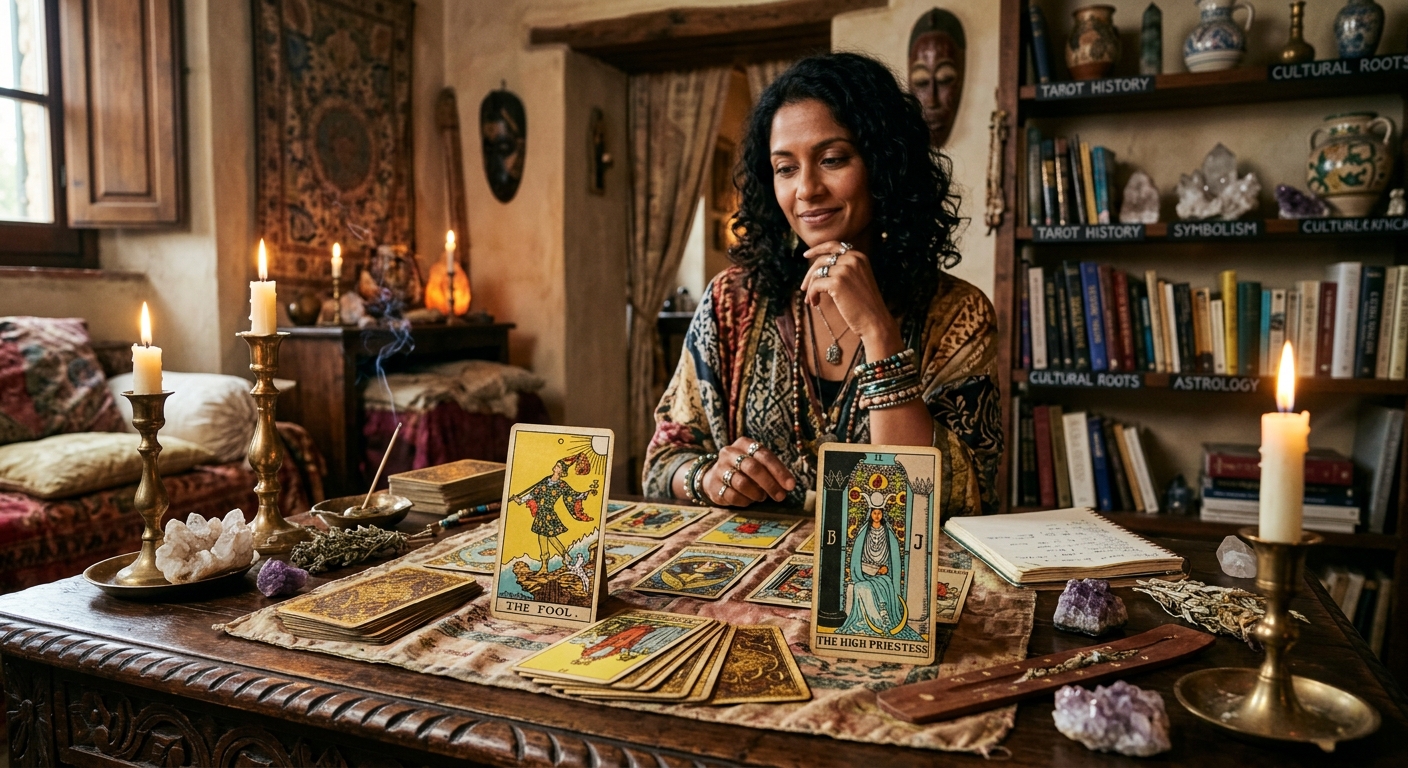
Summary
Unveiling Tarot: From Ancient Origins to Today’s Fascinating Allure investigates the historical evolution of tarot cards, highlighting their origins as a 15th-century Italian card game and subsequent transformation into tools for divination and personal insight. Initially used for entertainment, tarot’s complexity grew with influences from figures like Antoine Court de Gébelin and modern reinterpretations by occultists such as Aleister Crowley. The article reveals how tarot’s rich symbolism and cultural adaptations have shaped its contemporary applications, emphasizing the importance of ethical awareness in its diverse practices today.
History
Tarot cards originated in 15th-century Italy as a pastime rather than a mystical instrument, featuring standard suits akin to traditional playing cards. Initially enjoyed by the aristocracy, tarot decks included trump cards that evolved in iconography, influenced by medieval and Renaissance themes. Over time, this gameplay transitioned into techniques for divination, especially with 18th-century figures associating tarot with Egyptian lore, leading to modern interpretations from influential artists and spiritual thinkers who emphasized psychological and mystical symbolism.
Structure and Symbolism
Tarot decks are mainly categorized into the Major and Minor Arcana, with the former consisting of 22 archetypal cards representing stages of a spiritual journey. The Minor Arcana includes 56 cards divided into four suits, each reflecting societal structures and elemental concepts from earlier periods. The symbolism within tarot layers Christian allegory and classical mythology, later expanded by esoteric teachings linking the cards to mysticism, suggesting profound numerical and thematic correspondences that enhance their interpretive depth.
Cultural Variations and Practices
Tarot has adapted across cultures, intertwining with local spiritual practices from Brazil’s Afro-Brazilian traditions to Mexico’s interpretations of the Death card. These variations illustrate how tarot meanings evolve within different cultural contexts, influencing rituals and community practices globally. The ethical implications of tarot’s usage, particularly concerning its historical association with the Romani people, highlight the ongoing debates about cultural appropriation and the need for respectful engagement with the tradition.
Uses and Applications
Tarot cards serve various functions, from divination to psychological introspection, reflecting users’ quests for self-awareness and understanding. Different cultures incorporate tarot based on local beliefs and traditions, emphasizing community connections and individual exploration. Modern practices embrace tarot’s potential for emotional and spiritual growth, allowing readers to tailor their approaches whether through personal rituals or the diverse array of available decks that resonate with unique cultural backgrounds.
Modern Tarot Decks and Innovations
Today’s tarot decks showcase extensive artistic variety and cultural influences, moving beyond traditional structures to include diverse themes that reflect creators’ experiences and backgrounds. Innovations often blend tarot with local spiritual practices, enriching the reading experience through collaborative approaches with mediums. Although the core symbolism remains consistent, contemporary decks explore classical themes linked to esoteric traditions, ensuring that tarot continues to be a relevant tool for personal insight and expression across cultures.
Criticism, Skepticism, and Academic Perspectives
The interpretation of tarot faces scrutiny, primarily from academic critics who prioritize historical and cultural accuracy. While skeptical views exist, they also encourage a deeper examination of tarot’s authenticity and the evolution of its symbolic meanings, pushing practitioners to consider the historical context and contemporary relevance of tarot practices. Engaging with these criticisms can strengthen understanding and appreciation of tarot as a complex cultural artifact.
The content is provided by Avery Redwood, Front Signals