
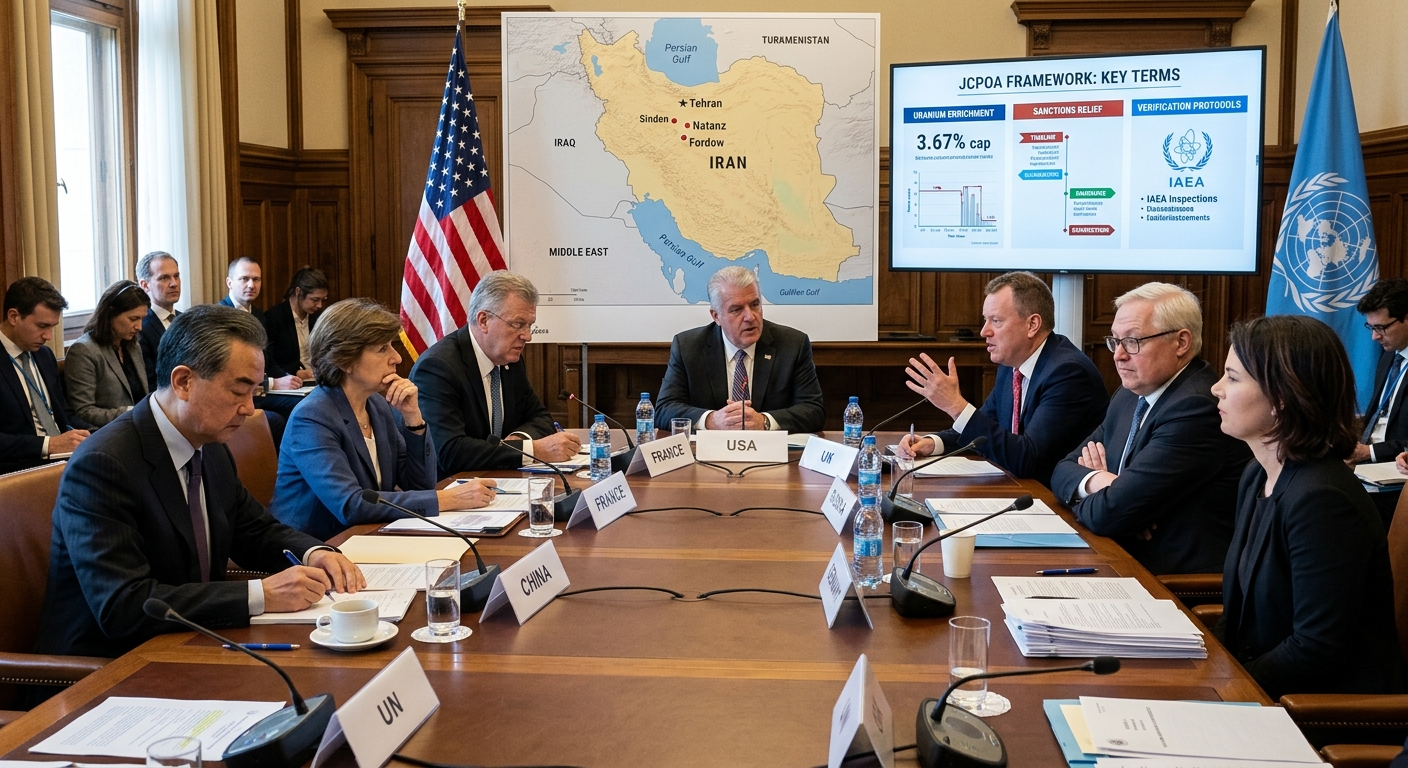
Summary of the JCPOA
The Joint Comprehensive Plan of Action (JCPOA), commonly referred to as the Iran nuclear deal, was established in 2015 to limit Iran’s nuclear capabilities in exchange for sanction relief. While Iran initially complied and saw many sanctions lifted, opposition from hardliners both in Iran and in the U.S. escalated tensions surrounding the deal. The U.S. withdrawal in 2018 led to increased Iranian nuclear activity, raising concerns about nuclear proliferation and regional stability.
Core Features of the JCPOA
The JCPOA imposed critical restrictions on Iran’s nuclear program, including limits on uranium enrichment and stockpiles, with rigorous monitoring by the International Atomic Energy Agency (IAEA). Although the deal aimed to alleviate concerns regarding nuclear weapons development, it faced internal resistance in Iran and was criticized for not addressing broader issues like Iran’s regional activities. The “snapback” mechanism intended for immediate measures if Iran violated the agreement became a focal point of debate post-U.S. withdrawal.
U.S. Withdrawal and Its Consequences
The Trump administration’s withdrawal from the JCPOA marked a significant shift, reinstating sanctions and igniting diplomatic disputes with European allies still committed to the agreement. This unilateral approach complicated international relations and escalated Iran’s nuclear activities, including enrichment beyond agreed limits. The ensuing geopolitical tensions heightened fears of conflict in the region and complicated future diplomatic negotiations.
International Reactions and Responses
The global response to the U.S. withdrawal varied widely. European allies expressed disappointment and sought to support the JCPOA, while countries like China and Russia condemned the U.S. actions as detrimental to multilateral governance. The European Union enacted a blocking statute to shield its firms from U.S. sanctions, emphasizing its commitment to the nuclear deal despite the challenges presented by U.S. policy shifts.
Legal and Diplomatic Complexities
Legal disputes arose around the “snapback” mechanism as the U.S. attempted to restore sanctions without participating in the JCPOA. Most Security Council members opposed this, considering it legally questionable, further complicating enforcement. The Biden administration’s efforts to engage diplomatically and seek a return to mutual compliance reflect ongoing challenges stemming from the prior unilateral decisions and Iran’s nuclear escalations.
Current Status and Future Outlook
Efforts to revive the JCPOA continue amidst significant geopolitical hurdles and Iran’s advancements in nuclear technology. Despite the complexities of enforcement and differing national interests, the framework established by the JCPOA remains pivotal in discussions regarding nuclear non-proliferation and regional security. Achieving a balanced approach will require navigating various international dynamics, including the role of sanctions and diplomatic negotiations going forward.
The content is provided by Jordan Fields, Front Signals