Summary
Unlocking the Mystique: Exploring the Timeless Allure of Tarot Cards from Ancient Origins to Today’s Fascination delves into the evolution of tarot cards from their origins as a Renaissance card game to their current roles in divination and self-reflection. Initially, tarot decks symbolized cultural prestige and leisure among the aristocracy, showcasing allegorical artwork rather than mystical themes. The structure combining Major and Minor Arcana laid the groundwork for modern interpretations, even as debates persist between historians, who stress their game-like roots, and practitioners, who view them as spiritual tools.
Historical Origins
Emerging in 15th-century Italy, tarot cards were initially designed for entertainment rather than divination, with the Visconti-Sforza decks serving as prime examples. These decks consisted of 78 cards split into four suits and trump cards that conveyed moral lessons through rich imagery. While some evidence suggests earlier forms resembling tarot existed in Germany, the established tarot as we know it blossomed in Italy, reflecting the cultural and political sophistication of the time rather than possessing any inherent mystical characteristics.
Structure and Design of Tarot Cards
Traditional tarot decks consist of a complex structure featuring four suits alongside a set of trump cards. The Major Arcana comprises 22 cards that depict significant archetypes while the Minor Arcana features four suits, mirroring modern playing cards in structure. The artwork and symbolism in these cards have evolved, shifting in focus from gameplay to serve as tools for personal insight and exploration.
Composition and Symbolism
A standard tarot deck includes the Major Arcana and the Minor Arcana, with each card layered in symbolism that reflects spiritual journeys and personal growth. Early decks, like the Visconti-Sforza, emphasized political themes and civic allegory rather than the esoteric elements introduced later. Regional variations can also be observed in the suits, which may differ in nomenclature and symbolism based on cultural context.
Evolution of Tarot’s Purpose
From the 18th century onward, tarot began to shift towards mystical associations, becoming integrated into various spiritual practices and esoteric traditions, although these links were relatively modern additions. Tarot transitioned into tools for self-reflection and meditation during this time, influencing interpretations and practical usage. Contemporary tarot readings are often viewed not as definitive predictions but as prompts for deeper personal insights.
Modern Popularity
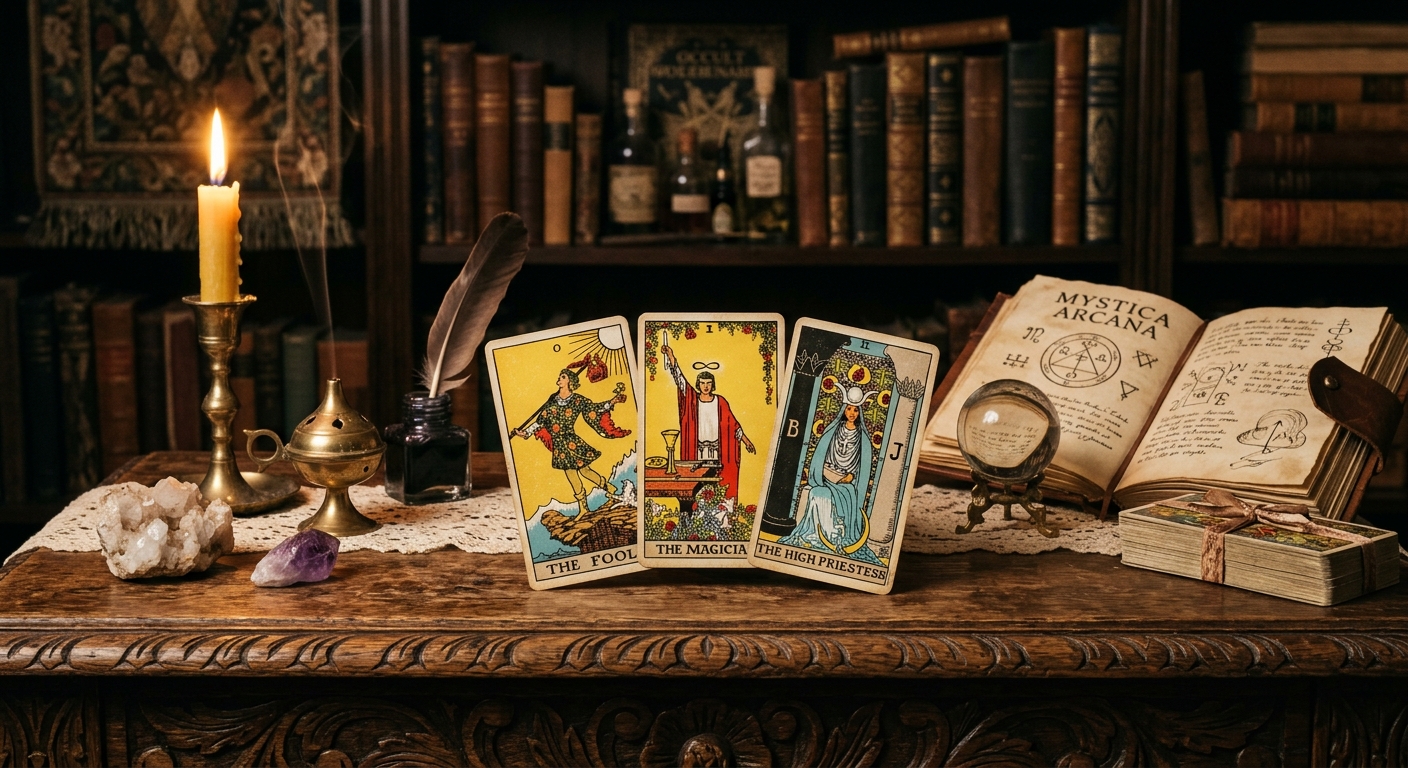
The rise in modern enthusiasm for tarot began when decks transitioned from luxury items to instruments for spiritual and personal exploration during the 19th century. The creation of the Rider-Waite deck significantly contributed to its popularity, characterized by clear imagery and accessible interpretations. Today, tarot is recognized for its versatility, appealing to various individuals seeking insight and reflection through its diverse themes and artistic expressions.
Criticism and Skepticism
Debate exists surrounding the historical and spiritual significance of tarot, with historians pointing to its origins as mere playing cards, while practitioners emphasize its mystical value. Critics argue that the narrative framing tarot as an ancient divination tool is largely a fabrication, with substantial gaps in historical evidence. This discourse raises important considerations about the nature of tarot as both a cultural artifact and a contemporary spiritual practice.
Collecting and Enthusiast Communities
The pursuit of tarot card collecting engages both enthusiasts and historians, drawn to the cards’ artistic and historical richness. Collectors often seek rare historical decks like the Visconti-Sforza, providing insight into their cultural origin. The present-day diversity in tarot deck themes fosters a vibrant community, where individuals explore personal expression through both use and scholarly inquiry into their symbolic meanings.
The content is provided by Harper Eastwood, Front Signals