
Leadership Changes and Intelligence Restructuring
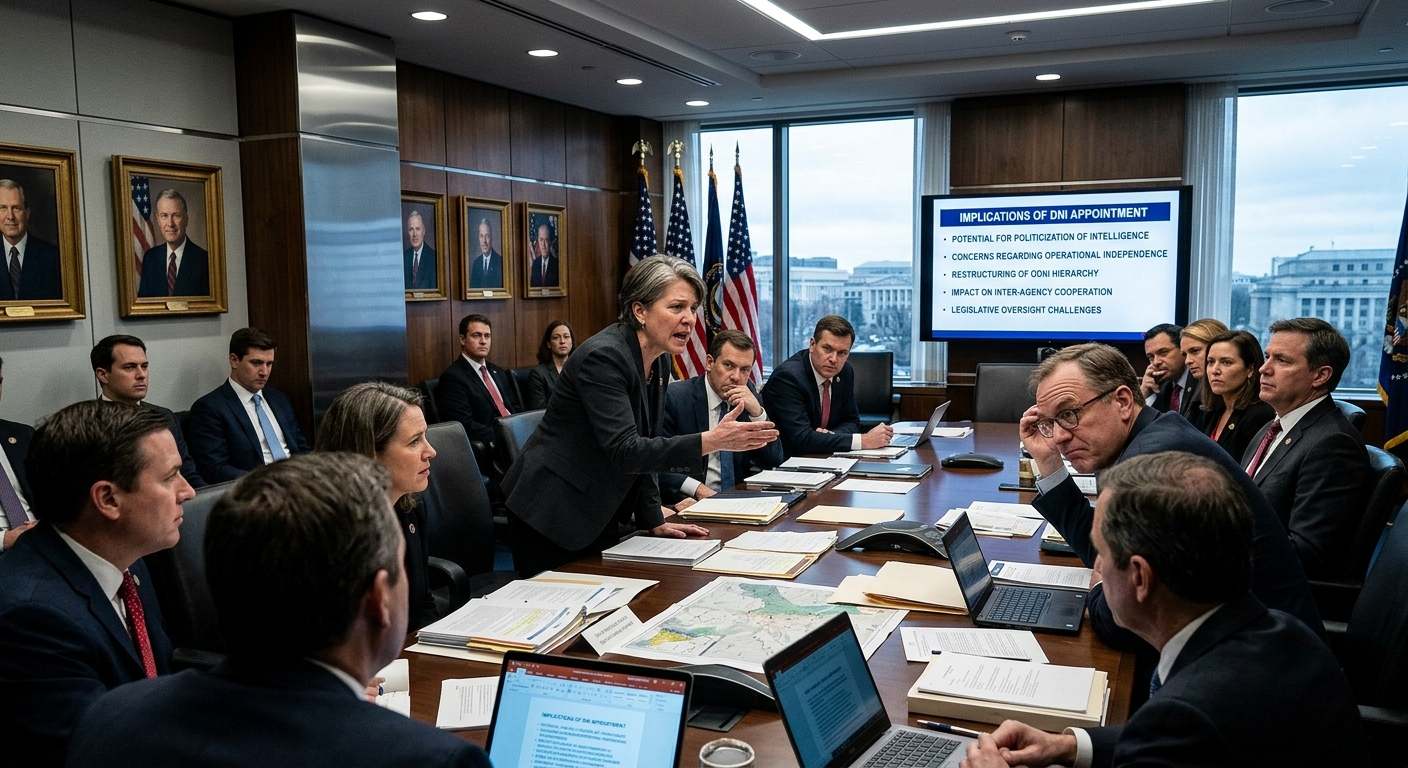
The appointment of Bill Pulte as acting Director of National Intelligence (DNI) in 2025 marked a considerable change in U.S. intelligence leadership. Pulte, lacking a background in intelligence or national security and previously director of the Federal Housing Finance Agency, faced directives from President Trump to substantially reduce staffing within the Office of the Director of National Intelligence (ODNI). This aim to streamline operations and cut bureaucratic waste came amid heightened concerns over the effectiveness and independence of the ODNI, tasked with overseeing 18 federal intelligence agencies including the CIA and NSA.
Trump’s dissatisfaction with the ODNI’s size prompted intense scrutiny regarding Pulte’s qualifications and approach. Lawmakers feared the agency’s independence would be compromised for political purposes, potentially impacting critical intelligence assessments, especially regarding sensitive issues such as Anomalous Health Incidents. Critics within Congress argued that Pulte’s lack of relevant experience could undermine the ODNI’s analytical capabilities, as the reshaping of the agency appeared to prioritize political alignment over national security objectives.
Concerns Over Staff Reductions and Agency Effectiveness
The directive for major staff reductions within the ODNI, emphasized by Trump, followed significant downsizing already implemented under former DNI Tulsi Gabbard. Despite having cut the workforce by up to 50% and saving nearly $1 billion, further reductions were pursued to achieve a smaller, more politically aligned intelligence structure. This led to fears that the ODNI’s role was shifting from its intended function as a central analytic hub to one primarily serving the political agenda, thus undermining its capacity to effectively coordinate intelligence efforts.
Particular concern centered around the potential impact of these changes on the handling of sensitive intelligence, raising questions about the independence of the information released. Critics noted that essential intelligence products, including the much-anticipated Global Trends report, were either discontinued or diminished, signaling a troubling turn away from objective analytics toward political maneuvering.
Bipartisan Criticism and Political Repercussions
Both Democrats and some Republicans criticized Pulte’s appointment, voicing significant apprehension regarding his suitability for the role of DNI. Democratic lawmakers underscored his lack of requisite national security experience and statutory eligibility, suggesting that his leadership could lead to politicized intelligence outcomes. Meanwhile, Republican concerns surfaced around the potential risks of prioritizing partisan interests over the integrity of U.S. intelligence processes. This tension was reflected in Senate actions to block extensions of surveillance programs, indicating a rare bipartisan consensus against the perceived politicization of intelligence operations under Pulte.
Public discourses highlighted how Trump’s mandate for Pulte to eliminate staff within the intelligence community could significantly reshape its operational focus. Such directives raised alarms about the ODNI’s future, especially its responsibilities in managing sensitive intelligence reporting and maintaining fidelity to its mission of national security oversight.
Implications for Intelligence Governance
The restructuring carried out under Pulte’s leadership has profound implications for intelligence governance, challenging the balance between effective oversight and political influence. Observers noted a troubling trend of diminishing analytical independence within the ODNI, prompting fears that critical assessments would be at risk of dilution or politicization. Moreover, U.S. intelligence governance could face long-lasting changes as the emphasis shifted away from independent nonpartisan analysis towards alignment with political objectives, particularly in light of Trump’s commitment to reshaping federal institutions during his presidency.
As discussions about the future of the ODNI continue, stakeholders within the intelligence community are left to navigate the complex intersections of national security needs, operational effectiveness, and political imperatives. Balancing these competing interests remains crucial for ensuring the protection and integrity of U.S. intelligence functions.
The content is provided by Avery Redwood, Front Signals