
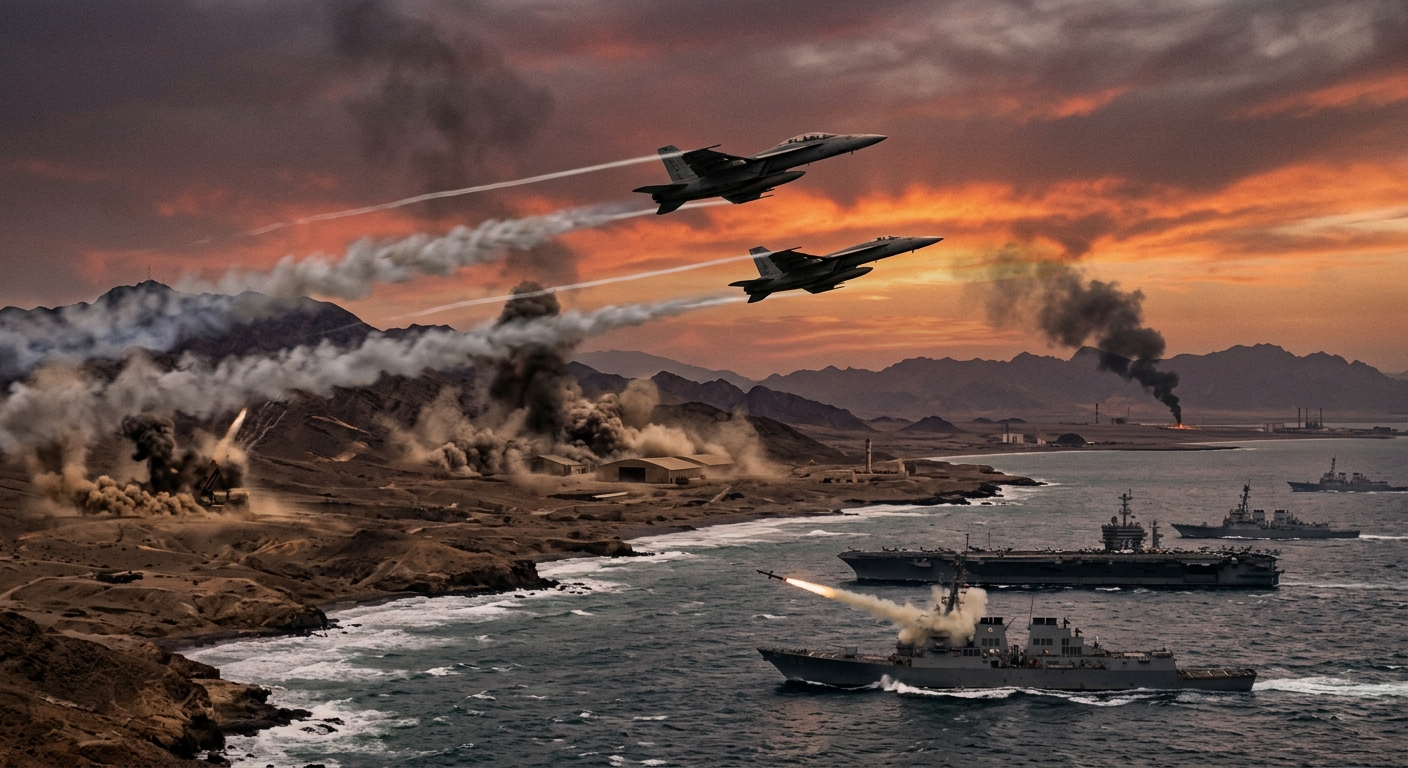
Summary of Operation Epic Fury
In 2026, President Donald Trump initiated Operation Epic Fury, a substantial military campaign against Iran targeting strategic locations to undermine its military capabilities and nuclear ambitions. The operation escalated existing tensions due to Iran’s nuclear program and regional activities, responding to provocations, including the downing of a U.S. helicopter and attacks on shipping. Despite framing the strikes as vital defensive actions, the offensive raised international concerns about potential escalations and the legality of unilateral military action without congressional approval.
Background of U.S.-Iran Tensions
Prior to the military strikes, U.S.-Iran relations had increasingly deteriorated, driven by disputes over Iran’s nuclear development and regional influence, especially following the conflict between Israel and Hamas in late 2023. Ongoing negotiations over Iran’s nuclear program yielded skepticism from U.S. officials, with some viewing them as mere delaying tactics. The Trump administration’s focus on military readiness, economic sanctions, and covert planning with Israel culminated in the launch of Operation Epic Fury, aimed at limiting Iran’s regional influence and military arsenal.
Military Orders and Execution of Strikes
In response to escalating threats, President Trump authorized extensive military action against Iranian military facilities including air defense systems and command centers. Known as Operation Epic Fury, this operation aimed to eliminate Iran’s ballistic missile capabilities and disrupt support for militias. The strikes proceeded with significant military coordination, drawing parallels to earlier engagements while facing retaliation from the Iranian military against U.S. bases, indicating the potential for prolonged conflict.
Political Dynamics and Decision-Making
Decision-making leading up to Operation Epic Fury was influenced by both military advisors and political imperatives, with President Trump balancing a desire for diplomacy against hardline military strategies. The timing of the strikes coincided with tentative diplomatic discussions, raising questions about the commitment to these negotiations. The unilateral nature of the military orders sparked constitutional debates over the president’s authority, contrasting with normative practices of seeking congressional authorization for military action.
Justifications and Public Messaging
The administration justified the military strikes as necessary actions against Iran’s aggression, aiming to preserve U.S. and regional security. However, skepticism remained among various media and intelligence sources regarding the degree of threat posed by Iran. Public opinion in the U.S. was divided, reflecting broader concerns about the ramifications of military involvement and the justification for unilateral action without broader consensus or strategic clarity.
Global and Regional Reactions
The U.S. strikes sparked significant reactions worldwide, with various countries taking sides in the conflict. While some U.S. allies supported the operation, Iranian officials condemned the strikes, framing them as acts of aggression. The strikes complicated diplomatic negotiations regarding Iran’s nuclear program and prompted increased hostility and military readiness from Iran, illustrating the far-reaching consequences of the U.S. military action.
Comparative Insights into U.S. Military Actions
Operation Epic Fury represents an escalation in U.S. military strategy towards Iran compared to previous conflicts like Operation Praying Mantis in 1988. This operation diversifies the targeting of military assets and reflects a shift in objectives towards dismantling Iran’s larger military framework. Observations from past U.S. military engagements reveal similar patterns of responding to Iranian provocations with calibrated military force, though the current offensive indicates a broadening scope and strength behind U.S. actions.
Aftermath and Consequences of the Offensive
The military strikes against Iran have led to heightened tensions, raising fears of prolonged conflict in the region and challenging perceptions of U.S. resolve. Despite Iranian threats of retaliation, public opinion within the U.S. remains polarized over the military engagement’s justification and potential effectiveness. Analysts caution that renewed hostilities could open opportunities for rival powers, making the situation complex and dynamic as responses reflect the intricate balance between military action and diplomatic strategies.
Legal and Ethical Implications
The legality of the unilateral military strikes has spurred extensive debate, with critics highlighting the absence of congressional authorization. Legal experts argue that the military actions breach both constitutional and international law principles regarding the use of military force. These debates underline the ethical implications of framing military action as a defense against imminent threats versus the responsibilities of the administration to uphold legal standards in matters of war.
The content is provided by Harper Eastwood, Front Signals