Interview Highlights
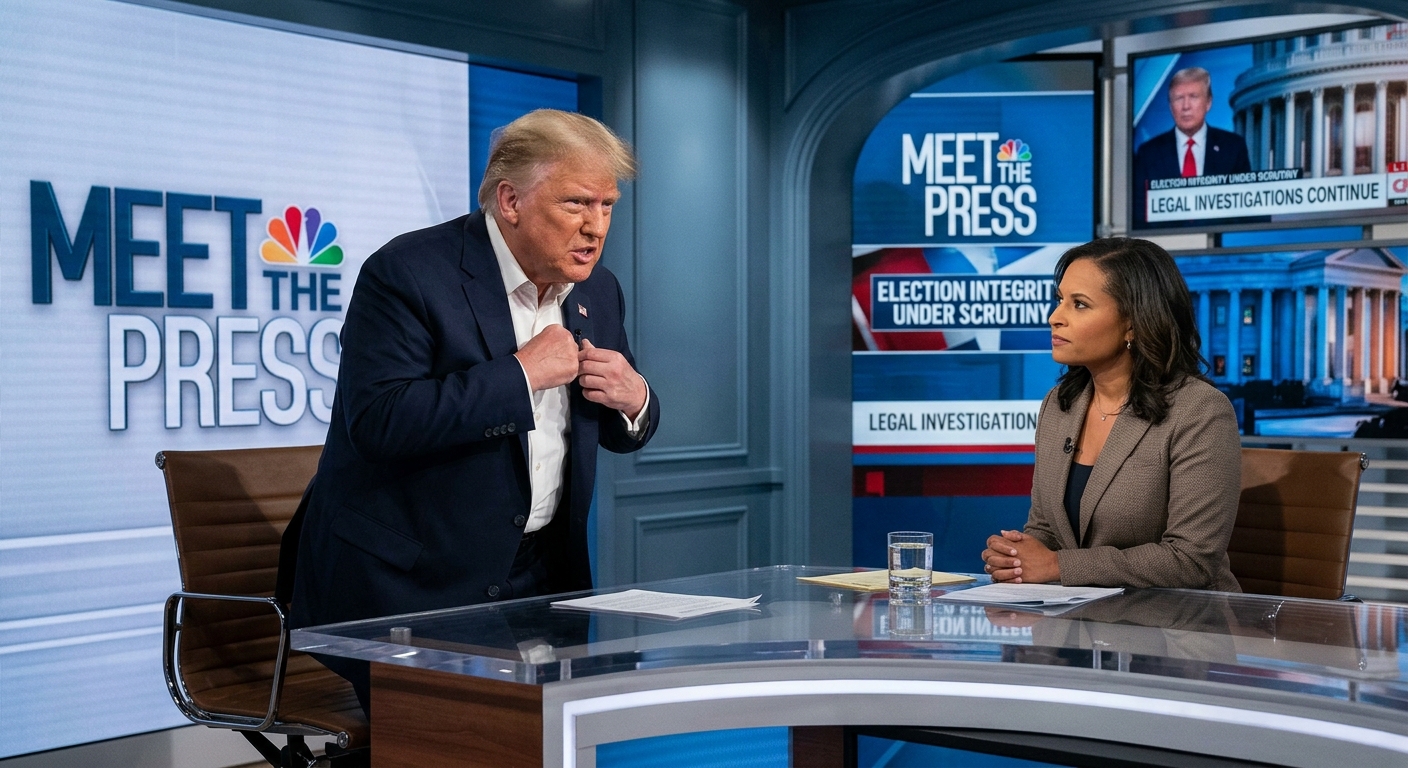
Former President Donald Trump ended a June 7, 2026 interview on NBC’s Meet the Press after being confronted about his unsubstantiated claims of election fraud and the $1.8 billion Anti-Weaponization Fund. The contentious interview, conducted in Chippewa Falls, Wisconsin, saw Moderator Kristen Welker pressing Trump for proof of his allegations, which he consistently failed to provide. Frustrated, Trump removed his microphone and left, marking a significant moment in ongoing discussions about election integrity and media interactions.
Context of Election Fraud Claims
The topic of election fraud remains highly polarizing in the U.S., involving both state and federal jurisdictions. The DOJ has been active in investigating election-related offenses and has faced scrutiny concerning past claims made by Trump regarding significant fraud in the 2020 election. Following multiple indictments and ongoing investigations, the dialogue around election legitimacy continues to evolve amidst public debate and legal action.
Key Issues Raised in the Interview
During the interview, Trump evaded clear answers regarding his claims about the “rigged” California primary elections and the legitimacy of the Anti-Weaponization Fund. He resisted providing concrete evidence for his assertions while critiquing the media’s fairness. Welker emphasized the established processes in vote counting, which challenged Trump’s allegations, yet he remained uncompromising in his stance, reflecting broader issues of misinformation.
Media Reactions and Implications
The interview’s conclusion drew sharp criticism from various media commentators, heightening discussions about Trump’s approach to accountability and evidence. Observers noted that his refusal to substantiate claims only fueled ongoing debates about election integrity and the consequences of his rhetoric. Amidst fresh DOJ investigations in key states, this incident further highlights the significance of media scrutiny in political discourse regarding election claims.
Legal Developments and Consequences
The aftermath of the 2020 election has generated numerous legal repercussions, with the DOJ expanding its investigations into alleged election fraud and attempts to undermine electoral processes. Current probes are focusing on specific incidents rather than broad allegations of fraud, indicating a shift in the approach to these serious claims. Additionally, lawsuits surrounding executive orders and demands for voter information illustrate the complexities of intertwining legal and political challenges in the current environment.
Trump’s Historical Media Relations
Trump’s history of confrontations with media outlets backdrops the contentious exchange during the Meet the Press interview. His pattern of accusing the press of bias has often led to abrupt ends in discussions, particularly when faced with challenging questions about election integrity. This continued dynamic emphasizes the ongoing tension between traditional journalism and political narratives, shaping public perception of electoral matters.
The content is provided by Jordan Fields, Front Signals