
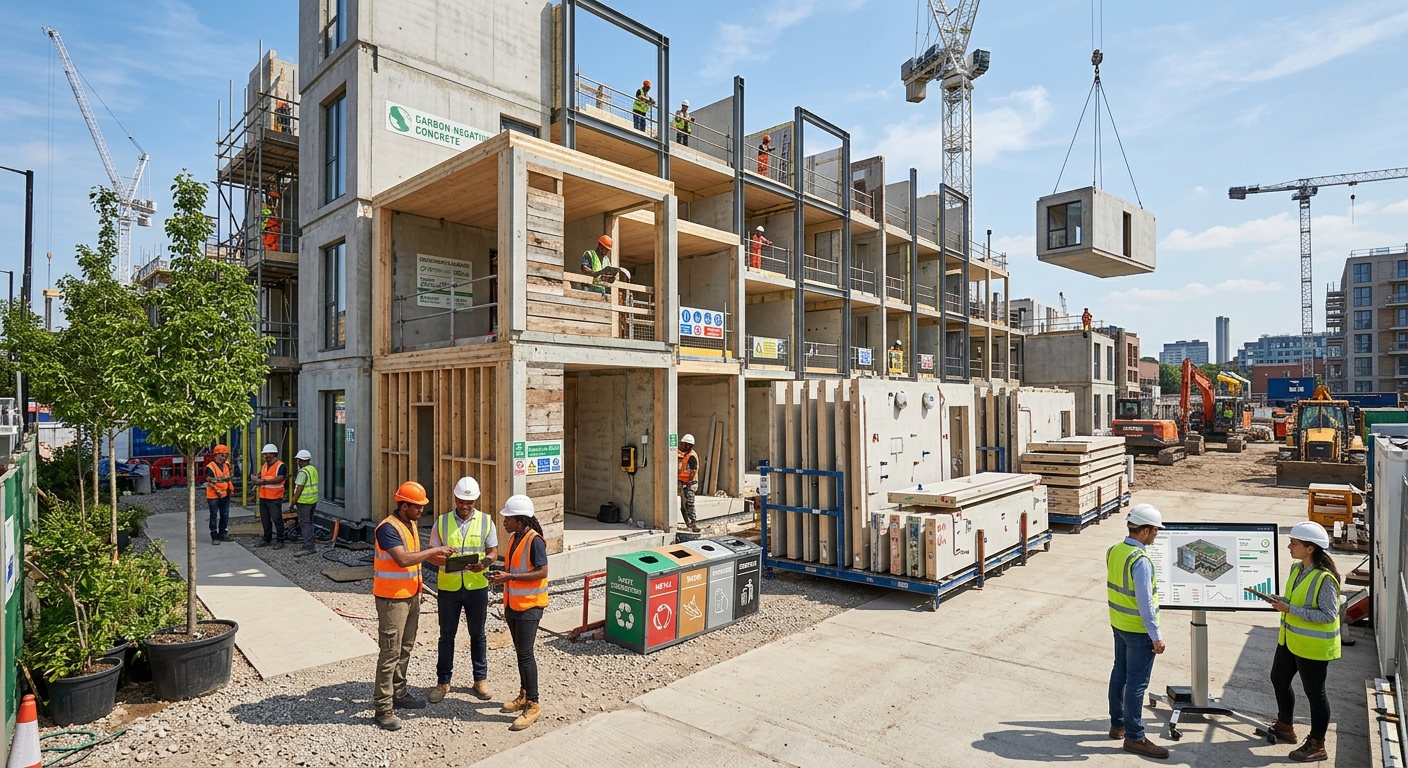
Summary of Construction Supply Trends
The construction industry is evolving rapidly due to significant changes in supply chain management, materials innovation, and project execution. Recent advancements are marked by a shift towards digital technologies, including AI and automation, which enhance operational efficiency and decision-making capabilities. Sustainability also drives this transformation, with innovations such as carbon-negative materials addressing environmental concerns. Amid geopolitical uncertainties and fluctuating costs, companies are adopting strategies like nearshoring and collaborative vendor management to stabilize their supply chains. As these trends continue, construction firms are focused on integrating new technologies and sustainable practices to achieve better agility and competitive advantage.
Key Drivers Shaping Construction Supply Chains
The construction sector is propelled by the adoption of digital technologies, which were accelerated during the COVID-19 pandemic. Real-time monitoring tools and AI are now critical in improving resource management and project execution. Sustainability is a significant concern, with a push toward environmentally responsible materials that reduce the industry’s carbon footprint. Geopolitical factors and fluctuating material availability further complicate supply chain dynamics, necessitating strategic adaptation and compliance with regulatory standards to ensure quality and sustainability. Together, these drivers create a transformative landscape for construction supply chains.
Emerging Trends in Construction Supply
Recent years have seen substantial shifts in construction supply trends, emphasizing digitalization and sustainable practices to address challenges such as material shortages and rising costs. Companies are increasingly utilizing digital tools that enable real-time resource visibility and improve inventory management, significantly reducing waste and accelerating project timelines. Additionally, prefabrication and modular construction are becoming more prevalent, enhancing productivity while addressing labor shortages. Strengthening vendor partnerships and diversifying suppliers also facilitate better procurement strategies to manage risks associated with material delays and price volatility.
Challenges Affecting Supply Chain Efficiency
Despite advancements, the construction supply chain faces notable challenges, particularly the lack of standardized practices leading to poor coordination among stakeholders. Smaller firms often struggle with integrating new technologies, limiting their efficiency and effectiveness in supply chain management. Material demand uncertainties and external disruptions heighten procurement risks, underscoring the need for resilient supply chains capable of adapting to changing circumstances. Issues like waste generation and regulation complexities further complicate operations, emphasizing the importance of sustainable practices and effective resource management strategies.
Technological Integration in Supply Chain Management
The adoption of advanced technologies is reshaping construction supply chain management by boosting efficiency and project outcomes. Digital procurement platforms and IoT applications are streamlining workflows, enhancing visibility, and synchronizing procurement with construction schedules to minimize delays. Automation and robotics are also playing significant roles in reducing operational costs and increasing accuracy in inventory management. This technological evolution not only improves collaboration among stakeholders but also enables smarter decision-making throughout the supply chain.
Variation in Technology Implementation
The degree of technology adoption in construction supply chains varies considerably across different segments, with larger contractors more likely to leverage advanced tools than small to medium-sized enterprises (SMEs). While larger firms can integrate sophisticated systems to improve operations, SMEs often lack the resources needed for effective adoption, impacting their competitiveness. Closing these gaps through improved communication and access to technology is essential for enhancing overall supply chain integration and performance across the industry.
Future Outlook for Construction Supply Chains
The future of construction supply chains is set to be shaped by continuous technological advancements and a push toward sustainability. Emerging technologies like AI and IoT are expected to enhance efficiencies, with a strong emphasis on using eco-friendly materials to comply with environmental regulations. Companies must also adapt to ongoing geopolitical challenges by diversifying suppliers and adopting regional sourcing strategies. As digital procurement tools gain traction, the construction industry will increasingly focus on building resilient, agile supply chains that promote collaboration and transparency, ensuring better project outcomes and long-term growth.
The content is provided by Avery Redwood, Front Signals