
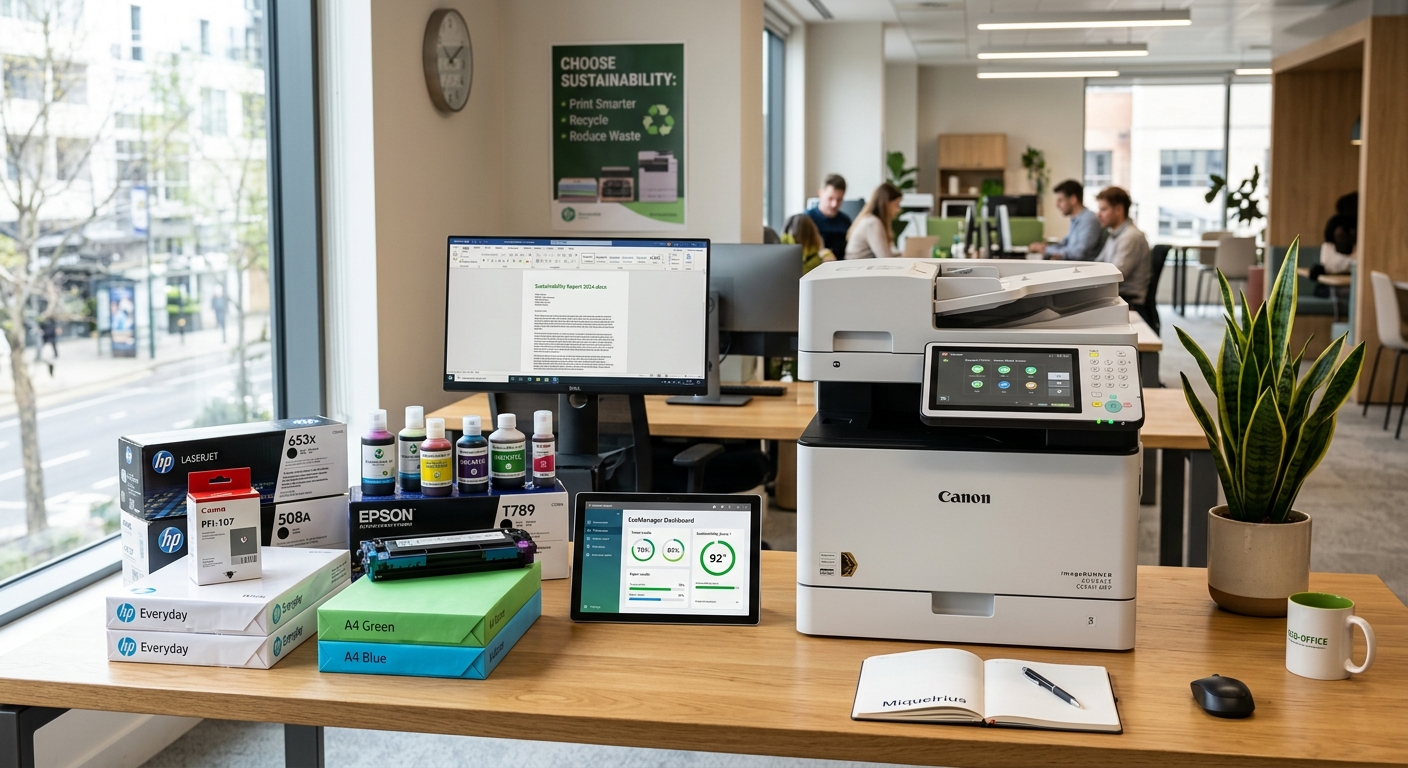
Choosing the Right Office Printer Supplies
Selecting suitable office printer supplies is essential for maintaining high-quality printing and operational efficiency. Critical considerations include understanding the differences between OEM, remanufactured, and compatible cartridges, as well as the impact on costs, print quality, and sustainability. Factors such as printer technology, printing volume, and the type of paper affect the decision-making process when evaluating supplies, and making informed choices can lead to improved performance and reduced costs.
Types of Office Printer Supplies
Office printer supplies consist of key materials like paper, ink, toner, and essential accessories. Each type plays a distinct role in achieving optimal printing results and maintaining printer functionality, thus understanding these supplies is vital for the selection process.
Paper
There are various types of printer paper available, including standard copy paper, glossy paper for images, heavyweight cardstock for durable prints, and specialized papers for specific tasks. The choice of paper affects print clarity and color vibrancy; thus, selecting the right type based on a project’s requirements can enhance overall printing outcomes.
Ink and Toner
Ink and toner are critical for producing prints, with ink suitable for inkjet printers and toner used in laser printers. Understanding the properties of dye versus pigment inks can impact print durability, while recognizing the efficiency of toner for high-volume prints ensures alignment with your operational needs.
Cartridges
Remanufactured cartridges, refurbished from OEM products, and compatible cartridges offer various price points and environmental benefits. While remanufactured options can provide substantial savings and reduced waste, ensuring compatibility and quality remains paramount for desired printing outcomes.
Printer Accessories
Essential accessories such as printer drums and fuser units significantly contribute to print quality and longevity. Timely replacement of these components is crucial to maintaining optimal printer performance and efficiency.
Key Considerations for Printer Supplies
When choosing printer supplies, several important factors come into play. Assessing the printing volume helps determine the durability needed from supplies, ensuring continuous operation without frequent disruptions. Compatibility with the printer model is also vital; using recommended cartridges minimizes risks of damage and performance issues.
The type of printing technology—inkjet or laser—affects both supply choice and cost efficiency, with laser printers often being more economical for bulk printing. Selecting the right paper that works best with the specified printer can help avoid unnecessary issues like jams and wasted resources, affecting overall productivity.
Sustainability has surfaced as a noteworthy consideration, with an emphasis on eco-friendly options. Choosing inks, toners, and papers that align with environmental goals supports both corporate responsibility and cost management.
Lastly, total cost of ownership should guide your evaluation by including not just purchase prices but also operational costs, maintenance, and potential security features relevant to sensitive organizational information.
Understanding Cartridge Options
Choosing between OEM, compatible, and remanufactured cartridges involves balancing quality and cost. OEM cartridges provide reliable performance but tend to be pricier, while compatible cartridges can deliver significant savings with acceptable quality levels for general use.
Remanufactured cartridges offer a middle ground, giving environmental benefits while being more affordable than OEM. However, potential variances in reliability exist; thus, selecting reputable sources is crucial to ensure consistent performance.
Maintaining Printer Supplies
Effective management of printer supplies directly affects both performance and longevity. High-quality supplies and regular maintenance practices help prevent common issues like clogs and print quality degradation, which can interrupt workflow and incur additional costs.
Regular upkeep, including timely replacement and inventory management, ensures printers operate smoothly. Additionally, understanding the compatibility of consumables with specific printer types is essential in maximizing efficiency and performance.
Sourcing Office Printer Supplies
Purchasing printer supplies should involve a focus on quality to support productivity. Investing in reliable products from established suppliers can lead to long-term benefits in service and functionality, while also addressing sustainability through responsible sourcing practices.
Modern procurement emphasizes a blend of efficiency, eco-friendliness, and comprehensive technology solutions, aligning purchasing with broader organizational values. A diverse supplier portfolio that meets quality and sustainability criteria allows for informed, strategic choices.
Troubleshooting Printer Supply Issues
Identifying and addressing common issues related to printer supplies is essential for maintaining optimal performance. Problems frequently arise from using expired cartridges or inappropriate inks, leading to poor print quality or printer malfunctions.
Maintaining a balanced inventory and utilizing automated ordering solutions can help prevent supply-related disruptions. Regular usage of the printer ensures that inks remain viable, while understanding the right type of ink based on specific requirements helps improve print outcomes.
Innovations in Printer Supplies
The future of office printer supplies is being shaped by innovations that enhance connectivity and sustainability. Advances in wireless technology allow for more streamlined printing, while eco-friendly initiatives focus on reducing waste and improving environmental impact.
Engaging in sustainable practices not only contributes positively to corporate responsibility but can also lead to considerable efficiencies in supply chain management, reflecting the evolving needs of the modern workplace.
The content is provided by Avery Redwood, Front Signals