
Summary
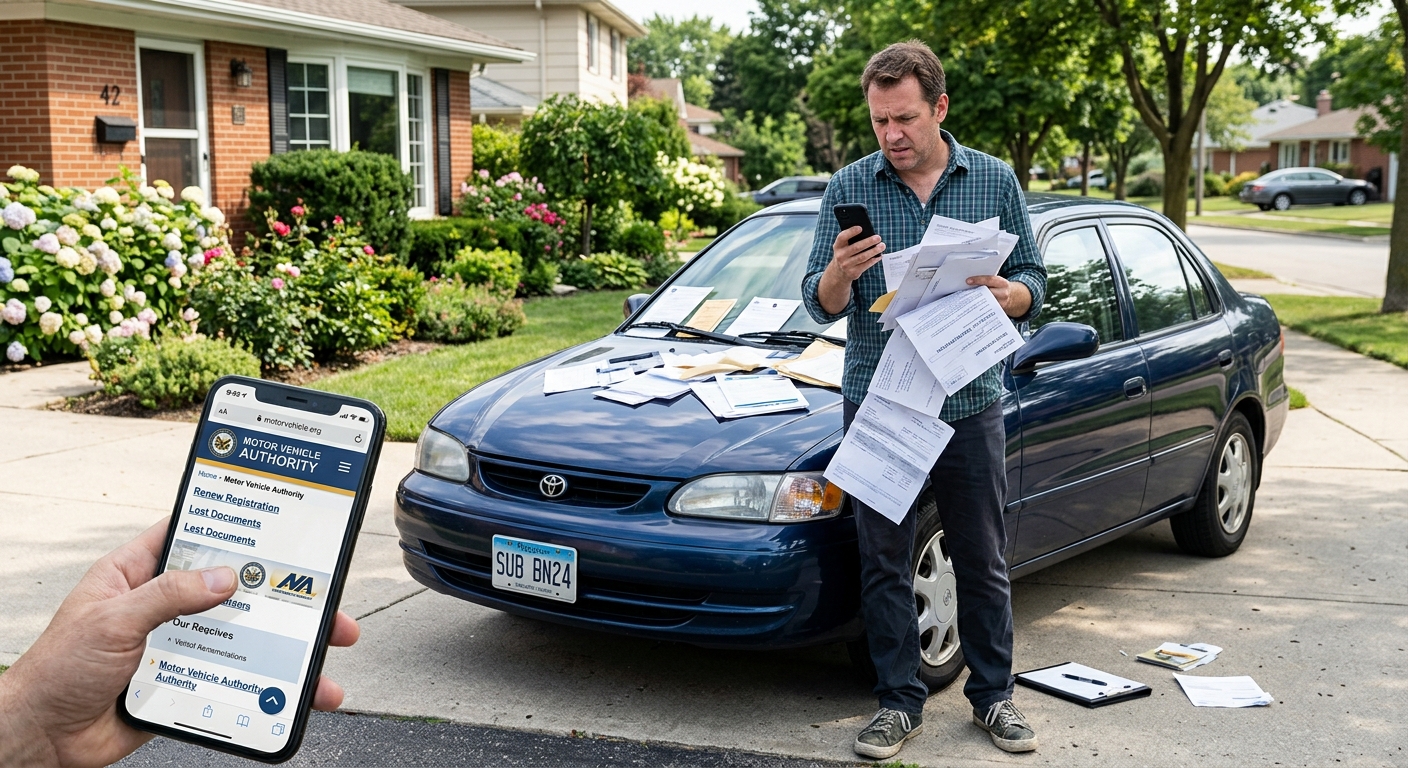
Misplacing vehicle registration documents can lead to significant legal and practical issues for vehicle owners, including fines and delays in transactions. Vehicle registration is necessary to prove ownership and comply with regulations for legal operation on public roads. The process to retrieve or replace these documents varies by region and typically involves contacting local authorities, providing proof of identity and ownership, and paying fees. Notably, understanding local laws is essential to navigate the replacement process efficiently.
Reasons for Misplacing Vehicle Registration
Vehicle registration documents are often misplaced due to human error, administrative mistakes, or regulatory complexities. Common scenarios include losing documents during a move or misplacing them in cluttered areas. Additionally, administrative errors, especially in commercial contexts, can complicate the situation further. Understanding these causes emphasizes the need for organized record-keeping to ensure prompt retrieval or replacement of lost registrations.
Importance of Vehicle Registration
Vehicle registration is crucial as it validates ownership and compliance with safety standards, allowing legal road operation. Driving without valid registration can lead to serious penalties, including fines and impoundments. It is also linked to insurance requirements, making it essential for risk management on the road.
Legal Obligations After Losing Registration
If registration documents are lost, vehicle owners must report the loss to their local Department of Motor Vehicles (DMV) or equivalent authority. This report protects against misuse and initiates the replacement process, often requiring specific forms and fee payments. Swift action is advisable to avoid legal penalties, as many regions have streamlined this process through online options.
Steps to Replace Lost Vehicle Registration
To replace lost vehicle registration, start by contacting the relevant vehicle registration authority, such as the DMV. Most jurisdictions allow requests for duplicates online, by mail, or in person. Required documents typically include the vehicle identification number (VIN), proof of identity, ownership, and payment of applicable fees.
Documentation and Fees
Ensure you have all necessary documentation ready when applying for a replacement registration. Fees vary by jurisdiction and may depend on factors like vehicle weight or location, and processing times can range from immediate online issuance to weeks if submitted by mail. Be aware of any additional requirements that may apply, including inspections in specific jurisdictions.
Regional Variations in Procedures
Replacement procedures differ widely depending on the region. For example, in California, completing a specific application form is necessary, whereas in the UK, recent upgrades to the DVLA’s processes have improved efficiency. In Australia, states maintain unique requirements emphasizing the need to consult local authorities for precise information.
Penalties for Not Carrying Registration
Driving without valid registration is illegal and can result in severe penalties, though distinctions exist between not registering a vehicle and not having proof on hand. Citations can often be resolved by providing proof later, but failure to register leads to harsher consequences. Additionally, driving without insurance increases legal risks, reinforcing the necessity of maintaining up-to-date registration and insurance.
Preventive Measures
To mitigate the risk of losing vehicle registration documents, maintaining organized records and utilizing secure storage locations is essential. Implementing internal checks before submitting documents can prevent errors and misplacement. Leveraging digital registration services can further safeguard against loss, providing easy access to necessary documents when needed.
Legal Restrictions and Challenges
Vehicle registration laws differ significantly across states and countries, complicating compliance, especially for those moving across borders. Administrative hurdles may arise, requiring specific actions based on regulations in various jurisdictions. Consulting local legal experts can help navigate any complexities associated with registration compliance.
Frequently Asked Questions (FAQs)
Q1: What to do if there’s a mistake on my registration?
Report errors immediately to the DMV to prevent delays in processing. Double-check information before submission to avoid administrative issues.
Q2: Can I replace my lost registration?
Yes, complete the necessary forms to report the loss, which may include additional steps if license plates are also missing.
Q3: How long does it take to receive a replacement?
Processing times differ; online applications are generally faster, while mailed requests may take longer.
Q4: Are there replacement fees?
Yes, fees vary depending on state regulations and vehicle characteristics, and it’s essential to check specific costs beforehand.
The content is provided by Harper Eastwood, Front Signals