
Summary
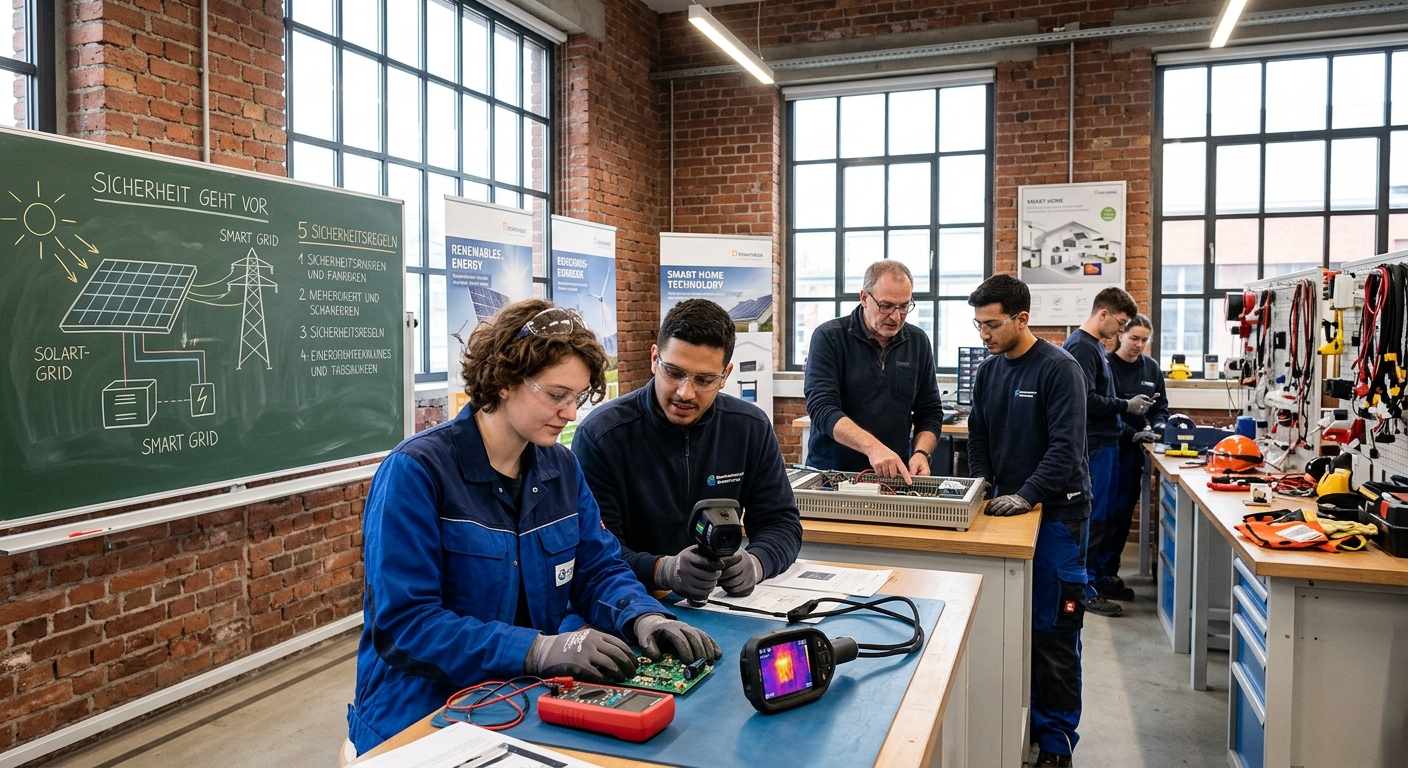
Elektro-Karriere 2026: So starten Sie Ihre zukunftssichere Ausbildung zum Elektriker outlines the evolving role of electricians in Germany. The integration of digital tools and a focus on renewable energies emphasize the need for well-trained professionals. This evolving landscape is driving demand across various sectors, including residential construction and renewable energy, highlighting the importance of technical proficiency and continuous education.
Overview of the Electrical Trade
The electrical trade has significantly transformed, mirroring technological advancements toward an All Electric Society. Electricians now engage with sophisticated digital tools alongside traditional equipment, reflecting current market demands. The profession encompasses installation and maintenance across sectors, with a robust grounding in physics and mathematics critical for effective problem-solving and design in electrical systems.
Preparing for a Career as an Electrician
Entering the electrician field typically requires a dual vocational training program, combining hands-on work with theoretical education, lasting 2.5 to 3.5 years. Candidates must meet specific educational prerequisites, including compulsory schooling, and often demonstrate proficiency in German, as effective communication is essential. Safety protocols are crucial throughout the training, emphasizing the importance of documentation and compliance for successful certification.
Elektro-Karriere 2026 Apprenticeship Program
The electrician apprenticeship lasts approximately three and a half years, integrating practical training and vocational coursework. Trainees learn foundational concepts before progressing to more complex topics like automation and compliance with safety standards. Requirements typically include a secondary education certificate and mathematical proficiency to support the curriculum’s demands.
Daily Tasks and Practical Skills During Apprenticeship
Apprenticeship training involves mastering foundational electrical concepts and applying them in real work scenarios, such as installation and maintenance tasks. Emphasis on safety and compliance with regulations is paramount, as trainees learn to navigate potential hazards effectively. As apprentices gain experience, they work on independent projects, reinforcing their problem-solving abilities and technical competence.
Certification and Examination Process (Gesellenprüfung)
Trainees must pass the comprehensive Gesellenprüfung, which standardizes the assessment of their competencies in the field. This process culminates in earning a journeyman’s diploma, ensuring qualifications in electrical work both in Germany and potentially abroad. Successful candidates have demonstrated both theoretical understanding and practical experience, reinforcing their career readiness.
Career Opportunities and Benefits Post-Apprenticeship
Certification opens diverse career pathways, with electricians well-positioned in expanding fields such as renewable energy. Initial salaries are competitive, but experience and specialization can lead to significantly higher earnings. Advancements could involve becoming a “Meister” or starting a business, thus enhancing job security and opportunities for international mobility in response to the growing skills shortage.
Future-Proofing Through Continuous Education
Continuous education is essential for electricians to stay competitive in a rapidly evolving industry, particularly in renewable energy and automation. Ongoing training ensures adaptability to new technologies and tools. Educational strategies, including blended learning, help address learning gaps and enhance retention, fostering an agile workforce ready to meet future demands.
Tips for Success in the Electrical Trade
Success in the electrical field requires not just foundational knowledge but also a proactive approach to learning and adhering to safety standards. Employers seek individuals who communicate effectively and demonstrate a commitment to quality work. Staying informed about evolving standards and emerging technologies is crucial for maintaining relevancy and competitiveness in the trade.
Resources and Support
Various support systems exist for aspiring electricians, primarily through Germany’s dual vocational training framework. Programs like the Placement Drive for Electricians offer structured pathways for international candidates, facilitating recognition of qualifications and job placement. These initiatives highlight the robust support available for those entering or progressing within the electrical profession.
The content is provided by Avery Redwood, Front Signals