
Summary
The ongoing tensions between the U.S. and Iran have seen cautious diplomatic progress in 2026, primarily over Iran’s nuclear program and the Strait of Hormuz’s control. Significant historical events, including the 1953 coup and the 1979 revolution, have shaped their relationship, particularly as Iran’s uranium enrichment nears weapons-grade levels and maritime security remains a concern. Recent negotiations have attempted to reopen the Strait of Hormuz without tolls, central to global oil trade, while addressing Iran’s nuclear activities which exceed the limits set by the 2015 JCPOA. Despite these talks, disagreements persist, particularly around Iran’s nuclear ambitions and its insistence on navigating regulations without U.S. involvement, complicating efforts toward lasting peace.
Historical Context
The U.S.-Iran relationship has been fraught with tension since key events like the 1953 U.S.-backed coup and the 1979 Islamic Revolution, which led to the severance of formal diplomatic relations. Following the hostage crisis, military confrontations have occurred, particularly in the strategic Strait of Hormuz, integral for energy transport. Iran’s assertive control efforts in the strait, including restrictions and naval engagements, have prompted responses from the U.S. and impacted global energy security, illustrating the complex and ongoing geopolitical rivalry between the two nations.
Recent Diplomatic Developments
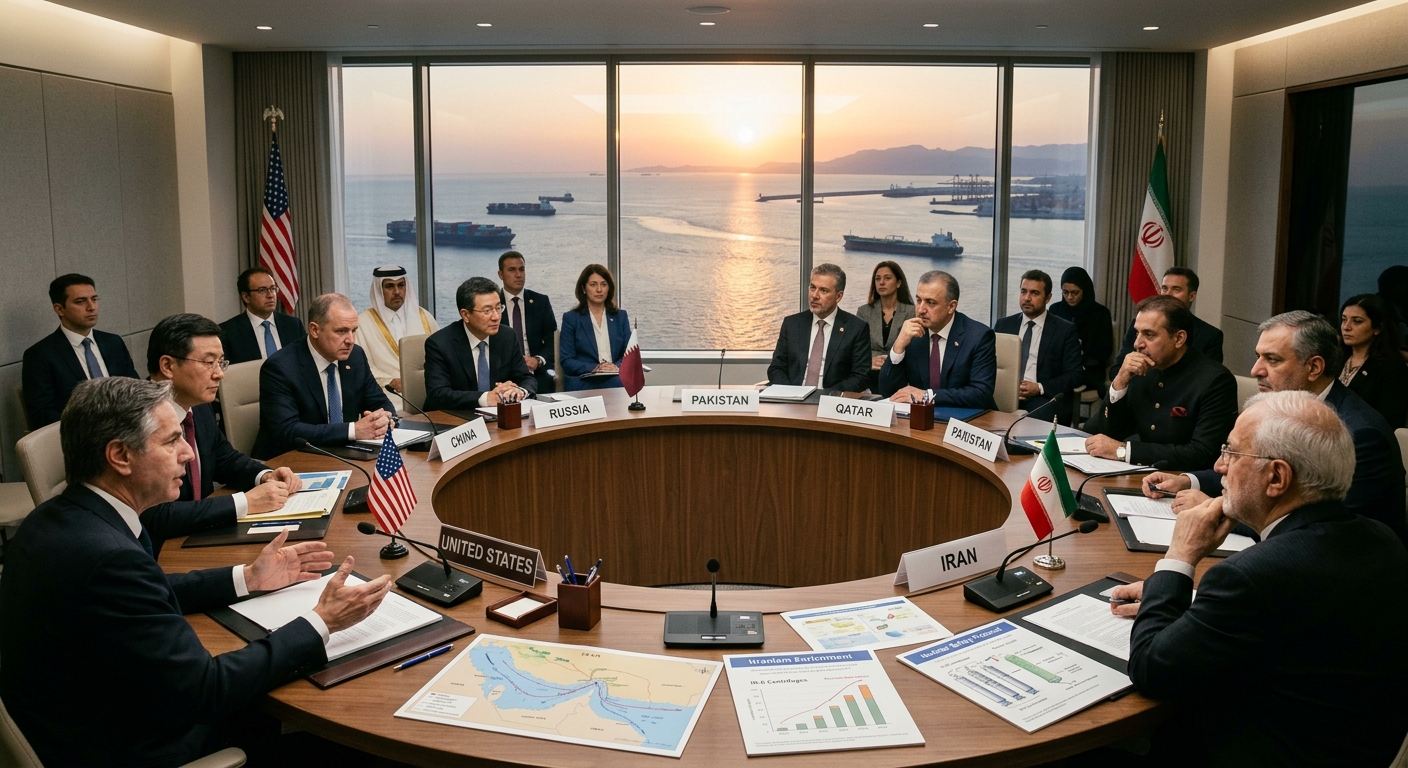
Diplomatic efforts since early 2026 have aimed at addressing Iran’s nuclear ambitions and ensuring maritime security in the Strait of Hormuz, marked by a fragile ceasefire since April 8. High-level discussions involving international stakeholders have signaled advancements, yet substantial differences in uranium management and maritime control remain. Iran’s demand for exclusive regulatory control over the Strait contrasts with U.S. interests, complicating negotiations despite attempts by regional intermediaries like Pakistan and Qatar to mediate the ongoing discussions. Skepticism exists within the U.S. political sphere about the terms of any agreement, particularly regarding Iran’s nuclear capabilities and regional security implications.
Uranium Enrichment Negotiation Issues
Iran’s uranium enrichment has been pivotal in negotiations, highlighting the tensions between Iran’s right to enrich under the NPT and global concerns about potential nuclear weapon development. Since the U.S. exited the JCPOA in 2018, Iran has escalated enrichment levels significantly, nearing stockpiles that could facilitate rapid weapons development. Discussions have centered around reconciling Iran’s insistence on enrichment rights with international mandates for oversight, revealing deep divisions in the negotiations, particularly as Iran’s recent enrichment levels raise alarms about compliance and verification processes.
Security Dynamics in the Strait of Hormuz
The Strait of Hormuz has emerged as a primary flashpoint for U.S.-Iran tensions, with Iran’s aggressive naval strategies prompting increased U.S. military presence to secure global shipping routes. The Iranian Revolutionary Guard Corps’ tactics, including maritime assaults and mine deployments, have significantly affected shipping operations, while Iran maintains its stance against U.S. navigation regulations. The volatile environment underscores the delicate balance between ongoing negotiations and military readiness, as both nations adjust strategies amid a backdrop of intermittent hostilities, highlighting the security implications for global energy trade.
International and Regional Reactions
Responses to the U.S.-Iran crisis reflect a diverse geopolitical landscape, with major powers expressing varying levels of support for diplomatic measures and concerns about military escalations. The UN Security Council discussions showcased divisions, with some states advocating for safe passage in the Strait of Hormuz while others warned against potential military implications. The complexity of regional dynamics continues to shape responses to the ongoing negotiations, emphasizing the strait’s critical role in global energy security.
Potential Outcomes and Future Prospects
Negotiations between the U.S. and Iran appear to be inching towards a framework for a peace agreement, with discussions focused on the Strait of Hormuz and Iran’s nuclear program. Potential agreements aim to balance sanctions relief with nuclear oversight, although significant challenges remain regarding Iran’s enrichment levels and regional claims. Both sides are utilizing the present ceasefire to explore pathways for a long-term resolution, but the failure to reach consensus could lead to escalated tensions and economic repercussions, affecting both regional stability and international energy supplies.