
Summary
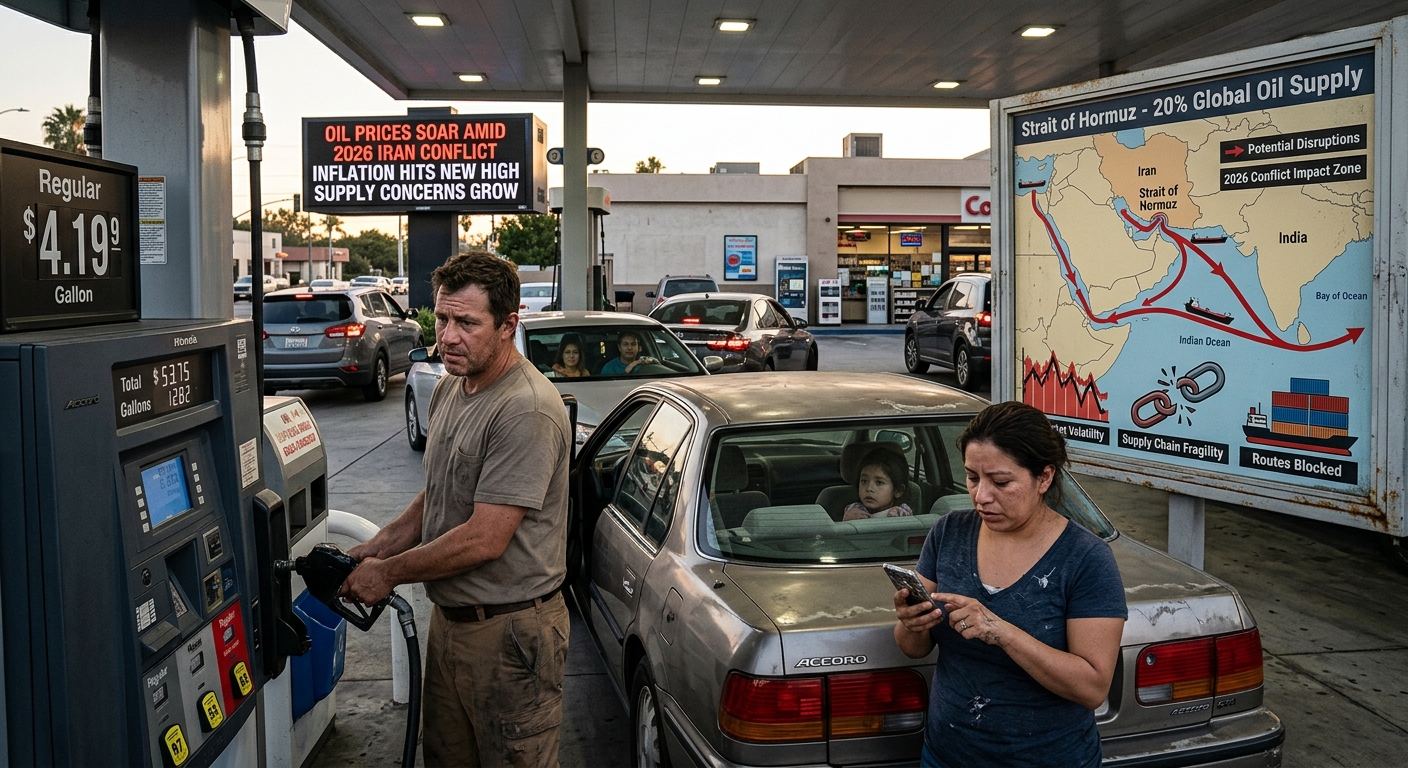
The 2026 Iran conflict, sparked by a U.S. and Israeli airstrike killing Iran’s Supreme Leader, has disrupted global energy markets, particularly impacting the U.S. economy. Iran’s closure of the Strait of Hormuz, crucial for oil transport, has led to soaring prices for gasoline and other fuels, straining household budgets. With average gasoline prices exceeding $4 per gallon, lower- and middle-income families are feeling the pinch more acutely, facing inflationary pressures that affect their everyday expenses. The U.S. government has responded by releasing oil from the Strategic Petroleum Reserve to stabilize markets and reassure the public, but prolonged conflict could worsen economic hardship and inflation.
Economic Impact
The closure of the Strait of Hormuz has caused substantial disruptions in oil markets, pushing U.S. fuel prices to higher levels. With gasoline prices climbing over $4 per gallon, families now incur additional monthly fuel costs of $100 to $400, depending on price fluctuations. This financial burden forces shifts in household budgeting, impacting discretionary spending and altering consumer behavior. Increased operational costs for transportation-dependent industries also feed into rising commodity prices, worsening inflation and squeezing American consumers’ disposable incomes.
Impact on American Families
American households are grappled by significant fuel price increases, with average additional costs approaching $296.56 per household each month. As families see their gasoline expenses rise, many are making lifestyle adjustments, reducing spending on non-essential items. This economic strain is felt most acutely by lower- and middle-income households, which allocate a larger share of their income to fuel and essential goods. Overall, heightened fuel costs ripple through the economy, impacting everything from food to utilities, and prompting concerns about persistent inflation and future financial security.
U.S. Government Response
The U.S. government has enacted strategic responses, including tapping the Strategic Petroleum Reserve to mitigate the impact of soaring energy prices caused by the conflict. While this response aims to stabilize the market, its effectiveness depends on the duration of the conflict, and concerns linger about the long-term implications for energy security. Reassurances from the government emphasize a return to lower prices following military operations, but ongoing tensions keep uncertainty high regarding future fuel costs and overall economic stability.
Public Reaction and Media Coverage
Widespread public anxiety accompanies the rise in fuel prices, with significant media attention highlighting consumer sentiment and economic repercussions. Reports address the historical context of gasoline price thresholds, which have previously triggered consumer backlash. Media narratives extend to cover geopolitical dynamics, the importance of energy supply chains, and calls for policies promoting renewable energy sources, reflecting a comprehensive view of the conflict’s implications on American families and global economic stability.
Long-term Implications
The conflict underscores vulnerabilities in global energy supply chains, raising awareness for strategic shifts in energy policy toward diverse renewable sources. Experts advocate for U.S. policies that reduce petroleum dependence and enhance energy autonomy, highlighting renewable technologies as less susceptible to geopolitical tensions. This conflict presents an opportunity to reconsider energy security frameworks, innovate energy solutions, and pursue stable economic conditions for the future, while immediate negotiations to reopen the Strait of Hormuz are vital to alleviating market pressures.