Summary
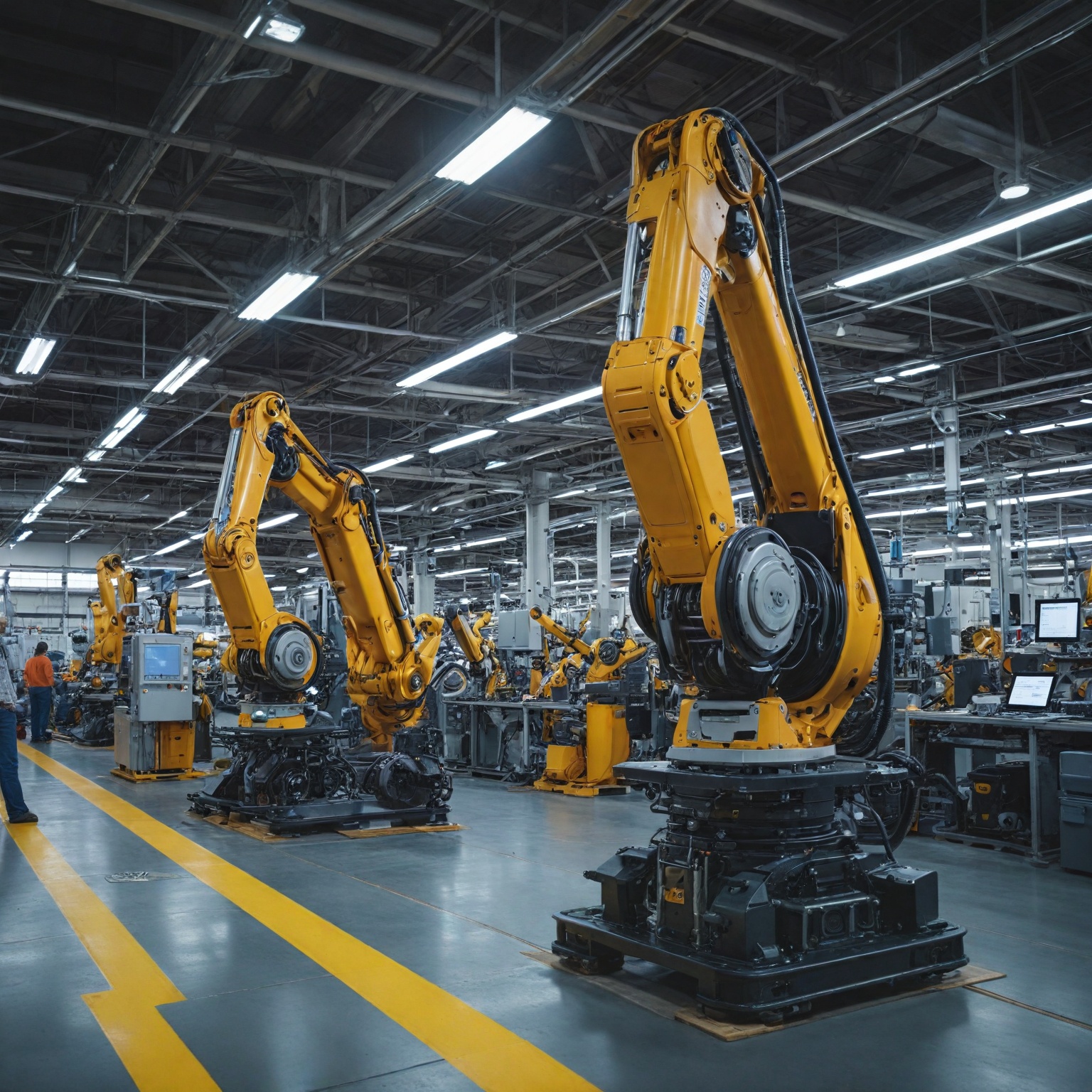
Machine tending robots are automated robotic systems designed to load, unload, and manage parts in manufacturing machinery such as CNC machines, injection molding presses, and stamping equipment. By performing repetitive, hazardous, or precision-dependent tasks, these robots significantly enhance manufacturing efficiency, safety, and product quality across diverse industries including automotive, aerospace, electronics, and medical device production. Their ability to operate continuously without fatigue and with high consistency has positioned them as critical enablers of modern industrial automation and the broader Industry 4.0 movement.
There are two primary types of machine tending robots: traditional industrial robots and collaborative robots (cobots). Industrial robots typically feature multi-axis arms capable of high-speed, repetitive operations suited for high-volume production, often requiring safety barriers to protect human workers. In contrast, cobots are designed to work safely alongside humans, equipped with advanced sensors and intuitive programming interfaces to facilitate flexible and adaptive manufacturing environments without extensive safety fencing. The integration of advanced end-of-arm tooling, vision systems, and AI-driven control further expands their functional versatility, enabling tasks ranging from part handling to in-process quality inspection.
Despite their numerous benefits—including increased productivity, reduced labor costs, improved workplace safety, and enhanced product consistency—machine tending robots face challenges related to system integration, high initial investment, and workforce training. Compatibility issues between legacy equipment and robotic control systems can complicate deployment, while the complexity of human-robot collaboration demands robust safety standards and operator confidence. Addressing these concerns is essential for manufacturers seeking to leverage the full potential of robotic machine tending within digitally connected smart factories.
Looking forward, ongoing advancements in artificial intelligence, sensor technologies, and collaborative robotics promise to further revolutionize machine tending. These innovations aim to produce multi-purpose, highly autonomous robots capable of seamless adaptation to varying tasks and environments, thereby driving greater operational agility and cost-effectiveness. However, successful adoption will depend not only on technological progress but also on workforce readiness and adherence to rigorous safety and integration frameworks, underscoring the multifaceted nature of the manufacturing transformation underway.
Overview of Machine Tending Robots
Machine tending robots play a critical role in modern manufacturing by automating the loading and unloading of machines such as CNC and injection molding equipment, thereby improving efficiency, safety, and productivity across various industries. These robots are broadly categorized into two types: traditional industrial robots and collaborative robots (cobots), each designed to address distinct manufacturing needs. Industrial robots are often large, powerful, and suited for high-volume repetitive tasks, whereas cobots are designed to work safely alongside human operators, facilitating flexible and adaptive production environments.
The fundamental components of machine tending robots include robotic arms equipped with end effectors, control systems, and advanced sensors or vision systems. The end effector, or end-of-arm tooling (EOT), is the most crucial element determining the robot’s specific functionality. Common EOTs encompass welding devices (MIG, TIG, spot welding), spray guns, grinding and deburring tools, electromechanical or pneumatic grippers, vacuum pickers, and machining tools, allowing robots to perform a wide range of tasks with precision.
Robot control systems vary in complexity and autonomy. Open-loop control systems operate without environmental feedback, executing predefined instructions, while more advanced systems incorporate sensors and machine vision to adjust actions dynamically, enhancing accuracy and adaptability in complex manufacturing settings. The integration of sophisticated technologies such as machine learning and artificial intelligence further enables robots to learn from human collaborators and respond to changing conditions, fostering harmonious human-robot collaboration in smart factories.
Machine tending robots not only enhance productivity by performing monotonous or hazardous tasks but also contribute to improved product quality through precise and consistent operations. Their deployment supports cost reduction and higher standards of manufacturing quality, which is particularly crucial in sectors requiring meticulous precision like aerospace, automotive, and medical device production. This combination of safety, efficiency, and quality has positioned machine tending robots as indispensable components of Industry 4.0, driving the transformation toward interconnected, digitized, and automated manufacturing ecosystems.
Types and Classifications of Machine Tending Robots
Machine tending robots are primarily classified into two main types: industrial robots and collaborative robots, also known as cobots. Each category possesses distinct characteristics tailored to different manufacturing requirements.
Collaborative Robots (Cobots)
Collaborative robots, or cobots, represent a newer generation of machine tending robots designed to work safely alongside human operators. Equipped with advanced sensors and intuitive software, cobots can perform tasks such as assembly, inspection, and machine tending with minimal programming or configuration. This ease of use is exemplified by “plug-and-play” cobots that enable manufacturers to automate loading, unloading, pick and place, and CNC machine tending quickly and efficiently.
Cobots have revolutionized CNC automation by providing more consistent and scalable machining processes while maintaining safety. Their built-in safety features allow operation in close proximity to humans without the need for extensive safety barriers, fostering improved human-robot collaboration on the factory floor. For example, in automotive manufacturing plants such as those operated by thyssenkrupp, cobots assist in machine tending and product inspection, freeing workers to focus on tasks that add higher value.
Industrial Robots
Industrial robots are the traditional automated systems widely used in manufacturing environments. These robots often feature robotic arms with multiple axes and are designed to handle repetitive and precise tasks such as loading and unloading machines. One of the earliest forms of industrial automation includes SCARA (Selective Compliance Assembly Robot Arm) robots, which specialize in rapid “pick and place” operations, particularly suited for inserting small electronic components. Although SCARA arms have less flexibility and strength compared to six-axis robotic arms, their speed makes them indispensable in the production of computer chips, watches, and other small-scale assemblies.
Industrial robots typically require an array of accessories and add-ons to perform effectively. Among these, end effectors or end-of-arm-tools (EOAT) play a critical role by enabling robots to interact with objects, offering versatility across diverse manufacturing tasks.
Technologies and Innovations in Machine Tending Robots
Machine tending robots are composed of several critical components that work in unison to perform precise and efficient operations in manufacturing environments. Central to their functionality are robotic arms and grippers, control systems, as well as sensors and vision systems that enable them to interact intelligently with their surroundings.
Control Systems and Automation
At the heart of machine tending robot automation are sophisticated control systems, typically comprising Programmable Logic Controllers (PLCs) and Human-Machine Interfaces (HMIs). PLCs act as industrial computers executing pre-programmed sequences based on sensor inputs and operator commands, ensuring smooth and reliable operation under demanding conditions. HMIs provide user-friendly interfaces, allowing operators to program tasks, monitor robot performance, and adjust operations as needed. This combination of PLCs and HMIs enhances the adaptability and efficiency of machine tending robots in various manufacturing settings.
End-of-Arm Tooling (EOAT)
A key innovation enabling diverse functionalities in machine tending robots is End-of-Arm Tooling (EOAT). EOATs, also known as end effectors, are specialized devices mounted on robotic arms or wrists to expand their capabilities. They fall into three main categories: automation, process, and inspection/verification tooling. Grippers, a type of EOAT, serve as the robot’s mechanical “hand,” enabling the manipulation, grasping, and release of parts during manufacturing operations. Additionally, tool changers allow robots to switch EOATs quickly, facilitating the handling of different parts or tasks without manual intervention. This modularity significantly increases the flexibility and productivity of machine tending robots.
Sensor and Vision Technologies
Advanced sensors and vision systems have transformed machine tending robots by enabling real-time quality inspection and enhanced environmental interaction. These systems can detect defects, verify dimensional accuracy, and assess surface quality during production, ensuring consistent product standards. Innovations in machine vision allow robots to perform detailed inspections autonomously, reducing reliance on human inspection and improving throughput.
Human-Robot Collaboration and Safety
Modern machine tending robots increasingly operate in collaborative environments alongside human workers. Human–robot collaboration (HRC) systems leverage the strengths of both humans and robots: robots handle monotonous or hazardous tasks, while humans focus on complex, innovative activities. Safety technologies such as speed and separation monitoring regulate the robot’s movements near human operators to prevent accidents and ensure a secure workplace. Integration of artificial intelligence (AI) and machine learning further enhances collaboration by enabling robots to learn from humans and adapt dynamically to changing conditions, fostering more efficient and flexible manufacturing processes.
Impact of Industry 4.0 and Connectivity
The rise of the Industrial Internet of Things (IIoT) and cloud computing has significantly influenced machine tending robots, facilitating seamless communication between robots, machinery, and factory management systems. This connectivity enables real-time data collection, remote monitoring, and intelligent decision-making, driving smarter and more efficient production systems. AI-powered analytics contribute to predictive maintenance and optimization of robot performance, supporting continuous improvement in manufacturing operations.
Evolution and Application Diversity
From the early bulky and expensive models to today’s agile and versatile systems, machine tending robots have evolved considerably. The development of specialized robotic arms, such as SCARA arms for rapid, repetitive tasks, has allowed faster and more precise manufacturing of components like computer chips and electronic assemblies. These robots are now capable of handling a wide range of tasks, including loading and unloading raw materials, operating CNC machines, welding, assembly, and packaging. Collaborative robot-powered automation, or cobots, like the Olympus UR Welding system, exemplify cost-effective solutions tailored for small and medium manufacturers seeking flexible automation.
Deployment and Integration in Manufacturing
The deployment and integration of machine tending robots in manufacturing are critical steps toward realizing the full benefits of Industry 4.0, where automation, big data, and the Internet of Things (IoT) converge to create smarter and more flexible production systems. Implementing these robots involves addressing several technical and operational challenges, especially in ensuring compatibility with existing machinery and control systems.
A key aspect of successful integration is the seamless communication between programmable logic controllers (PLCs) and robotic systems. PLCs serve as durable, reliable computers that monitor inputs, execute programmed logic, and control outputs, playing a vital role in automating manufacturing processes. Synchronizing communication protocols between PLCs and robots is essential to coordinate movements and avoid errors, though mismatched protocols can complicate integration. Solutions often involve selecting controllers and PLCs with native compatibility or utilizing protocol gateways to bridge differences between communication standards such as DeviceNet and ProfiNet.
Beyond hardware compatibility, adhering to standards like ANSI/ISA-95 facilitates enterprise-control system integration, enabling smooth data exchange for digital process integration, production analysis, and maintaining data integrity. This framework supports the connectivity between robotic machine tending systems and existing factory IT infrastructure, which is crucial for achieving a cohesive and efficient smart factory environment.
In smaller factories or job shops, where resources for staff training may be limited, deploying robotic tending systems with intuitive user interfaces helps reduce the learning curve and minimizes human error, thereby enhancing productivity and profitability. Additionally, robust vendor support—including warranties, technical assistance, and regular software updates—is vital for maintaining system performance and longevity.
Applications Across Manufacturing Industries
Machine tending robots have become integral to various manufacturing industries, enhancing productivity, efficiency, and safety by automating the loading and unloading of parts from industrial machinery. One of the most common applications is in CNC (Computer Numerical Control) machining, where these robots handle tasks such as placing raw materials into milling machines, lathes, or grinding machines and retrieving finished parts for subsequent production stages. This automation not only increases operational efficiency but also reduces labor costs and minimizes human error, which can otherwise lead to higher scrap rates and longer cycle times.
In metalworking industries, machine tending robots are especially valuable for handling heavy, sharp, or hot metal parts. Equipped with specialized grippers, they safely manage materials that would pose risks to human workers, thereby improving workplace safety and maintaining consistent production flow. Similarly, in medical device manufacturing, where precision and strict regulatory compliance are critical, these robots contribute to maintaining high standards by ensuring accurate and consistent handling of sensitive components.
Beyond CNC machining and metalworking, machine tending robots are also used in injection molding and stamping operations. They support the continuous flow of raw materials and finished goods, acting as a vital production pipeline that maximizes overall equipment effectiveness and uptime. Advanced machine tending systems incorporate built-in sensors, smart programming, and AI-driven decision-making to adapt dynamically to varying tasks, enabling flexible manufacturing processes suited for smaller factories or job shops with limited resources for extensive human training.
The versatility of machine tending robots across these diverse manufacturing sectors underscores their crucial role in the ongoing digital transformation of industry. As part of the Industry 4.0 movement, these robots facilitate the creation of interconnected, automated smart factories where machines and devices communicate seamlessly to boost productivity and reduce costs. Their adoption is particularly significant in industries facing competitive pressure from automated production systems, enabling companies with higher labor costs to remain viable through increased automation.
Benefits of Machine Tending Robots
Machine tending robots provide numerous advantages that significantly enhance manufacturing processes. One of the primary benefits is their ability to increase productivity by operating continuously without the need for breaks, shifts, or rest periods. This continuous operation allows CNC machines and other industrial equipment to function 24/7, maximizing machine utilization and enabling manufacturers to meet tight deadlines and respond quickly to market demands.
In addition to boosting productivity, these robots improve product quality by adhering to exact specifications during their tasks. This precision is particularly crucial in industries requiring high standards such as aerospace, automotive, and medical device manufacturing. The consistent performance of robots reduces errors and variability, leading to higher-quality outputs and greater repeatability in production.
Machine tending robots also contribute to cost reduction in manufacturing. By automating repetitive and hazardous tasks, they lower labor expenses associated with hiring, training, and retaining skilled operators. This is especially valuable in industries facing labor shortages or high turnover rates. Furthermore, by maintaining a consistent workflow and reducing human error, these robots help drive down the overall cost of production over time.
Safety is another significant advantage offered by machine tending robots. They can operate in hazardous environments that pose risks to human workers, such as areas with high temperatures, toxic chemicals, or heavy machinery. By handling dangerous tasks, robots reduce workplace accidents and injuries, fostering a safer work environment and promoting employee satisfaction. Additionally, their integration can lead to better-organized production lines, reducing clutter and enhancing workflow efficiency.
Finally, machine tending robots enhance operational efficiency through advanced programming capabilities. Equipped with sensors, vision systems, and control technologies, they can follow optimized pathways and schedules, manage material flow, and perform quality inspections with high accuracy. This technological integration supports process optimization and ensures consistent supply of components to each stage of production, ultimately driving improved yields and manufacturing reliability.
Challenges and Limitations
The adoption of machine tending robots in manufacturing faces several significant challenges and limitations. One of the primary obstacles is the ongoing labor shortage in the industry, which restricts the ability of manufacturers to operate multiple CNC machines efficiently. Skilled labor scarcity and the complexity of traditional machine tending processes often result in bottlenecks, as human operators may be unable to match the speed and precision required for high-volume production. Additionally, the technical training needed to effectively manage these processes can be a substantial barrier.
Integrating robotics technology with existing manufacturing systems presents further difficulties, particularly concerning compatibility issues between various machines and software platforms. This incompatibility may require additional investments in new technologies to achieve seamless integration. Moreover, the high costs associated with acquiring and maintaining robotic systems pose financial challenges for many manufacturers. Beyond the initial capital expenditure, ongoing maintenance and the need for specialized technical skills—such as programming, troubleshooting, and maintenance—add to the complexity and expense of implementation.
Human–robot collaboration (HRC) systems, while offering the potential for improved productivity and safety by combining the strengths of both humans and robots, introduce their own set of challenges. Despite advancements in artificial intelligence and machine learning that allow robots to adapt and learn alongside human operators, the complexity of collaborative robot technology currently limits its application to relatively simple production processes. This limitation can undermine operator
Best Practices, Standards, and Frameworks for Deployment
Deploying machine tending robots effectively requires adherence to best practices, relevant standards, and robust frameworks to ensure seamless integration, operational efficiency, and safety. One critical best practice is selecting systems with intuitive user interfaces to minimize training time and ease maintenance efforts. Vendor support plays a significant role in deployment success, encompassing warranties, technical assistance, and software updates, which can greatly influence the overall experience with robotic machine tending solutions.
Integration with existing manufacturing IT infrastructure is another crucial consideration. Compliance with standards such as ANSI/ISA-95, the Enterprise-Control System Integration standard, facilitates seamless data exchange between enterprise and control systems. This enables digital process integration, ensures data integrity, and supports detailed production analysis, all of which are vital for the efficient operation of robotic machine tending systems.
From a technological perspective, the use of advanced robotic capabilities tailored to specific tasks is recommended. For example, applications involving grinding, polishing, or deburring benefit from Active Compliant Technology, which provides adaptive compliance to accommodate variations between parts, thereby ensuring consistent quality outcomes. Safety is also paramount, with deployments often incorporating features such as protective doors on machines and designated infeed and outfeed conveyors or staging tables to safeguard operators and maintain process flow.
The broader industrial context, shaped by Industry 4.0, demands that robots possess higher intelligence and flexibility. This includes the ability to operate multi-purpose tasks without requiring task-specific programming, enabling manufacturers to keep pace with rapid technological advances and labor market challenges. Readiness models for Industry 4.0 emphasize social and collaborative competencies, technical knowledge, and workplace flexibility, underscoring the human-machine integration necessary for successful deployment.
Leading Manufacturers and Market Landscape
The market for machine tending robots is rapidly evolving in response to the demands of Industry 4.0, which emphasizes interconnected, digitized, and automated manufacturing ecosystems. Leading manufacturers are focusing on developing intelligent, flexible robotic systems capable of integrating seamlessly with existing factory setups to meet the increasing need for efficiency, precision, and adaptability.
Key players in this sector often prioritize compatibility and versatility, offering robots that can work with various end effectors, vision systems, and sensor technologies. This flexibility allows for a wide range of machine tending applications, from material loading and unloading to real-time quality inspection, which is essential in the smart factories envisioned by Industry 4.0. Collaborative robots (cobots), in particular, have gained prominence due to their ability to integrate smoothly within production lines without the need for extensive reprogramming or safety barriers, thereby enhancing workplace safety and operational speed.
The rise of the Industrial Internet of Things (IIoT) has further shaped the market landscape by enabling better communication and coordination between robots and other manufacturing machinery. This integration drives smarter production processes and continuous monitoring, which manufacturers leverage to maintain a competitive edge by increasing product quality and reducing downtime.
However, challenges remain, especially in ensuring compatibility between new robotic technologies and legacy systems, often requiring additional investments in hardware and software upgrades. Despite these hurdles, companies adopting advanced machine tending robots stand to benefit from significant improvements in operational efficiency, cost-effectiveness, and flexibility, positioning them favorably in the increasingly automated global manufacturing environment.
Future Trends and Developments
The future of machine tending robots is closely tied to the ongoing evolution of Industry 4.0, which emphasizes the integration of humans, machines, data, and decision-making processes in manufacturing. As Industry 4.0 gains traction globally, robots are expected to become increasingly intelligent and autonomous, enabling smarter and more flexible manufacturing systems that do not rely on task-specific programming. This shift will support the rise of multi-purpose robots capable of adapting to diverse tasks and environments, further enhancing productivity and operational agility.
Collaborative robots, or cobots, represent a significant trend in the near future of machine tending. Equipped with advanced sensors and safety features, cobots can work safely alongside human operators without extensive protective barriers, facilitating more seamless human-robot collaboration on factory floors. Their ability to automate tasks such as loading and unloading CNC and injection molding machines not only improves consistency and scalability but also frees human workers to focus on higher-value activities, driving overall efficiency gains.
Artificial intelligence (AI) is another critical development shaping the next generation of machine tending robots. AI-driven robots are expected to enhance predictive maintenance by monitoring equipment conditions and forecasting failures, thereby reducing downtime and maintenance costs. Beyond manufacturing, AI-powered robotics may extend into customer service, inventory management, and healthcare, showcasing the expanding role of intelligent automation in various industries.
Despite these technological advances, challenges remain, particularly in smaller factories and job shops where resources for training and development are limited. Effective implementation of machine tending robots will require not only investment in the right tools but also in workforce training to minimize human error and maximize automation benefits. As these trends converge, the future of machine tending promises increased efficiency, safety, and productivity across industries, marking a pivotal step forward in the revolution of manufacturing.
Regulatory and Safety Considerations
Machine tending robots, especially collaborative robots (cobots), are designed with a strong emphasis on safety to enable seamless and secure human-robot interaction in manufacturing environments. A key safety feature includes protective barriers such as doors that prevent debris from escaping the industrial machine area, along with infeed and outfeed conveyors or staging tables that organize unfinished and finished parts respectively, ensuring smooth workflow and reducing risks.
To maintain safe operations, every deployment of cobots in machine tending requires a comprehensive risk assessment tailored to the specific application and facility conditions. This ensures that safety protocols align with operational needs and regulatory requirements, minimizing hazards for workers sharing workspace with robots. Leading manufacturers like Universal Robots have developed extensive safety toolsets, including configurable safety functions that meet diverse plant safety standards, allowing human operators to work safely side-by-side with cobots.
Critical safety measures involve speed and separation monitoring technologies, which regulate the robot’s force and speed when near human operators. This approach prevents accidents and injuries by limiting potentially harmful interactions during close-proximity collaborative tasks, such as assembly lines or manufacturing processes. The ability of robots to operate in hazardous environments—characterized by high temperatures, toxic chemicals, heavy machinery, and sharp objects—further protects human workers from exposure to dangerous conditions and reduces risks related to fatigue from repetitive or physically demanding tasks.
The content is provided by Harper Eastwood, Brick By Brick News