Summary
A home dry bar is a dedicated area within a residence designed for storing and serving beverages without the inclusion of plumbing or sinks, distinguishing it from traditional wet bars. Popular for their cost-effectiveness and versatility, dry bars have become a favored feature in modern home design, offering homeowners a stylish and functional space for entertaining guests in a relaxed and personalized environment. Unlike wet bars, dry bars emphasize efficient storage solutions and aesthetic integration, making them adaptable to a wide range of architectural styles and interior design trends.
The evolution of home bars reflects broader shifts in social habits and residential design, from mid-century bar carts and informal setups to today’s customizable, multifunctional spaces that often blend seamlessly with kitchens, living rooms, or recreational areas. Contemporary dry bars typically feature smart storage, varied countertop materials, layered lighting, and decorative accents that enhance both utility and ambiance, with popular styles ranging from modern minimalist to vintage glamor and rustic boho. These spaces serve not only as beverage centers but also as focal points for socializing and personal expression within the home.
Designing a home dry bar involves careful planning to balance aesthetics, functionality, and safety, often including custom cabinetry, adjustable shelving, integrated wine racks, and task lighting. Advances in 3D rendering and builder expertise allow homeowners to visualize and tailor their bars precisely to their space and preferences. Despite their many benefits, some considerations include maintaining organization to prevent clutter and ensuring safe usage of glassware and accessories within limited areas.
As home dry bars continue to gain popularity, they exemplify a blend of tradition and innovation in residential entertainment design. Notable examples demonstrate how creative use of materials, lighting, and layout can transform these bars into inviting, stylish spaces that add both value and enjoyment to the home. Their adaptability and appeal make home dry bars a significant trend in contemporary living environments.
Historical Background and Evolution
Home bars have a rich history that reflects changing social habits and design trends over the decades. Initially, mid-century homes often featured bar carts and simple wet or dry bars, which served as informal spaces for entertaining guests. However, by the 1970s, there was a shift towards more formal home entertainment spaces. Bars began to be constructed in dedicated areas such as basements or recreation rooms, providing a more refined environment for adults to relax and socialize.
Over time, the home bar has continued to evolve in both form and function. While the popularity of home bars has remained steady, their design has adapted to modern lifestyles. Today, home bars vary widely, ranging from compact dry bars hidden behind sliding doors to fully equipped entertaining spaces with beverage centers, ample storage, and multifunctional countertops. This evolution reflects a growing desire for versatility, allowing bars to serve multiple purposes such as coffee stations or cocktail areas depending on the occasion.
Contemporary home bars often emphasize customization and seamless integration with the home’s overall aesthetic. Homeowners now work closely with designers to tailor every aspect, from layout to materials and finishes, ensuring that the bar complements the style of the space and meets individual needs. While many modern home bars remain simple in design and often lack sinks to save space, larger setups may include wet bars for increased functionality.
The enduring appeal of home bars lies in their ability to provide a dedicated area for entertainment while adapting to the changing tastes and needs of homeowners. This balance of tradition and innovation continues to make home bars a sought-after feature in residential design.
Benefits of Home Dry Bars
Home dry bars offer a range of advantages that make them a popular choice for homeowners seeking a stylish and functional entertaining space. One of the most notable benefits is the relatively low cost of installation compared to wet bars, as dry bars do not require plumbing or a water line for a sink. This makes them easier and more affordable to incorporate into various areas of the home, such as finished basements, game rooms, man caves, or even attached to the kitchen for added convenience.
In addition to cost-effectiveness, dry bars create a dedicated and inviting space where friends and family can gather comfortably without the constraints of fitting into public venues like restaurants or commercial bars. This promotes a safe, relaxed environment conducive to socializing and enjoying each other’s company at any time. Furthermore, having a dry bar can increase the overall value of a home by adding a unique and attractive feature that appeals to potential buyers.
From a design perspective, dry bars provide an opportunity to incorporate efficient storage solutions and stylish elements that enhance both form and function. Custom cabinetry with adjustable shelves, pull-out drawers, and integrated wine racks help optimize storage and organization, while design details such as solid oak wood slats add a modern touch that ties the bar area seamlessly into the living space. By extending such design features across adjacent walls, homeowners can create a cohesive and inviting atmosphere that elevates the entire room.
Planning and Designing a Home Dry Bar
Designing a home dry bar offers an exciting opportunity to create a personalized and functional space that enhances both the aesthetics and utility of your home. The process begins with a thorough consultation to discuss your ideas, space constraints, and how you envision using the bar. This initial step ensures the design aligns perfectly with your lifestyle and preferences.
When it comes to the layout and style, possibilities range from simple and minimalist setups to extravagant and elaborate designs. Factors such as budget and available space heavily influence the scope of the project, allowing you to tailor the bar to your specific needs—essentially, your bar, your way. Most home dry bars tend to lean towards simpler designs, often omitting sinks unless there is ample extra space available. This multi-functional approach maximizes usability without overcrowding the area.
Incorporating a beverage center, additional counter space, and improved storage solutions, such as wide drawers for bar accessories, can significantly enhance the functionality of the space. These elements offer flexibility and keep the bar organized while also serving as an attractive focal point within the home. Attention to detail and creativity are key to transforming a dry bar into a true showstopper that complements the overall interior design.
Whether integrating a dry bar as part of a kitchen remodel or creating a distinct entertaining area, modern home bars are becoming increasingly popular features that blend seamlessly into various architectural styles and interior design trends. From traditional to modern aesthetics, the dry bar can be customized to match the home’s overall style, enhancing the ambiance and appeal of the space.
Professional builders and designers often provide detailed 3D renderings during the design phase, allowing homeowners to visualize the final product before construction begins. This step not only helps in refining the design but also ensures that every detail is captured as imagined, resulting in a high-quality finished product crafted with precision and care.
Popular Design Styles and Themes
Home dry bars offer a versatile opportunity to incorporate a wide range of design styles and themes, tailored to fit the personality and aesthetic preferences of the homeowner. Whether aiming for a sleek modern look or a nostalgic vintage vibe, there are numerous creative directions to explore.
Modern and Contemporary Styles
Modern home bars often emphasize clean lines, minimalist cabinetry, and high-contrast materials. For example, black marble countertops paired with creamy white cabinets create a striking yet elegant contrast, while glass shelves accented with brass brackets add a touch of sophistication and blend seamlessly with metallic ceiling finishes. Incorporating materials such as quartz countertops and geometric backsplashes enhances the clean, sophisticated appeal typical of contemporary designs.
Floating shelves with integrated LED lighting are common in modern setups, offering both functionality and ambiance. Mirrored tiles or glass backsplashes not only reflect light but also create a sense of depth, making the space appear larger and more inviting. Navy-blue cabinetry combined with geometric backsplashes and white quartz countertops exemplify a bold yet refined modern aesthetic, often complemented by dual wine coolers and ample storage for ease of entertaining.
Vintage and Glamorous Themes
For those who prefer a nostalgic or opulent atmosphere, vintage-inspired designs provide a rich, dramatic setting. Elements such as retro floral wallpaper, faceted gold bar counters, and wall-mounted glass and brass shelving evoke the glamour of past eras. Dark glossy ceiling paint and floor-to-ceiling drapes further amplify the luxurious ambiance, creating a home bar that feels like a timeless oasis.
Hardware choices, like quilted polished chrome handles, add sparkle and character, while iridescent glass tiles behind floating shelves highlight specialty glassware collections, enhancing the overall allure of the space.
Rustic and Boho Influences
Rustic and bohemian themes bring warmth and natural textures to the dry bar area. The use of solid oak slats stained in custom finishes, often stretching over twelve feet, combined with flat black backgrounds and semi-gloss accents, creates a striking balance between sophistication and organic charm. Incorporating woven baskets, ceramic goblets, and hints of greenery alongside liquor bottles and books adds an inviting, lived-in feel that complements both rustic and boho interiors.
Wooden trolleys, neutral herringbone backsplashes, and natural décor pieces like potted plants and art prints are popular choices for creating a cozy yet stylish bar space within a modern kitchen or living area.
Eclectic and Personalized Themes
Customization is key in eclectic designs, allowing homeowners to dream big and craft one-of-a-kind showstoppers. Unique geometric patterns, bold colors, and mixed materials push creative boundaries and ensure the dry bar becomes a focal point of any entertaining space. Personal touches such as neon signage, coasters, and carefully selected cocktail accessories not only add personality but also help achieve a desired thematic ambiance—be it a futuristic lounge or a historical saloon.
The flexibility of the dry bar concept means the design can range from super simple to extravagantly detailed, adapting to budget and space constraints while fulfilling the homeowner’s vision.
Integration with Home Architecture
Popular architectural styles often influence dry bar designs, aligning the bar with the overall aesthetic of the home. Styles such as Urban Farmhouse, Mid-Century Modern, Spanish Revival, and French Country each bring distinct elements to the bar’s look and feel. Interior design trends like eco-friendly materials, wellness-focused features, and smart home technology integration are increasingly incorporated, ensuring the bar is not only stylish but also functional and future-proof.
By exploring these varied styles and themes, homeowners can create dry bars that not only elevate their space aesthetically but also enhance the overall entertaining experience.
Fundamental Features and Functions
Home dry bars have become a central element of modern home entertaining, combining both functionality and style to create inviting spaces for socializing. Unlike wet bars, which include sinks with running water, dry bars focus on efficient storage and accessibility for beverages, mixers, and related accessories, making installation simpler and more cost-effective. Whether integrated into a kitchen or designed as a standalone feature, dry bars are crafted to optimize space and enhance the overall entertainment experience.
Efficient storage solutions are essential to a well-organized dry bar. Custom cabinetry with adjustable shelves, pull-out drawers, and integrated wine racks help maximize storage capacity while maintaining an uncluttered appearance. Hidden drawers, often placed under upper cabinets or built into floating shelves, contribute to a clean, minimalist design without sacrificing functionality. These drawers are ideal for storing cocktail mixes, corkscrews, bottle openers, tongs, and mixing spoons, ensuring all necessary tools are within easy reach.
Lighting plays a crucial role in both the aesthetic and practical aspects of a dry bar. Task lighting above the counters facilitates drink preparation, while layered lighting options, including soft-colored ambient lights, help set the mood for gatherings. The lighting scheme is often designed to complement adjacent kitchen areas, creating a seamless visual flow and maintaining consistent style throughout the home.
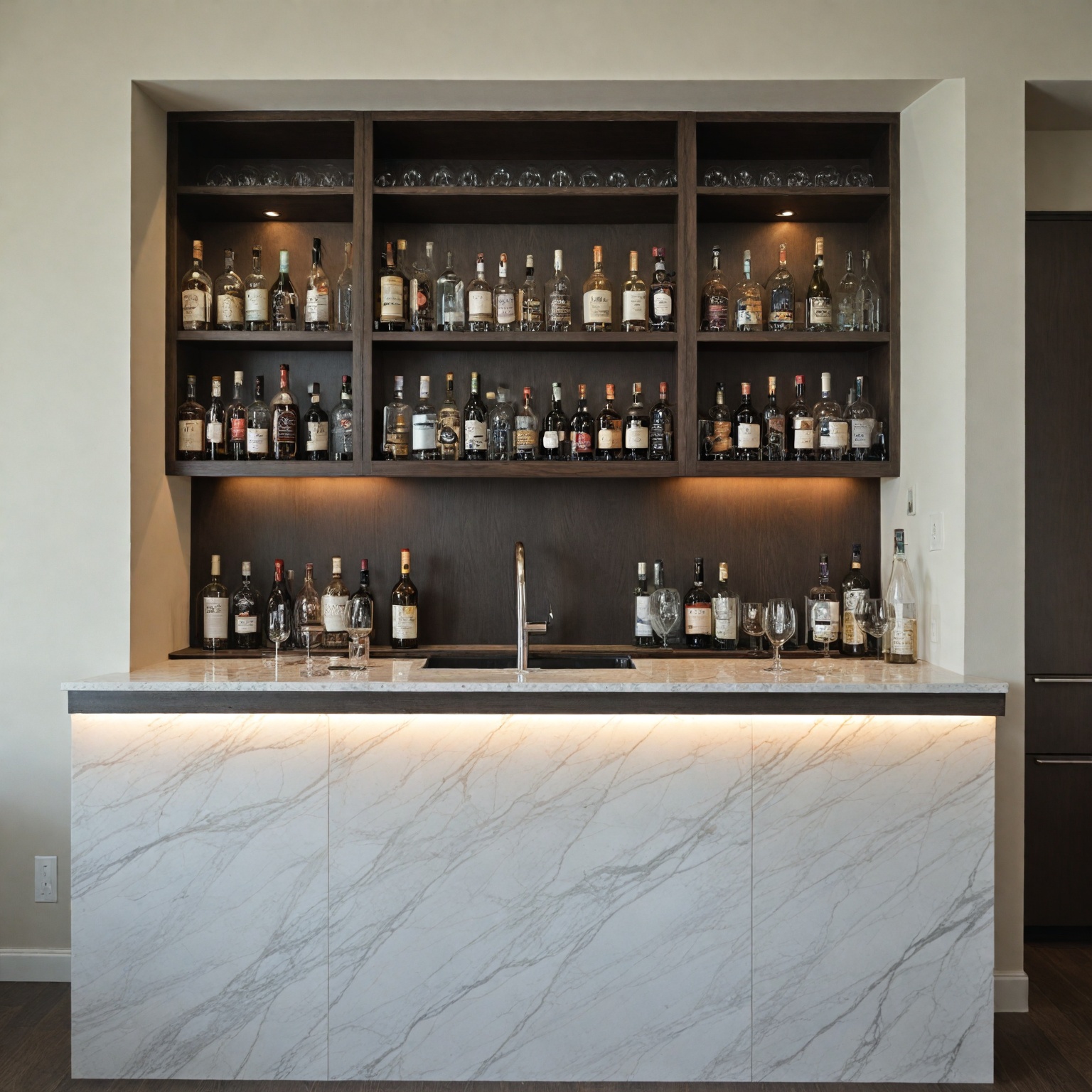
Countertops vary widely depending on design preferences, ranging from durable butcher block to luxurious marble veining, often accented with decorative elements like potted plants or art prints to add character and warmth to the space. For homes with limited space, innovative solutions such as compact fold-away counters or movable bar carts provide flexibility without compromising on function or style.
Ultimately, the goal of a home dry bar is to establish an inviting “stage” for entertainment—a dedicated space where friends and family can gather comfortably, enjoy drinks, and engage in lively conversation. This blend of practical features and thoughtful design elevates the dry bar beyond a simple beverage station to a key focal point of home hospitality.
Key Design Elements of High-Quality Dry Bars
A well-designed dry bar combines functionality, style, and efficient storage to create an inviting space for entertaining and everyday use. One of the primary design elements is intelligent storage solutions, including custom cabinets with adjustable shelves, pull-out drawers, integrated wine racks, and hidden drawers. These features optimize space while maintaining a clean and simplistic aesthetic, crucial for a well-organized bar area.
Material choice and surface finishes also play a vital role. Countertops with luxurious materials such as marble veining add elegance to the space, often complemented by decorative elements like potted plants, art prints, or ornaments that enhance the ambiance without overcrowding the area. Additionally, incorporating natural and organic materials—such as wood, stone, clay, and bamboo—aligns with current wellness decor trends and can create a seamless connection between the bar and surrounding living spaces.
Lighting is another essential component of high-quality dry bars. A layered lighting scheme is recommended, including task lighting for preparation areas and softer colored lights to set a party mood. LED lighting beneath shelving not only highlights glassware but also adds subtle illumination that enhances the atmosphere.
Design continuity with adjacent rooms, particularly the kitchen, ensures that the dry bar feels integrated rather than an afterthought. Matching cabinetry styles, color palettes, and materials help create a cohesive flow between spaces, making the dry bar a natural extension of the home’s interior. When space is limited, solutions like bar carts on wheels or fold-away counters provide flexibility while still supporting entertaining needs.
Finally, visual texture and layered elements—such as custom stone tables with unique bases, eye-catching wallpaper, and woven chairs—can imbue the dry bar area with personality and warmth. These design touches often evoke regional or stylistic influences, such as a California feel or mid-century modern vibe, further elevating the overall experience for users and guests alike.
Latest Creative Ideas and Innovative Trends
In 2024, home dry bars have evolved beyond mere drink stations into carefully crafted entertainment experiences that blend style, functionality, and innovation. One of the standout trends is the use of custom-designed elements such as solid oak wood slats, which add a modern yet warm aesthetic to the space. By extending this design across multiple walls, homeowners can create a cohesive and inviting atmosphere that enhances the overall living environment.
Designers are pushing boundaries with geometric patterns and intricate 3D effects achieved through contrasting finishes, such as semi-gloss accents against matte black backgrounds. These artistic touches transform dry bars into striking focal points and conversation starters within game rooms or living areas. Adding base-cap molding and framed paneling elevates the sophistication of these spaces, giving a timeless yet contemporary appeal.
Lighting plays a crucial role in the modern home bar, with task lighting integrated under cabinets or within floating shelves to highlight beautiful backsplashes, glassware, and accessories. Layered lighting combined with mirrored or glass-front cabinets not only increases functionality but also enhances the glamorous ambiance of the bar area. Neon signs and thematic coasters provide personalized touches that reflect the homeowner’s style, whether aiming for a futuristic lounge vibe or a nostalgic saloon feel.
Storage solutions have become smarter and more customizable, featuring adjustable shelves, pull-out drawers, and built-in wine racks that keep essentials organized and accessible while preventing countertop clutter. Seamlessly integrating the dry bar into open-concept spaces—often through built-ins or by using contrasting cabinetry colors—helps maintain visual flow from kitchen to living room, making the bar a natural extension of the entertaining area.
DIY dry bars are also gaining popularity as budget-friendly options,
Materials and Finishes
When designing a home dry bar, selecting the right materials and finishes is crucial to achieving a stylish and functional space that complements the overall decor. A variety of textures and elements can be combined to create a sophisticated yet inviting atmosphere.
Wood is a predominant choice for cabinetry and paneling, offering both warmth and timeless appeal. For instance, solid oak wood slats provide a modern touch that enhances the design’s cohesion when carried across multiple walls, while 1×8 boards and base-cap molding add sophistication and depth through raised surfaces and framed sections. Cabinetry often features wood mullions on glass doors, adding a refined accent that highlights collections of specialty glassware.
Countertops vary from classic to contemporary, with black marble countertops paired with creamy white cabinets being a popular modern combination. Such contrasts are complemented by brass brackets on glass shelves, which harmonize with metallic paint on ceilings to add subtle luxury. Additionally, porcelain mirror tiles, such as those from Ann Sacks, can frame the bar area, providing a sleek and reflective backdrop that enhances visual texture without overwhelming the space.
Backsplashes introduce opportunities for playful or elegant design statements. Iridescent glass Vihara tiles behind floating shelves and along back walls contribute a vibrant and dynamic effect, particularly when accented by polished chrome hardware like quilted drawer pulls. These details add sparkle and dimension, elevating the overall aesthetic.
Functional accessories also contribute to finishes, with polished chrome elements such as bottle openers and cocktail shakers doubling as design features. Choosing coasters, neon signage, or other decorative accents can further personalize the bar, reinforcing the intended atmosphere—whether that be a sleek futuristic lounge or a cozy, historical saloon vibe.
Ultimately, the possibilities for materials and finishes in a custom-built dry bar are nearly limitless. Whether constrained by budget or space or aiming for extravagance, these design choices allow homeowners to create a bespoke bar experience that reflects their style and enhances their living space.
Maintenance and Upkeep
Proper maintenance and upkeep are essential to preserve the aesthetic appeal and functionality of a home dry bar. Regular cleaning and careful handling of surfaces such as cabinetry and countertops help extend the life of your dry bar. For painted cabinets, using a sponge roller and paintbrush for touch-ups is recommended, as this method provides an even finish and hides brush strokes effectively. Additionally, to prevent brushes and rollers from drying out during intermittent work, wrapping them in aluminum foil can be helpful.
Storage organization also plays a crucial role in maintenance. Incorporating top drawers or hidden compartments allows for easy access to cocktail accessories while maintaining a clean, minimalist look. This not only keeps the space tidy but also ensures that frequently used items like corkscrews, bottle openers, and mixing spoons are readily available. Furthermore, placing the dry bar in a convenient location relative to the dishwashing area can streamline cleaning and reduce clutter, making upkeep more manageable.
Incorporating design elements from the kitchen into the dry bar can aid in seamless integration and maintenance by creating a cohesive look and shared materials that are easier to clean and maintain. Finally, working with professional builders who emphasize craftsmanship and detail can ensure that the materials and finishes chosen are durable and designed for easy upkeep, enhancing the longevity of your dry bar space.
Safety Considerations
When designing and using a home dry bar, safety is an important aspect to keep in mind to ensure a secure and enjoyable environment for everyone. Since dry bars typically do not include sinks or water lines, there are fewer concerns related to plumbing hazards; however, handling glassware and beverages still requires caution due to the risk of spills and breakage.
To minimize accidents, it is advisable to incorporate task lighting above counters where drinks are prepared, improving visibility and reducing the likelihood of spills or broken glass. Additionally, using cabinets with clear glass doors allows easy identification of contents without opening them, which helps prevent mishandling and accidents caused by searching for items in dim light.
Another consideration is maintaining adequate storage and organization to avoid clutter, which can lead to spills or broken items. Including wide drawers specifically for bar accessories and beverage storage helps keep the space orderly and safe, especially in multi-functional designs where the bar area may also serve as a snack station or beverage center.
Finally, choosing furniture and fixtures that optimize space, such as foldable counters or mobile bar carts, can help reduce congestion and improve movement around the bar area during gatherings. These features contribute to creating a safe, flexible space that accommodates guests comfortably while minimizing hazards.
Notable Examples and Case Studies
Several notable examples and case studies highlight creative approaches to designing home dry bars that combine both functionality and style. One standout design features a dramatic black-and-white backsplash paired with a white countertop and black open shelving. This setup is complemented by a wine fridge that maintains bottles at the perfect temperature, creating a sleek and practical space ideal for entertaining. Similarly, smaller home bars can be created with decorative trays set atop console tables, as demonstrated in a formal dining room styled with essential barware and artistic accents, such as a bust, to elevate the space’s aesthetic appeal.
Another example emphasizes the importance of display in home bar design. Collections of liquor bottles can be attractively showcased using floating shelves, which not only serve as eye-catching conversation pieces but also provide easy access for mixing drinks. Glass cabinets offer an alternative that doubles as an accent feature within the home, ideal for displaying elegant glassware or wine collections. This focus on display is often paired with practical lighting solutions—under cabinet lighting, for instance, enhances the beauty of backsplashes and countertops while offering better visibility during cocktail preparation, contributing to the bar’s dual role as a functional and inviting area.
These case studies underscore the growing popularity of home bars as a staple in modern residential design. They demonstrate how thoughtful combinations of materials, lighting, and layout can transform a simple space into an entertainer’s dream, whether integrated into a larger room or featured as a compact, stylish niche.
Related Topics
Exploring home dry bars naturally leads to several related subjects that can enhance both the functionality and aesthetic appeal of your space. Home design trends and luxury home amenities often intersect with bar setups, offering inspiration from cutting-edge technologies to green building techniques and sustainability practices in modern home construction.
Storage and display solutions are a key consideration, with floating shelves being a popular choice for showcasing liquor collections. These shelves not only provide easy access but also serve as distinct accent pieces that complement overall interior design. Accessorizing a dry bar is an enjoyable part of the process, where themes inspired by favorite pubs or alehouses can guide choices in barware, glassware, neon signs, and other decorative items, helping to create a personalized atmosphere ranging from futuristic lounges to vintage saloons.
Understanding the difference between wet and dry bars is also important. While both serve as entertainment hubs, a wet bar includes a sink with running water, whereas a dry bar focuses on storage and serving without plumbing. Many opt for dry bars due to the simpler installation and cost-effectiveness, making them a practical and stylish choice for hosting guests.
Additionally, modern design ideas such as incorporating glass panel cabinets, butcherblock countertops, and elegant shelving units offer innovative ways to create a functional mini bar that blends seamlessly with the home’s decor. These elements provide a solid foundation for entertaining and can be tailored to fit any home environment or personal style.
The content is provided by Jordan Fields, Brick By Brick News