
Summary
The DOJ’s Anti-Weaponization Fund, valued at $1.776 billion, was initiated in 2024 as part of a settlement to address claims of “lawfare” and “weaponization” of government powers, particularly against individuals alleging politically motivated abuses by Democratic officials. This fund, funded via the DOJ’s Judgment Fund, aims to provide compensation and formal apologies to affected individuals but has drawn legal challenges due to concerns over its constitutionality, transparency, and potential misuse of taxpayer money. Its controversial nature underscores the fraught intersection of law, politics, and governance in the U.S.
The DOJ Lawfare Fund
Launched as a systematic remedy for victims of alleged government misconduct, the Anti-Weaponization Fund allows individuals to seek redress through formal apologies and compensation. Its establishment from the DOJ’s Judgment Fund enables faster claims processing without further congressional appropriations. However, critics argue that the fund may disproportionately benefit Trump allies, as it primarily addresses claims framed around alleged actions by Democratic officials, raising questions about its legitimacy and fairness.
Legal Challenges to the DOJ Fund
Several lawsuits have emerged challenging the legality of the Anti-Weaponization Fund, questioning the absence of statutory authority for its creation and its oversight commission. Critics highlight concerns over the fund’s operational secrecy and how it could inadvertently empower individuals involved in unlawful activities, including threats against Capitol police officers from January 6. The legal structure that allows the fund to operate without much judicial oversight further complicates efforts to oppose its establishment.
Official Responses
Responses to the establishment of the DOJ fund have been polarized. While DOJ officials assert that the fund provides a lawful means for victims to seek relief from government abuses, critics express concerns about political exploitation and potential overreach. Some legal experts view the fund as a necessary response to government misuse of power, although legal challenges loom that question its broader implications for government accountability and executive reach.
Political and Legal Implications
The fund’s creation highlights deeper tensions surrounding governmental accountability, the politicization of legal mechanisms, and the fragility of democratic processes. It raises significant concerns regarding the appropriateness of using taxpayer money to compensate individuals associated with controversial political claims, particularly those linked to January 6. The implications of this fund extend beyond its immediate operations, potentially reshaping how political grievances are addressed in the future.
Related Cases and Developments
Recent high-profile legal cases, including Trump’s civil suit against the IRS related to leaked tax returns, exemplify the evolving landscape of lawfare in the U.S. The establishment of the Anti-Weaponization Fund aims to systematically address perceived grievances arising from such instances of legal exploitation. Critics of the fund emphasize the potential for misuse and manipulation of legal frameworks for political ends, highlighting ongoing tensions between legal processes and political maneuvering.
Criticism and Support
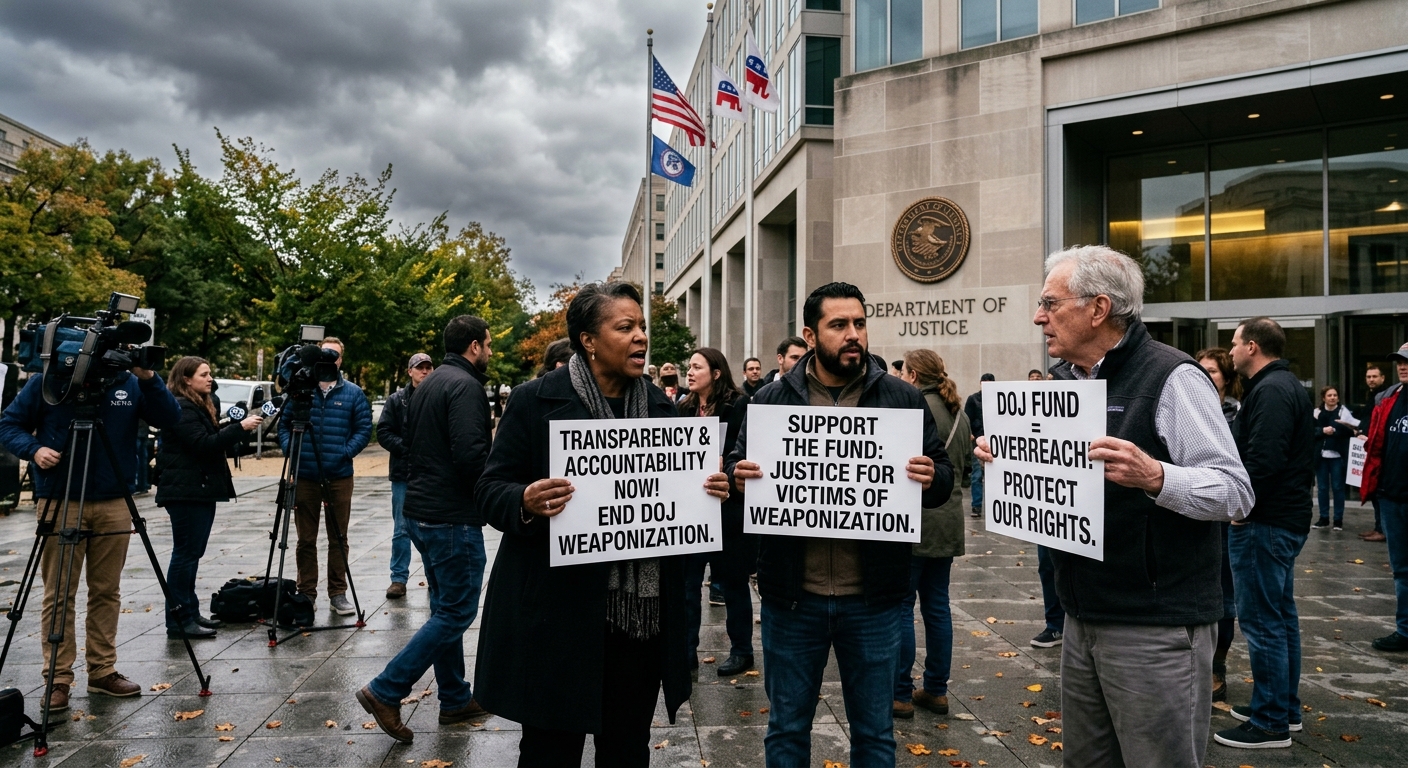
The fund has sparked intense debate, with supporters framing it as a vital mechanism for addressing injustices, while critics assert it signifies governmental overreach and failure to uphold accountability standards. This division underscores the challenges of establishing a fair and transparent process in politically charged contexts, which could influence the future legitimacy of similar initiatives. As the fund continues to face scrutiny, its future may hinge on the outcomes of ongoing legal and political battles.
Future Prospects
The future of the Anti-Weaponization Fund is uncertain, facing significant legal and political obstacles that may obstruct its operation. Potential lawsuits could challenge its funding and mandate, navigating through various levels of the judicial system. These developments reflect broader concerns about the use of “lawfare” and how it might redefine the relationship between legal mechanisms and political accountability in America, shaping the landscape of future government actions and policies.