
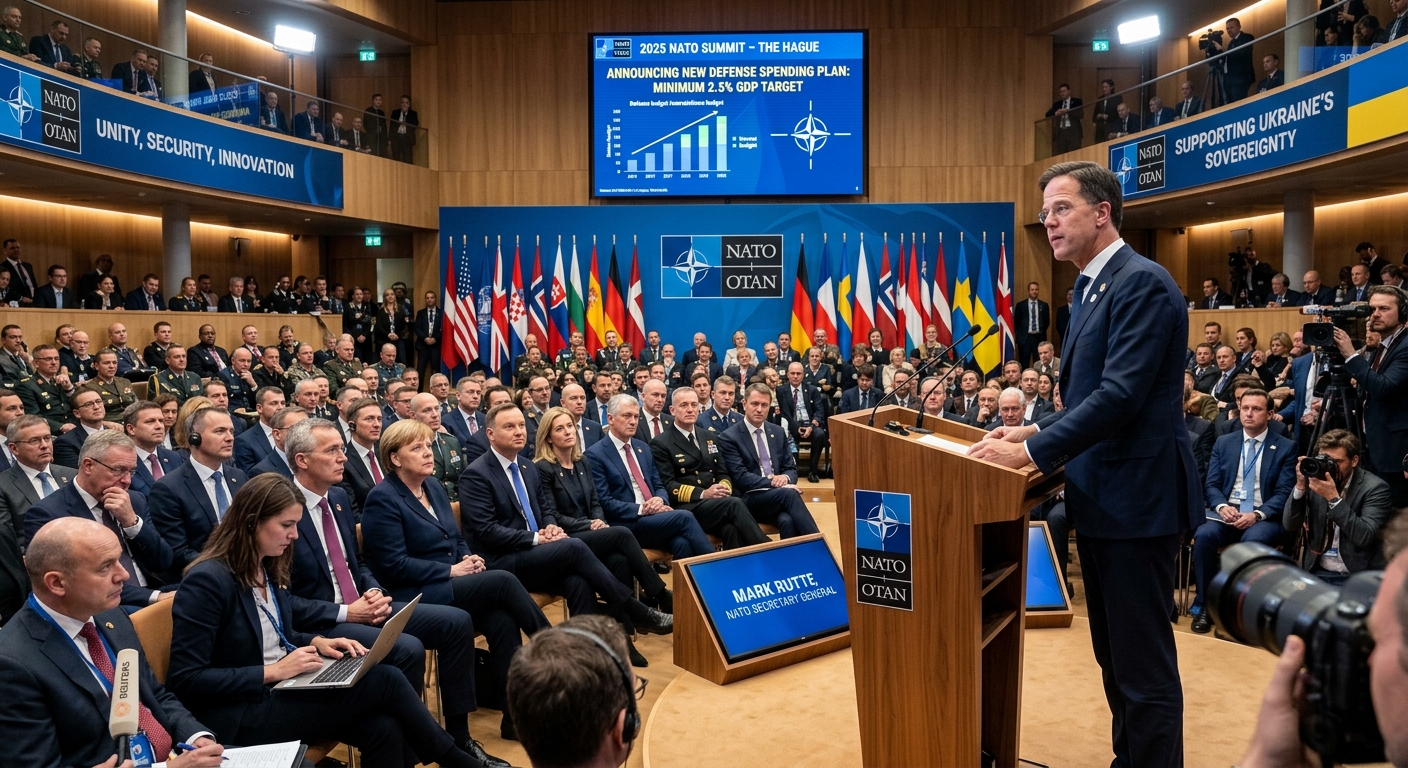
Summary of NATO’s New Defense Spending Plan
NATO’s newly unveiled defense spending plan at the 2025 Summit signals a decisive change in response to rising global tensions, particularly with Russia. The plan sets a bold target of 5 percent of GDP for defense budgets by 2035, an increase from the previous 2 percent benchmark established in 2014. This target includes a core military expenditure of 3.5 percent of GDP and an additional 1.5 percent for cybersecurity and infrastructure, aiming to enhance NATO’s collective defense capabilities. Secretary General Mark Rutte has emphasized the need for increased European contributions and collaboration with the U.S. to effectively address security challenges and support Ukraine amid ongoing conflicts.
Key Components of the Plan
The 2025 Summit outlined a structured approach with significant commitments for defense expenditures. The new target includes at least 3.5 percent of GDP for core military needs, reflecting the alliance’s shift to counter contemporary threats. NATO has also prioritized enhancements in air and missile defense, logistic capabilities, and overall military readiness. These changes highlight a proactive strategy to address NATO’s capability gaps and reinforce deterrence against adversaries like Russia.
Strategic Priorities and Capability Gaps
Central to the updated spending plan are strategic priorities such as increased air and missile defense assets and logistics support. NATO aims for a 400 percent increase in defensive capabilities to remain effective against modern threats. This comprehensive focus ensures that NATO can effectively safeguard its member states from varied geopolitical instabilities, particularly on its eastern flank. The integration of enhanced multimodal exercises further demonstrates NATO’s commitment to readiness and transatlantic cooperation.
Reactions from Allies and Public Sentiment
The announcement of higher defense spending has elicited mixed reactions within NATO. Supporters view these commitments as essential for enhanced military readiness; however, concerns about duplicative capabilities and reliance on the U.S. persist. Public opinion generally favors increased military spending and NATO membership, yet it also reflects anxieties about America’s commitment to European security. These sentiments indicate a complex relationship among NATO members, prompting discussions about European strategic autonomy and collaborative defense efforts.
Challenges and Implications
The push for increased defense spending underscores a shift toward European self-determination in security matters. While there is widespread support for NATO, debates over budget allocations and capabilities remain contentious. The evolving geopolitical environment, combined with pressures from public opinion, highlights the need for a balance between maintaining NATO unity and ensuring effective defense strategies among member nations. This transition reflects ongoing concerns regarding reliance on U.S. military support, emphasizing the necessity of a unified approach to collective security.
Looking Forward
NATO’s new spending plan represents a significant commitment to modernizing and enhancing collective security capabilities within the alliance. The ongoing discussions among member states regarding the feasibility of these targets will shape NATO’s strategy in the coming years. The alignment of defense investments with emerging threats will be crucial, as will the capacity of the alliance to adapt to changing geopolitical realities while maintaining cohesion among its members.