
Summary
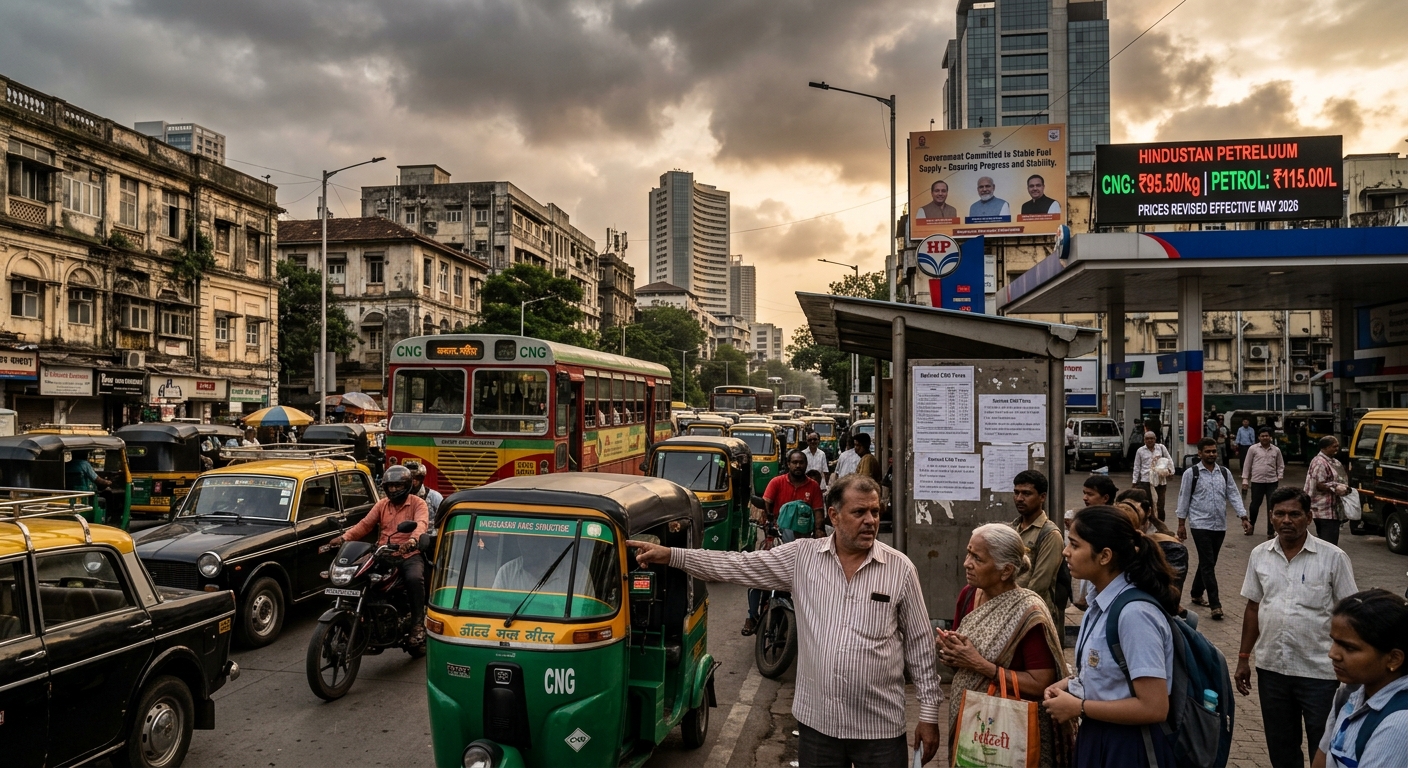
In May 2026, India experienced a significant surge in fuel prices, with both diesel and compressed natural gas (CNG) rates increasing by ₹1 per kilogram, resulting in fare hikes for public transport. This marked the third price increase for CNG within ten days, amid geopolitical tensions in West Asia affecting global crude oil prices, which have now surpassed $100 per barrel. Additionally, a depreciating rupee has worsened the cost of fuel imports, leading to widespread implications for inflation and household budgets, especially among low-income groups. The government has reassured citizens about stable fuel supplies but faces calls for reforms amidst ongoing market volatility.
Recent Price Hike
The recent increases in fuel costs in May 2026, including a ₹2 per kilogram rise in CNG prices in Delhi, reflect geopolitical instability in West Asia, particularly the Iran conflict. These tensions have contributed to volatility in the global oil market, pushing domestic prices higher and adding pressure on public transportation operators. As transportation and logistics costs rise, fare adjustments may be necessary, particularly in urban hubs like Delhi and Mumbai, impacting consumer budgets and overall inflation.
Causes of the Price Surge
Fuel price increases stem from both international and domestic factors. Geopolitical tensions in West Asia have led to a surge in global crude prices, while the depreciation of the Indian rupee has elevated import costs, directly influencing domestic pricing for petrol, diesel, and CNG. Additionally, local government tax structures and supply-demand imbalances contribute to these price fluctuations, creating an economically challenging environment for consumers and transport operators.
Impact of Price Increase
The rise in fuel prices has a pronounced impact on the Indian economy, especially through escalated transportation costs that inevitably drive up the prices of goods and services. As fuel accounts for a significant portion of operating expenses in the logistics sector, these hikes can lead to increased freight charges, further exacerbating inflation. Public transportation systems are particularly vulnerable, with operators projected to pass on costs to passengers, straining household budgets for daily commuters.
Public and Political Response
The recent fuel price hikes have ignited public concern, particularly regarding affordability in metro areas like Delhi and Mumbai, where transportation costs are expected to surge. Autorickshaw unions have already sought fare increases as operators face rising expenses, heightening tensions around inflation. The government has promoted alternative fuel options and must navigate a complex landscape of public and political pressure while managing volatile market conditions that directly impact pricing strategies.
Future Outlook
The outlook for fuel prices in India appears precarious, heavily influenced by ongoing geopolitical tensions and global market fluctuations. If crude oil prices remain high and the rupee continues to weaken against the dollar, further price increases could be on the horizon. While government interventions could potentially adjust pricing dynamics, forecasting exact changes will be complicated by the current economic and geopolitical landscape, creating uncertainty for consumers and markets alike.