
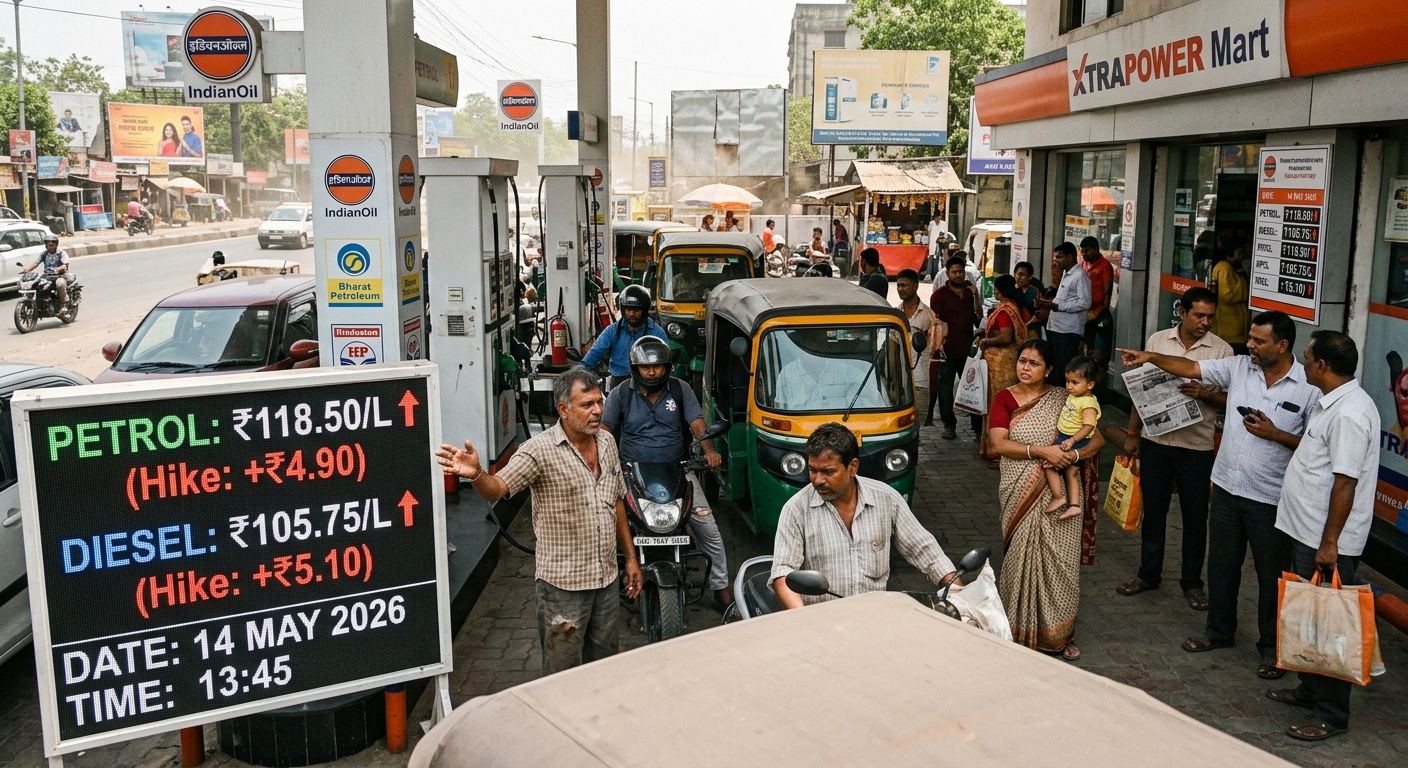
Fuel Price Surge in India
In May 2026, India faced an unprecedented spike in fuel prices, with increases of about Rs 5 per litre for petrol and diesel occurring within ten days. This rise concluded nearly four years of price stability, driven by escalating global crude oil costs and compounded by significant losses reported by state-owned oil marketing companies (OMCs). Understanding the underlying factors—such as geopolitical tensions and operational losses—can clarify the reasons behind this surge and its implications for consumers and businesses alike.
Economic Impacts
The recent price increases are set to escalate inflationary pressures as costs for transportation and logistics rise. More specifically, businesses reliant on fuel for their operations may have to pass these costs onto consumers, thereby impacting demand. For middle- and lower-income households, these increases may strain budgets, underlining the uneven economic impact of fuel pricing on different segments of society.
Public Sector Undertakings’ Strain
State-owned OMCs are grappling with significant financial stress as losses on petrol and diesel sales remain substantial. Despite recent price hikes, these companies are still experiencing under-recoveries of Rs 10 per litre on petrol and Rs 13 per litre on diesel, which translates to nearly Rs 750 crore in daily losses. This financial instability is not only concerning for the sustainability of OMCs but also raises questions about the long-term viability of public sector enterprises amid ongoing global market volatility.
Government Measures
In response to the rapid increase in international crude prices, the Indian government has implemented measures like reducing excise duties on fuel to alleviate pressure on both consumers and OMCs. While this has offered temporary relief, significant revenue losses challenge the government’s financial strategy. Long-term solutions will likely entail balancing the immediate needs of consumers with the fiscal health of state enterprises, highlighting the complexities of managing fuel prices in a volatile market.
Public and Media Reaction
The recent spike in fuel prices has elicited widespread concern and scrutiny from the public and media alike. As consumers feel the pinch of rising costs, there are increasing calls for transparent government policy changes to address pressing economic issues. The ongoing debate underscores the necessity for sustainable solutions to stabilize prices without compromising the financial health of OMCs or burdening consumers unduly.