
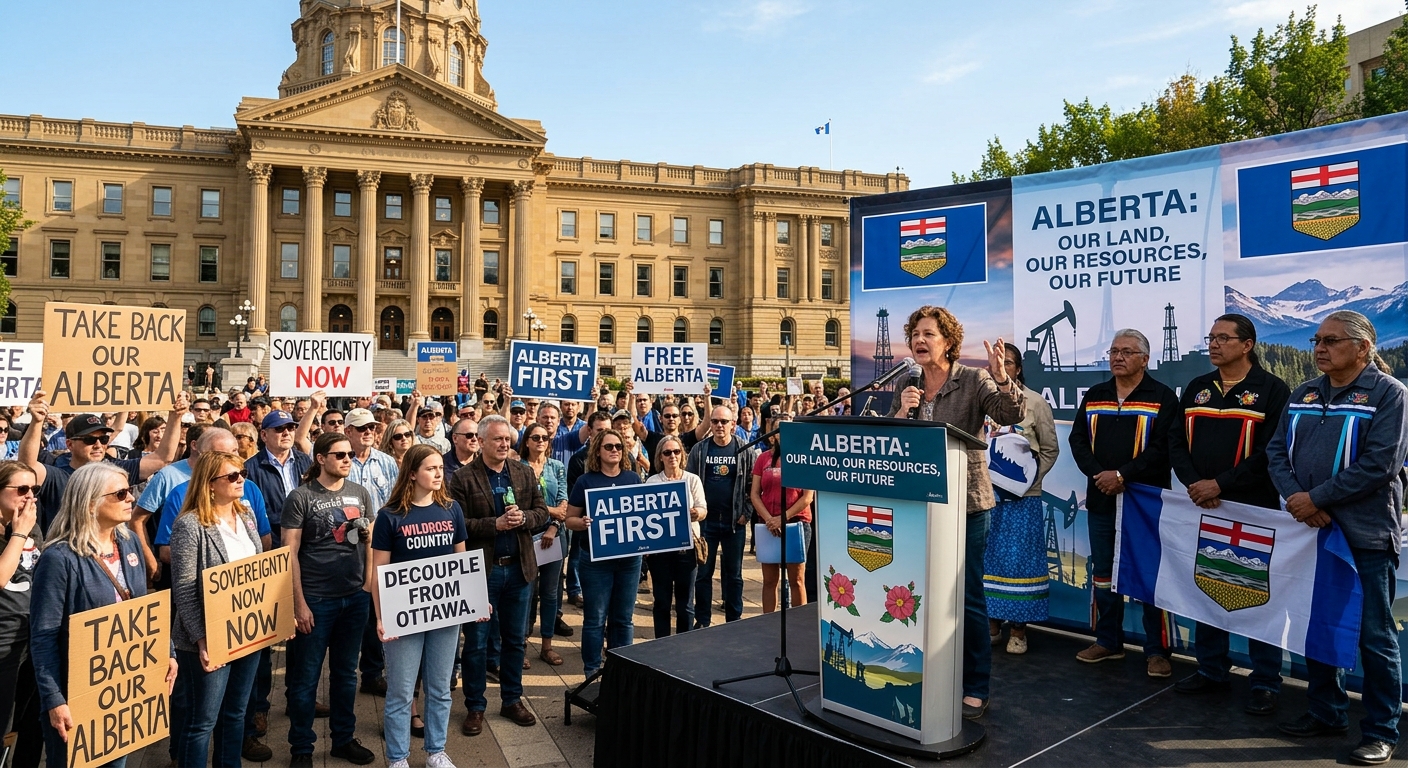
Summary
The debate over Alberta’s potential secession from Canada is shaped by historical grievances, economic concerns, and a desire for political autonomy. With a support base that currently hovers between 15% and 27%, the separatist movement has gained traction in response to perceived federal policies that are unfavorable to Alberta’s interests. Significant political figures demonstrate a split in perspective, complicating relationships within the province and its dealings with the federal government. The constitutional challenges posed by Indigenous rights and legal complexities create additional hurdles to any movement toward independence.
Historical Context
The roots of Alberta’s separatism can be traced to the 1970s, primarily fueled by federal policies viewed as undermining Alberta’s interests, such as the National Energy Program. While Alberta’s separatist sentiments have occasionally surfaced through organized efforts, an early group, the Independent Alberta Association, sprang from frustrations over federal control of resources. The effects of global oil crises and federal initiatives intensified feelings of alienation, driving a surge in support for independence, especially under Prime Minister Justin Trudeau’s government, which has been perceived as hostile to Alberta’s economic prospects.
Political Environment
The political landscape surrounding Alberta’s independence remains complex, with only about a quarter of the population expressing support for secession, although many perceive Premier Danielle Smith as sympathetic to the cause. A range of political figures contrasts the separatist sentiments with advocacy for national unity, illustrating that political branding can shift based on public perception. Legislation like the Alberta Sovereignty Within a United Canada Act aims to challenge federal authority but faces substantial legal pushback and critiques from Indigenous groups regarding constitutional validity.
Economic Impact
Economic considerations are pivotal in the independence discussion, particularly concerning Alberta’s significant dependence on the energy sector. Experts caution that secession could substantially diminish economic activity due to the loss of existing trade agreements and the inability to access federal services. The fluctuating support for independence correlates with economic developments, as concerns rise about the potential financial implications of departing from Canada, particularly amidst recent federal policy decisions affecting Alberta’s economy.
Cultural Dynamics
The separatism in Alberta is closely tied to a unique provincial identity perceived as marginalized by the federal government, often referred to as “western alienation.” Grassroots activism and social media play crucial roles in promoting a distinct cultural narrative that emphasizes Alberta’s autonomy. However, support is unevenly distributed, with demographics influencing approval rates, particularly within urban versus rural communities where the latter shows greater skepticism toward independence.
Legal and Constitutional Challenges
Navigating the legal dimensions of Alberta’s independence involves substantial challenges under Canadian law, particularly regarding the Alberta Sovereignty Act’s potential overreach. The Supreme Court has established that unilateral secession lacks legal grounding, necessitating negotiations at the federal level for any constitutional amendments. Indigenous groups also highlight constitutional and treaty issues, asserting that any push for independence must consider their rights and the complexities of existing agreements with the Crown.
Independence Movement Organizations
Various organizations within Alberta actively promote the independence movement, though many early attempts at gaining formal recognition have struggled. The evolution of parties advocating for secession marks a significant shift in political engagement regarding Alberta’s future, with newer entities attempting to unify efforts toward achieving sovereignty. Despite previous setbacks, the current landscape indicates a growing political presence for separatist sentiments.
Future Scenarios
The potential for Alberta pursuing independence hinges on numerous factors, including political momentum, economic conditions, and legal constraints. If a referendum were to happen, it would need to navigate both public sentiment and administrative hurdles, potentially inciting deeper political divisions. The implications of independence could reshape Alberta’s economy in ways that may not align with public support, suggesting that sustained dialogue and clarity about outcomes will be essential as the situation evolves.
Reactions and Opinions
The independence movement elicits a diverse spectrum of reactions, revealing a complex interplay of support and opposition within Alberta. Public opinion highlights a disparity between personal support for secession and perceived leadership alignment with those views, complicating the political narrative. Motivations for and against independence are deeply rooted in historical grievances and current sentiments regarding representation in federal matters, shaping ongoing discussions about Alberta’s place within Canada.
Public Sentiment and Political Leadership
Public perception of political leaders influences support for independence, with a notable gap between the leadership’s sentiments and the broader public opinion landscape. Despite depicting a strong inclination toward retaining unity, more political figures emerge advocating for regional interests, reflecting a nuanced political environment that requires careful navigation to accommodate varying viewpoints.
Economic Consequences
Concerns about potential economic fallout from the independence movement persist, with critiques focusing on how separatist rhetoric may impact investment and economic stability. The uncertainty around separatism extends beyond political implications, requiring careful consideration of its economic viability and sustainability.
Indigenous Perspectives
Indigenous leaders are vocal opponents of Alberta’s independence initiatives, emphasizing the need for significant consultation and acknowledgment of treaty rights. Their perspectives play a critical role in shaping the ongoing dialogue about secession, demanding that any future considerations remain deeply informed by their rights and needs.